
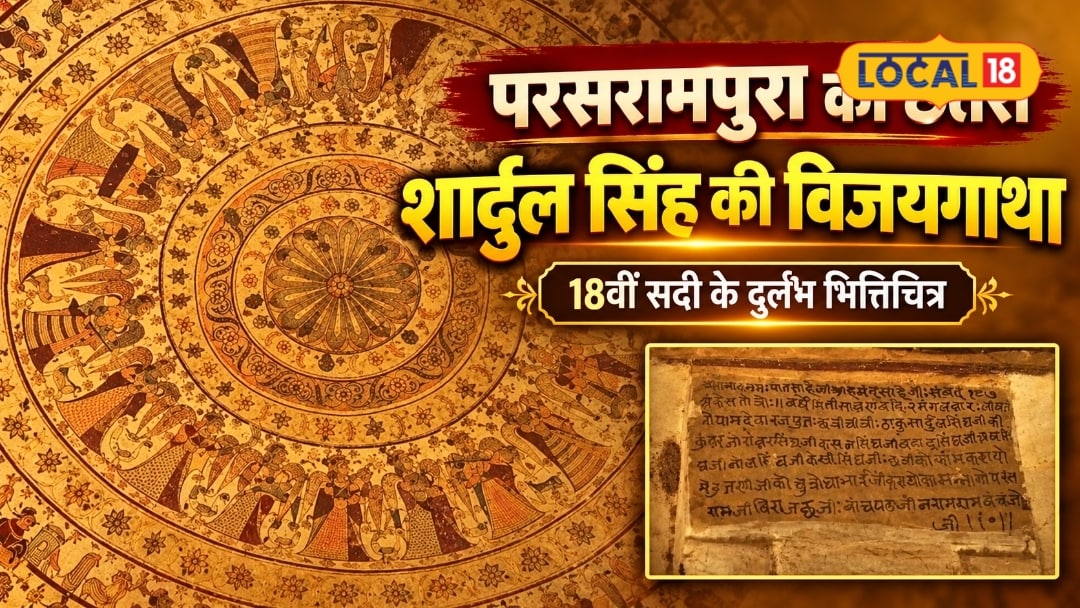
In the heart of the culturally rich Shekhawati region, the village of Parasrampura in Jhunjhunu district houses a monumental piece of regional history known as the Maharao Shardul Singh Chhatri. This architectural marvel serves as both a physical memorial and a vibrant document of local bravery, capturing an era of strategic conquests and artistic brilliance that defined the 18th century in northern Rajasthan.
The historical genesis of the Parasrampura cenotaph is deeply intertwined with the military campaigns led by Maharao Shardul Singh. Before launching his historic and decisive attack on Jhunjhunu, Shardul Singh hoisted his victory flag at this very site. Following his demise, his five devoted sons commissioned the grand cenotaph during the 18th century to immortalize his leadership, territorial expansion, and enduring legacy in the region.
A defining feature of this architectural landmark is its interior ornamentation, executed through rare natural pigments that have survived the test of time remarkably well. The walls and ceilings showcase intricate frescoes, including a prominent depiction of Maharao Shardul Singh seated in a royal court alongside his five sons. These artistic representations offer invaluable insights into the attire, courtly manners, and aesthetic sensibilities of the 18th-century Rajput nobility.
Despite its priceless cultural and historical value, the ground reality surrounding the Maharao Shardul Singh Chhatri in Parasrampura village paints a concerning picture of neglect. Heritage experts and local cultural enthusiasts have repeatedly expressed anguish over the current state of affairs, noting that the structure is largely kept locked and remains deprived of professional conservation efforts necessary to arrest environmental degradation.
The cultural degradation and physical neglect of such heritage assets carry a direct economic and developmental toll on the broader Kotputli-Behror region and surrounding districts. Heritage tourism has traditionally served as a powerful catalyst for rural economies, employment generation, and artisan revival. When sites like the Parasrampura cenotaph remain inaccessible and unpreserved, the local community loses a vital opportunity to harness cultural tourism for sustainable socio-economic growth.
Addressing the preservation challenges of the Parasrampura monument requires immediate, coordinated intervention from state archaeology departments and district administrative authorities. Safeguarding these fragile 18th-century natural-pigment frescoes demands specialized chemical treatment, structural stabilization, and regulated public access that balances tourism promotion with strict heritage conservation protocols.
Looking ahead, local heritage advocates and community leaders are urging the government to formulate a comprehensive restoration roadmap for the Maharao Shardul Singh Chhatri. By officially incorporating the site into regional heritage trails, ensuring transparent administrative oversight, and reopening the monument to scholars and tourists, authorities can rescue this vital chapter of Shekhawati history from permanent obscurity.
