
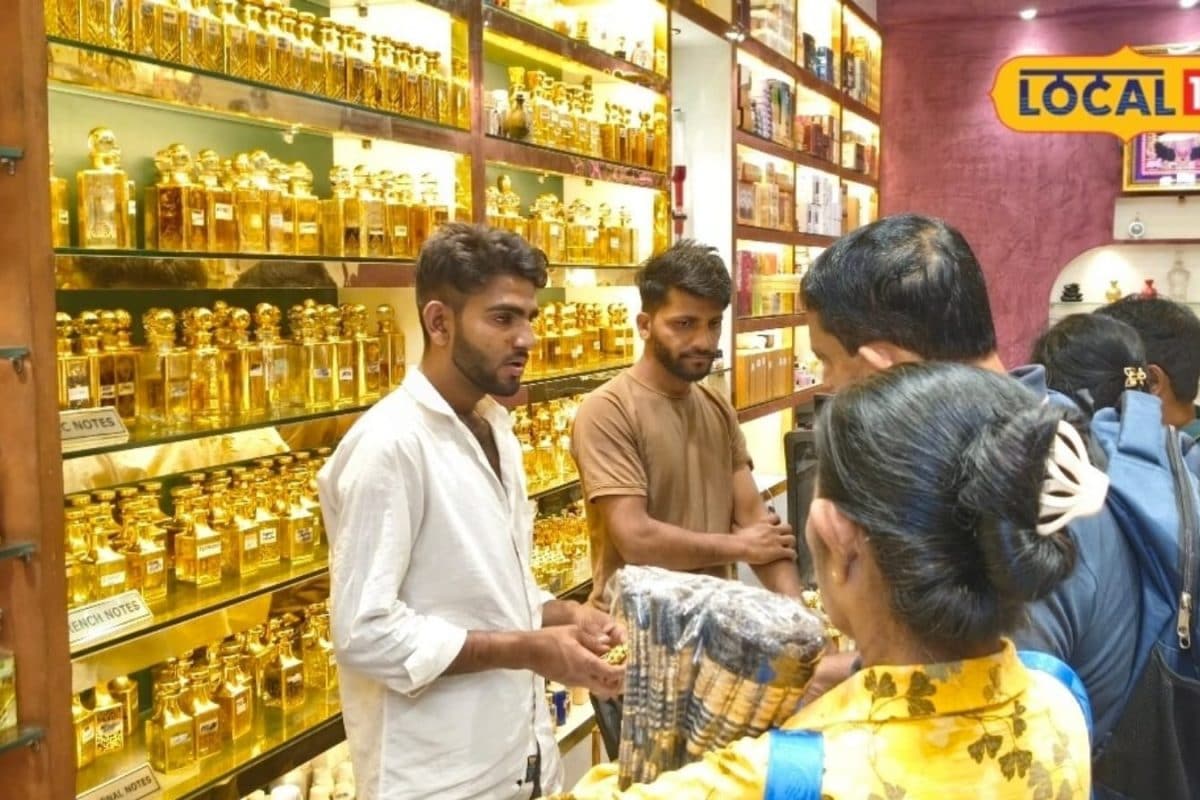
In the bustling and historically rich walled market of Jaipur, a remarkable century-old enterprise continues to preserve the ancient and sophisticated craft of traditional perfumery. D.R. Aroma, a legacy establishment standing tall through generations of economic evolution, offers rare and exquisite natural fragrances that command an astonishing market value of twelve lakh rupees per liter. This staggering valuation reflects not merely the scarcity of the ingredients, but the immense patience, intricate distillation processes, and generational expertise required to produce pure botanical essences that capture the essence of luxury.
The historical roots of this aromatic enterprise extend back to Kannauj, universally recognized as the traditional perfume capital of India. The foundational patriarch of the family journeyed from Kannauj after mastering the complex art of traditional distillation, bringing these closely guarded botanical formulas to the vibrant markets of Jaipur. During the early formative years, the trade was sustained through relentless physical effort, with the founder traversing the city streets on a bicycle to vend artisanal fragrances directly to discerning patrons before finally establishing a permanent storefront.
Examining the contemporary ground reality of this traditional venture reveals a meticulously curated inventory tailored to distinct seasonal preferences and festive demands. According to current shopkeeper Lakhan, who represents the fourth generation managing the establishment, customer preferences undergo a profound shift depending on the weather and cultural celebrations. During the festive season of Deepawali, consumer demand gravitates strongly toward traditional floral distillations including rose, mogra, sandalwood, kewra, and khus, which are celebrated for their cooling and uplifting sensory properties.
Conversely, the arrival of winter introduces a completely different olfactory profile, with patrons showing a strong affinity for richer, warming compositions such as shamama and specialized varieties of oud. The establishment maintains a diverse and highly prized collection of global and oriental varieties, including white oud, black oud, cambodian oud, and African oud. Each variant is carefully sourced and aged to ensure absolute purity and longevity, satisfying the sophisticated palates of collectors who understand the intricate nuances of authentic animalic and botanical wood oils.
The regional and international footprint of this Jaipur-based enterprise extends far beyond the local boundaries of the walled market, creating an economic bridge between traditional Indian craftsmanship and global luxury markets. Proprietor Lakhan asserts that the demand for their bespoke artisanal fragrances is not restricted to domestic buyers, but actively flourishes across international destinations including Dubai, the United States, London, and Paris. This cross-border appreciation highlights the enduring global appeal of authentic, hand-crafted oriental perfumery in an era dominated by mass-produced synthetic alternatives.
While operating within the traditional commercial landscape, the business maintains adherence to indigenous manufacturing methodologies, ensuring that modern commercial pressures do not compromise the integrity of the end product. The generational transition from a bicycle vendor model to a permanent retail establishment within the historic core of Jaipur underscores the resilience of family-owned artisanal enterprises. This continuity serves as a vital anchor for preserving intangible cultural heritage within the region, offering residents and international visitors alike a direct connection to centuries-old sensory traditions.
Looking ahead, the fourth-generation stewards of D.R. Aroma remain committed to upholding the rigorous standards established by their ancestors while quietly adapting to the evolving demands of global connoisseurs. The ongoing popularity of twelve-lakh-rupee-per-liter fragrances demonstrates that genuine craftsmanship and uncompromising quality retain immense value in the modern marketplace. As local administration and tourism boards continue to promote the heritage markets of Jaipur, establishments like this remain indispensable pillars of the city's vibrant cultural and commercial identity.
