
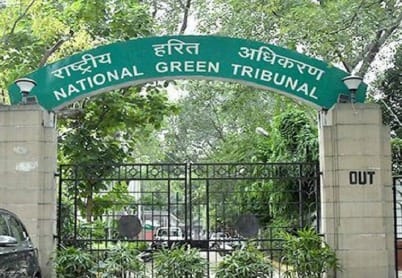
In a landmark environmental directive carrying profound implications for urban forestry and ecological preservation, the National Green Tribunal has issued comprehensive orders mandating universal tree geo-tagging and complete botanical enumeration across every district and city in the state of Rajasthan. This decisive judicial intervention comes in the wake of widespread public concern and administrative scrutiny surrounding environmental degradation, notably originating from contentious felling activities at Chomu House in Jaipur.
The historical backdrop of this administrative and legal battle traces back to mounting pressures on urban green cover as real estate development and infrastructure expansion accelerate across major Rajasthani urban centers. For decades, environmentalists and civic activists have raised persistent concerns regarding the unmonitored destruction of mature urban trees, which play an irreplaceable role in mitigating urban heat islands, preserving biodiversity, and maintaining air quality standards within historical administrative hubs like Jaipur.
Addressing the core mechanics of the new regulatory framework, the green panel has instituted stringent supervisory protocols governing vegetative clearance. Most notably, any administrative proposal or commercial development project seeking to axe more than 25 trees will no longer bypass local scrutiny; instead, such proposals are subjected to mandatory evaluation and thorough investigation by a specialized committee established to review environmental impacts and verify ecological necessity.
Stakeholder perspectives regarding these sweeping directives are multifaceted, reflecting a delicate balance between urgent environmental conservation and the practical demands of infrastructure modernization. While civic organizations, environmental advocates, and urban ecologists have universally lauded the tribunal's intervention as a long-overdue safeguard, municipal authorities and urban planners face complex logistical challenges in executing widespread botanical mapping and establishing the mandated oversight mechanisms.
Examining the regional impact on the Kotputli-Behror district and surrounding semi-urban localities, local administrative bodies are bracing for comprehensive compliance audits. The enforcement of systematic geo-tagging ensures that local communities and district authorities maintain transparent digital records of every mature tree, substantially curbing unauthorized logging, preventing illegal timber extraction, and fostering a culture of rigorous environmental accountability at the grassroots level.
The administrative response from various municipal corporations and forest department directorates has shifted toward immediate compliance planning, leveraging modern geographical information systems and satellite-based mapping technologies to execute the tribunal's mandate. District administrations across the state are presently mobilizing specialized survey teams, botanical experts, and technical personnel to initiate the monumental task of urban and rural tree census operations without administrative delays.
Looking toward the forward outlook, the successful implementation of these judicial directives is anticipated to reshape urban planning paradigms throughout Rajasthan over the coming months and years. By institutionalizing transparency through mandatory geo-tagging and committee-led scrutiny for the removal of over 25 trees, the state is poised to establish a robust legal precedent balancing sustainable developmental growth with uncompromising ecological preservation for future generations.
