
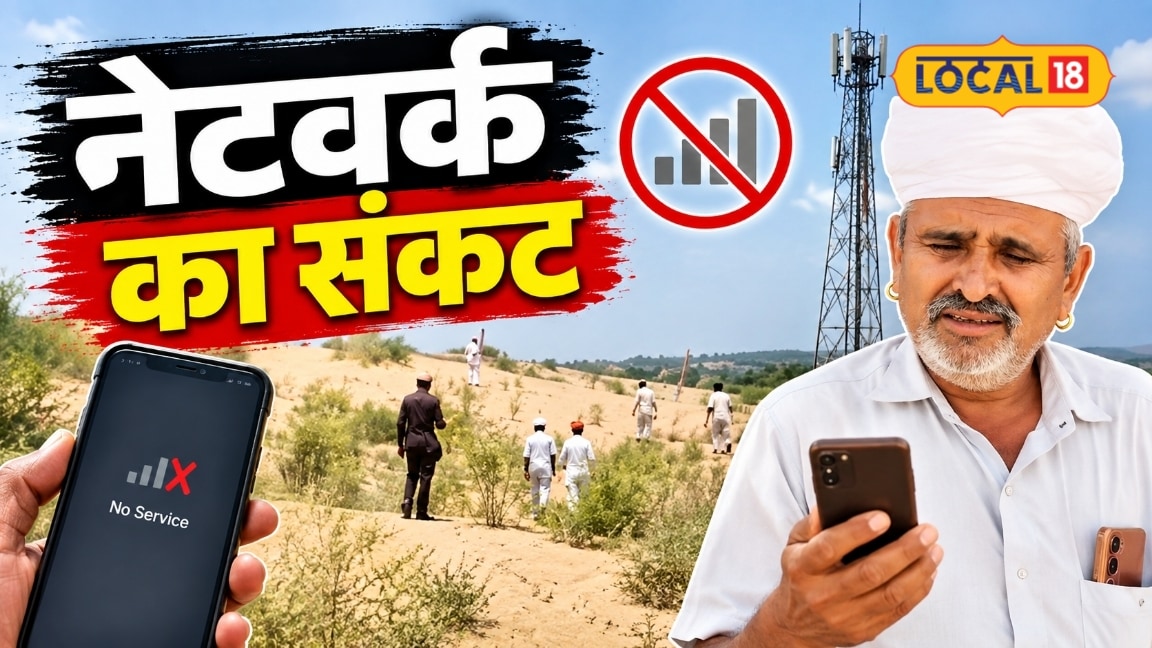
In an alarming manifestation of the digital divide in rural India, residents of Sabarsar Gram Panchayat within the Shergarh subdivision of Jodhpur district are grappling with an acute and persistent mobile network crisis. Spanning a vast geographical expanse, this remote locality finds itself cut off from mainstream telecommunication channels, leaving more than 700 households stranded in technological isolation. For the local populace, the basic act of placing an emergency phone call or connecting with the outside world has transformed into a daily physical ordeal.
The roots of this connectivity crisis trace back to infrastructural neglect and geographical vulnerabilities that have long plagued remote settlements in the region. While telecommunication expansion has surged across urban centers and major semi-urban corridors, peripheral rural pockets like Sabarsar continue to be bypassed by telecom operators. The absence of nearby mobile towers and repeater stations creates massive signal shadows, effectively rendering standard cellular devices useless inside residential structures and community spaces.
The ground reality in Sabarsar is both stark and physically demanding for its residents, numbering nearly 7oz00 citizens across the Gram Panchayat. With zero network coverage inside their homes, villagers including the elderly, women, and children are compelled to climb onto their rooftops or trek toward towering sand dunes simply to catch a faint, intermittent signal bar. This extraordinary daily routine not only poses significant physical risks, particularly during adverse weather conditions and extreme heat, but also highlights the widening chasm in basic infrastructural provisions.
Beyond personal communication, the crippling lack of mobile connectivity has severely paralyzed critical socio-economic activities within the community. Students attempting to pursue online education and digital learning initiatives find themselves entirely locked out of virtual classrooms and study portals. Furthermore, local operations at E-Mitra centers and various essential government online services have come to a virtual standstill, depriving citizens of timely welfare benefits, documentation processing, and digital governance initiatives.
The fallout of this digital deprivation extends deeply into the regional framework, impacting the livelihood and emergency responsiveness of the wider community. Traders, farmers, and daily wage earners residing in Sabarsar struggle to coordinate market prices, transport logistics, and agricultural updates, putting them at a severe economic disadvantage compared to their well-connected peers in neighboring regions. Medical emergencies, in particular, become harrowing scenarios where contacting ambulances or healthcare providers depends entirely on someone successfully scaling a sand dune to make a call.
In response to this deepening crisis, frustrated villagers have formally petitioned local authorities and administrative bodies, demanding an immediate technical survey of the area. The collective appeal emphasizes the urgent necessity of installing dedicated mobile towers or deploying alternative technical infrastructure to permanently bridge the connectivity gap. Residents have underscored that swift state intervention is imperative to restore normalcy and integrate their region into the nation's broader digital mainstream.
As the administration weighs the technical feasibility and resource allocation for network expansion in Shergarh subdivision, public expectations remain high for a time-bound resolution. The local community stands firm in its demand for accountability and prompt remedial action from telecom regulators and district officials. Ensuring reliable telecommunication infrastructure in Sabarsar is not merely a matter of convenience, but an essential prerequisite for equitable development, public safety, and democratic participation in the modern era.