
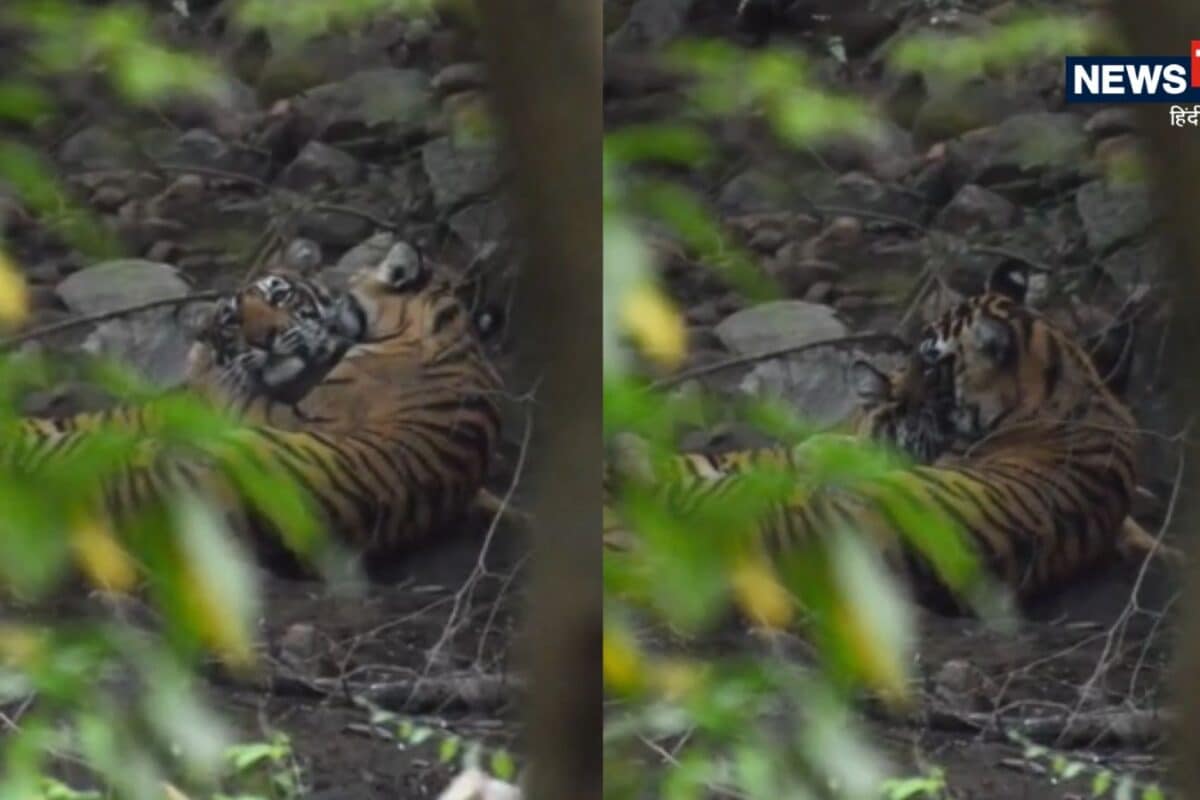
In a development that has brought immense joy to wildlife enthusiasts across the region, a captivating and tender moment has been officially documented within the boundaries of the renowned Sariska Tiger Reserve located in Rajasthan. The footage, captured with remarkable clarity, showcases a heartwarming interaction between tigress ST-2302 and her dependent young cub, portraying a pristine display of maternal affection and playful bonding in the wild. This poignant interaction highlights the natural behavioral patterns of big cats within their protected habitat.
The footage originates specifically from the Andheri buffer zone, an ecologically sensitive and strictly monitored sector within the Sariska Tiger Reserve situated in the Alwar district. Over the years, the reserve has continuously implemented rigorous conservation protocols, anti-poaching measures, and habitat restoration strategies to ensure a safe environment for the resident feline population. These ongoing administrative interventions have gradually transformed the landscape into a secure sanctuary, allowing endangered species to breed, raise their litters, and exhibit natural behaviors without undue external disturbances.
While traditional economic statistics or quantitative demographic indices are not the primary focus of this specific behavioral sighting, the ecological metrics of Sariska reflect a positive trajectory in tiger conservation. The continuous monitoring of tigress ST-2302 and other resident felines involves advanced camera trapping techniques, radio telemetry, and dedicated field patrols by forest department personnel. These meticulous scientific operations generate vital data regarding territory expansion, cub survival rates, and overall predator-prey dynamics within the sprawling forest ecosystem.
Local wildlife conservationists, field biologists, and nature enthusiasts have lauded the emergence of this visual documentation as a testament to the thriving ecosystem of Sariska. Observers have noted that such visual evidence serves as a powerful reminder of the emotional capacities of wildlife, bridging the psychological gap between human observers and wild animals. Stakeholders across various environmental forums emphasize that protecting these forest corridors is paramount to sustaining such harmonious natural interactions for future generations.
The broader geographical and cultural impact of such wildlife milestones extends significantly into neighboring regions, including the Kotputli-Behror district. Communities residing in the periphery of these protected forests share a deep-rooted cultural affinity with the local fauna, recognizing the ecological importance of maintaining a balanced natural heritage. The positive news from Sariska resonates deeply among regional residents who take immense pride in Rajasthan's rich natural legacy and the successful resurgence of its tiger population.
Administrative oversight within the Sariska Tiger Reserve remains exceptionally vigilant, with forest officials and rangers maintaining round-the-clock surveillance across the core and buffer zones, including the Andheri region. Strict guidelines regulate tourist movement, vehicle speeds, and photographic parameters to prevent any form of human interference or habitat disruption. These proactive regulatory frameworks ensure that vulnerable cubs like the offspring of tigress ST-2302 can mature safely under the protective umbrella of the state forest department.
Looking toward the future, forest authorities and wildlife management committees plan to expand community outreach programs and habitat expansion initiatives around the Sariska landscape. As public awareness grows through such endearing media depictions, conservationists anticipate heightened public participation and support for anti-poaching drives and corridor protection. Ultimately, the enduring bond between tigress ST-2302 and her cub stands as an inspiring symbol of ecological resilience and hope for the continued preservation of India's magnificent wildlife heritage.
