
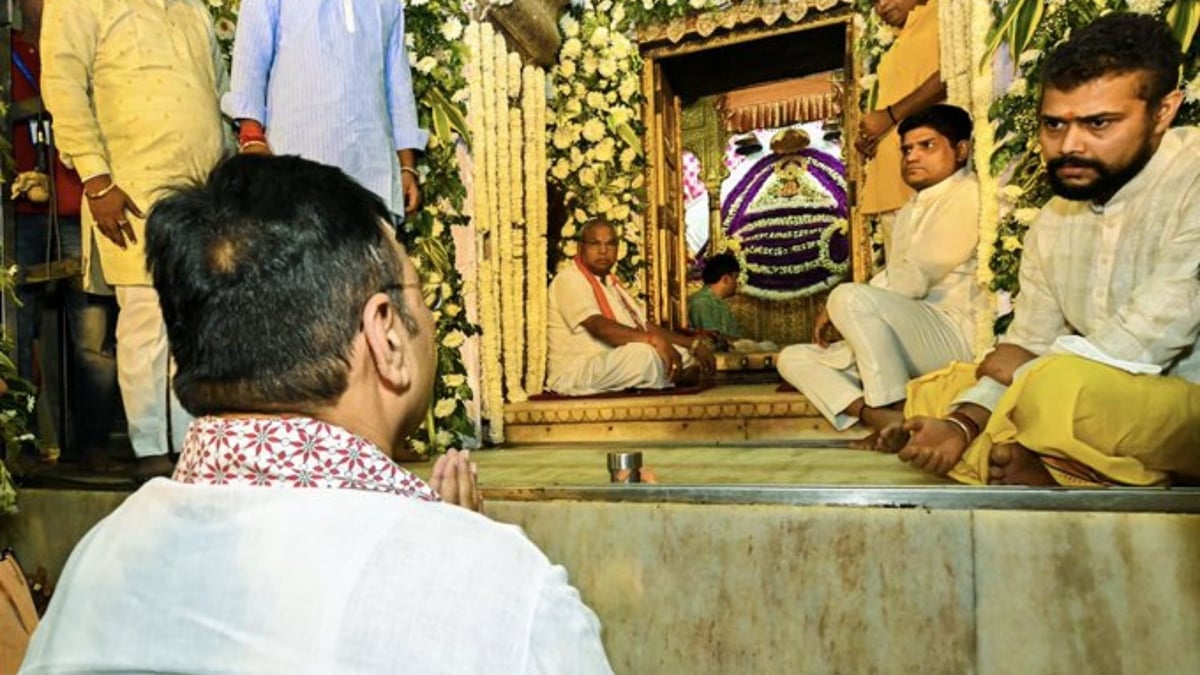
Rajasthan Chief Minister Bhajanlal Sharma arrived in Sikar district for a crucial two-day official visit, marking a significant administrative and spiritual journey aimed at assessing regional development and pilgrim management. The primary focus of his itinerary centered upon the holy town of Khatushyamji, a globally renowned spiritual destination that attracts millions of devotees annually from across India and abroad. The Chief Minister's presence in the region underscores the state administration's proactive stance on maintaining public order, civic infrastructure, and seamless crowd regulation at major religious epicenters.
Khatushyamji holds immense historical, cultural, and spiritual significance within the Hindu faith, particularly in the Shekhawati region of Rajasthan and the broader Northern Indian belt. Dedicated to Barbarika, revered as Khatushyam Ji, the temple sees colossal surges of footfall during holy occasions, Ekadashi fairs, and regular weekends. The delicate balance between preserving ancient religious traditions and managing modern urban logistics requires constant administrative oversight, making high-level ministerial visits vital for identifying infrastructural bottlenecks and implementing timely corrective measures.
During his visit, the Chief Minister conducted a comprehensive review of the ongoing infrastructural arrangements, crowd management protocols, and safety mechanisms surrounding the temple complex. While specific financial outlays and logistical metrics continue to be monitored by local district collectorates, the core focus remains on preventing congestion, enhancing medical emergency response times, and expanding holding areas for devotees standing in long queues. The integration of advanced technological surveillance, automated queue management, and robust barricading forms the bedrock of the state's logistical strategy for the shrine.
Local stakeholders, temple priests, regional traders, and pilgrim welfare associations welcomed the Chief Minister's direct intervention, expressing optimism that heightened governmental focus will translate into better commercial and spiritual experiences. Representatives of the trading community noted that an uninterrupted and safe flow of devotees directly boosts the local economy, hospitality sectors, and small-scale handicrafts businesses. Meanwhile, administrative officials assured the leadership that all operational directives issued during the tour will be executed with immediate effect and stringent compliance.
The broader geographical and economic impact of this visit extends across neighboring administrative jurisdictions, including the newly formed Kotputli-Behror district, which serves as a major transit corridor for pilgrims traveling from the national capital region and Haryana towards Sikar. The arterial roadways connecting Kotputli and Behror to Khatushyamji experience intense vehicular traffic during peak pilgrimage seasons, necessitating coordinated inter-district traffic management, highway patrolling, and wayside amenities to ensure passenger safety and prevent highway gridlocks.
In response to the Chief Minister's explicit directives, local law enforcement and municipal authorities have intensified security audits, fire safety inspections, and sanitation drives across all guest houses, dharamshalas, and commercial establishments surrounding the temple. District officials have been tasked with maintaining round-the-clock surveillance through dedicated control rooms, ensuring that emergency medical personnel and ambulances remain stationed at strategic points along the primary approach routes to handle any unforeseen contingencies swiftly.
Looking ahead, the state administration plans to roll out long-term master planning for Khatushyamji to accommodate the exponential growth in pilgrim numbers anticipated over the coming years. This forward-looking approach includes widening approach roads, developing multi-level parking facilities, and upgrading civic utilities to match national standards of religious tourism management. Public expectations remain high as the state government translates these high-level directives into ground-level execution, ensuring that every devotee's spiritual journey is safe, dignified, and memorable.
