
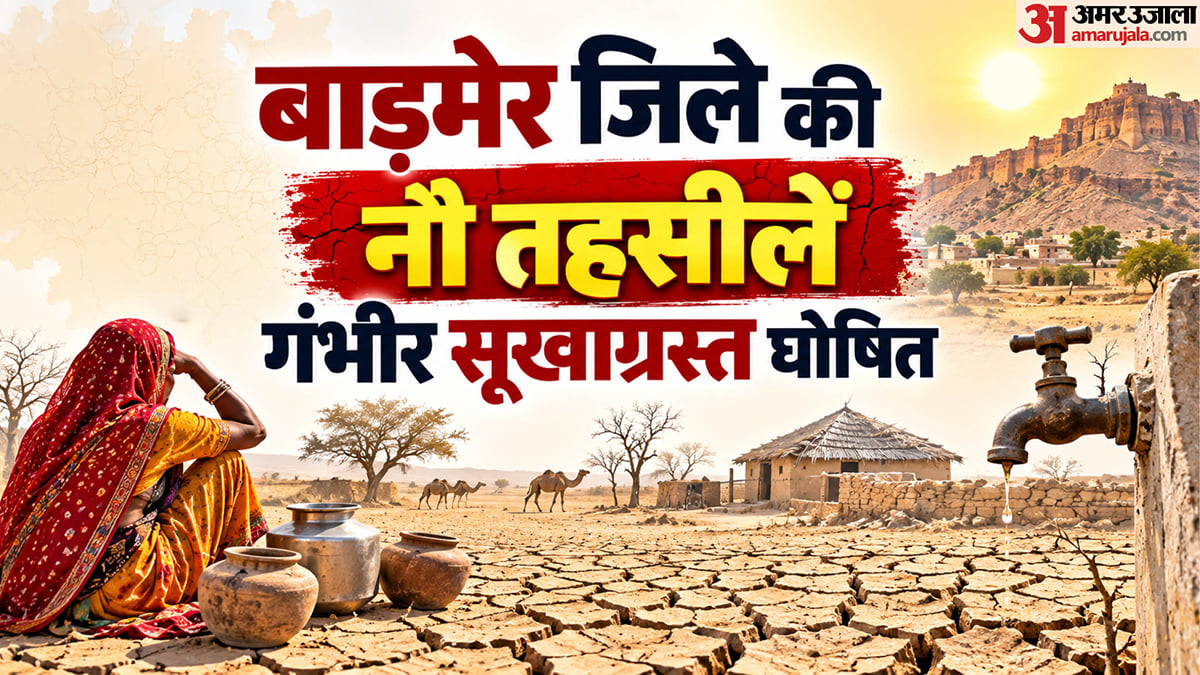
The Government of Rajasthan has officially declared nine tehsils within the Barmer district as severely drought-affected for the kharif crop year 2026. This critical decision comes in the wake of deficient seasonal rainfall, which has triggered an alarming water crisis across the region. The agricultural and pastoral communities in these designated areas are facing unprecedented challenges as local water reserves deplete rapidly, threatening both livelihoods and animal husbandry.
Historically, the Barmer region has faced climatic vulnerabilities, but the current dry spell during the kharif crop year 2026 has intensified the agrarian distress to critical levels. The failure of adequate monsoon showers has left vast expanses of agricultural land parched, preventing successful sowing and destroying standing vegetation that typically serves as vital fodder for livestock during the drier months.
As part of the immediate administrative response to this unfolding emergency, the state government has mandated the establishment of 10 dedicated fodder depots across the affected tehsils. These strategic depots are designed to ensure a steady and subsidized supply of animal feed, directly addressing the survival needs of pastoralists who constitute a major portion of the local economy and depend entirely on their livestock for sustenance.
Local pastoralists, community leaders, and agricultural representatives have expressed deep concern over the escalating crisis, emphasizing the urgent need for timely logistical support. Many stakeholders have highlighted that without immediate intervention, the scarcity of water and fodder could lead to a massive distress migration of cattle and severe economic losses for families whose generational wealth is tied to animal rearing.
While the administrative measures currently focus heavily on Barmer, the broader regional implications resonate across neighboring administrative districts, including communities connected to Kotputli-Behror. Agricultural economists note that regional weather anomalies and widespread drought conditions often create ripple effects in state markets, influencing the overall availability and pricing of agricultural commodities, dairy products, and fodder supplies throughout Rajasthan.
In response to the crisis, district authorities and revenue department officials have been mobilized to conduct detailed field surveys and assess the full extent of crop damage across the nine affected tehsils. These ground-level assessments are crucial for formulating further relief packages, ensuring transparency, and directing resources precisely to the most vulnerable households suffering from the agricultural shortfall.
Looking ahead, the state government has outlined a comprehensive monitoring framework for the remainder of the kharif crop year 2026 to oversee the functioning of the 10 fodder depots and manage water distribution tankers. Public expectations remain high for sustained administrative vigilance, timely financial assistance, and long-term infrastructure development to mitigate the recurring impacts of severe droughts in western Rajasthan.
