
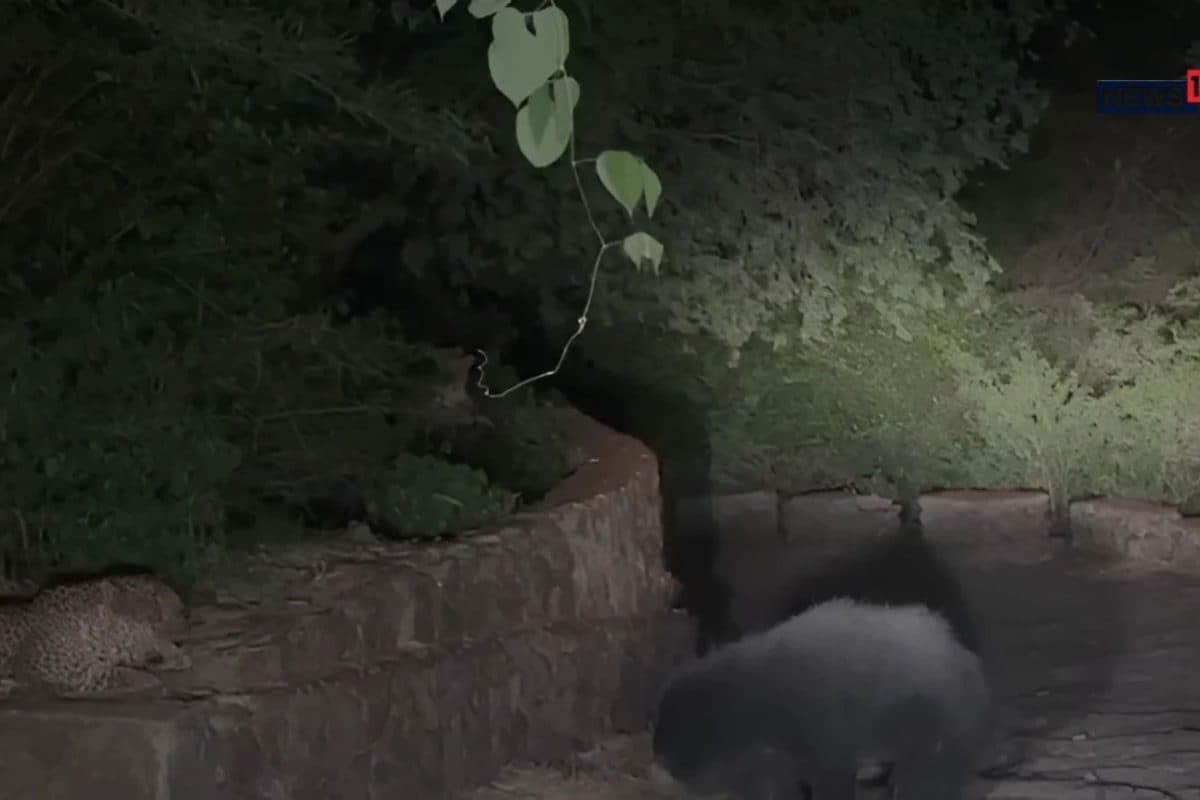
In a striking display of wildlife behavior, a rare and dramatic nocturnal confrontation between a wild bear and a leopard was captured on camera in the forested terrain of Sirohi district. The incident, which took place within the sensitive ecological zones of the Mount Abu region, unfolded along a quiet jungle trail under the cover of darkness. Such direct territorial clashes between large apex predators and omnivores in natural habitats offer a rare glimpse into the complex dynamics of forest ecosystems.
The region of Sirohi and its surrounding hilly tracts have historically been recognized as vital corridors for diverse wildlife, supporting significant populations of leopards, bears, and other indigenous fauna. The ecological makeup of these protected and semi-protected terrains naturally creates overlapping territories where different species frequently cross paths. However, direct visual documentation of active aggression and defensive maneuvers between these specific animals remains exceptionally uncommon, elevating the significance of this documented encounter.
According to the detailed visual evidence captured during the event, the wild bear was moving along a customary jungle path when it detected the presence of a leopard perched stationary atop an elevated stone wall. Demonstrating immediate territorial alertness, the bear shifted instantly into an aggressive posture and launched a swift, intimidating lunge toward the leopard. The sheer intensity of the bear's charge caught the feline off guard, compelling the leopard to remain crouched defensively on the wall rather than engaging in an open counter-offensive.
Wildlife observers, conservationists, and local forest officials analyzing the digital footage have noted that such aggressive displays are typically driven by competition for space, food sources, or the defense of personal territory. The deep, resonant growls of the bear echoed through the quiet woodland, creating a tense atmosphere that ultimately culminated in the bear moving onward, leaving the startled leopard stranded on the structure. The stark contrast between the charging bear and the cornered leopard highlights the unpredictable nature of predator-prey and inter-species dynamics in the wild.
The ripple effects of this viral wilderness event have resonated far beyond the immediate boundaries of the Sirohi and Mount Abu regions, capturing the imagination of nature enthusiasts nationwide. While the geography of this incident remains distinct from northern districts like Kotputli-Behror, rural and forested communities across the state closely monitor such wildlife movements due to ongoing concerns regarding human-wildlife coexistence, agricultural safety, and the protection of livestock in peripheral forest zones.
In response to the rising frequency of human-animal interactions and the circulation of such compelling wildlife footage, regional forest authorities and administrative bodies maintain continuous vigilance across vulnerable corridors. Forest department officials routinely issue safety advisories to local residents, tourists, and travelers frequenting forested stretches, urging heightened caution during dusk and nocturnal hours when wild animals are predominantly active in their natural domains.
Looking ahead, wildlife management experts emphasize the critical need for enhanced monitoring systems, scientific tracking, and public awareness campaigns to preserve the delicate ecological balance in habitats like Sirohi. As digital documentation of wildlife behavior becomes increasingly prevalent, authorities intend to utilize these insights to bolster conservation frameworks, safeguard local communities, and ensure the unhindered yet safe passage of indigenous fauna within their protected home ranges.
