
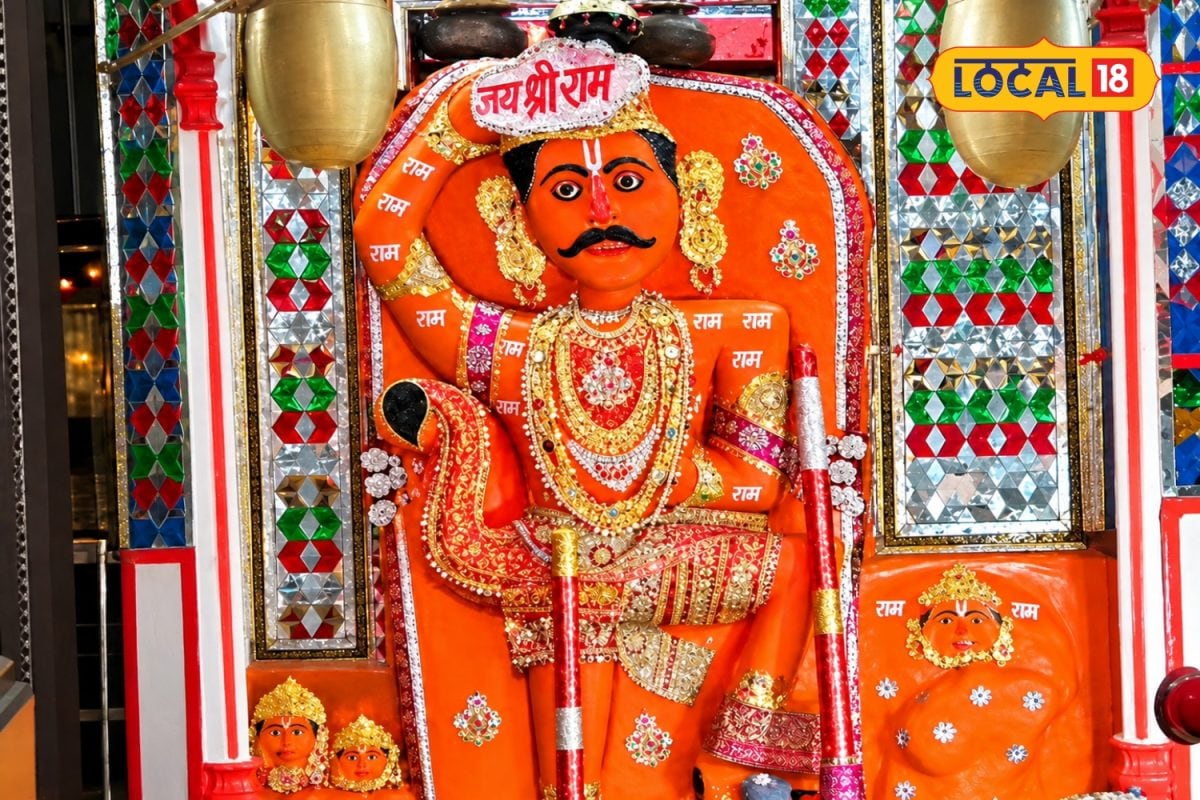
In the vast cultural and spiritual landscape of Rajasthan, the Nagaur district holds a prominent place due to its array of unique and historical shrines. Among these, a particularly distinctive temple dedicated to Lord Hanuman has captured the profound attention of devotees from far and wide. This specific sacred site is renowned for housing a rare depiction of Hanuman featuring moustaches and a dancing posture, alongside other unique forms such as one-eyed Hanuman and Imli Wale Balaji.
Delving into the historical context and the origins of this revered site, local resident Shyam Borana sheds light on its deep-rooted past. According to the historical accounts and traditional narratives shared by community members, this temple was established approximately 500 years ago by a revered saint. The foundational phase of the temple is deeply intertwined with a mysterious and miraculous event that occurred centuries ago, leaving an enduring spiritual mark on the region.
The ground reality surrounding the temple reflects a vibrant culture of unwavering faith and devotion among the local population and visiting pilgrims. While specific commercial metrics or financial stakes are not the primary focus, the massive influx of devotees visiting the shrine carries substantial cultural and religious value for Nagaur. Pilgrims traditionally visit the sacred premises to offer coconuts, a ritual that is firmly believed by the community to fulfill all cherished desires and alleviate worldly troubles.
Community perspectives and stakeholder voices further enrich the narrative of this ancient shrine. Local resident Shyam Borana emphasizes that the spiritual legacy of the temple has been meticulously preserved across generations through oral traditions and collective community reverence. Devotees who visit the sacred precinct often share personal accounts of divine grace, reinforcing the sanctity and the mystical aura that surrounds the moustached and dancing deity.
Examining the broader regional impact, the presence of such unique religious landmarks significantly boosts spiritual tourism and cultural heritage awareness in Rajasthan. While the immediate geographical location is Nagaur, the fame of these distinct temples resonates across neighboring districts, drawing curious travelers, historians, and devout pilgrims alike. This steady movement of visitors fosters a strong sense of cultural continuity and local identity within the broader region.
From an administrative and structural standpoint, the preservation of such ancient religious sites relies heavily on community stewardship and traditional caretakers. Local authorities and temple committees work in tandem to manage the steady flow of pilgrims, ensuring that the historical architecture and spiritual sanctity of the nearly 500-year-old establishment are adequately maintained for future generations.
Looking toward the forward outlook, public expectations remain high regarding the continued protection and promotion of this unique heritage site. As awareness of the dancing and moustached Hanuman spreads through modern documentation and traditional storytelling, the shrine anticipates an even greater number of visitors. The enduring faith of the people, anchored by historical milestones like the 500-year legacy highlighted by Shyam Borana, ensures that the temple will remain a cornerstone of spiritual devotion in Rajasthan.
