
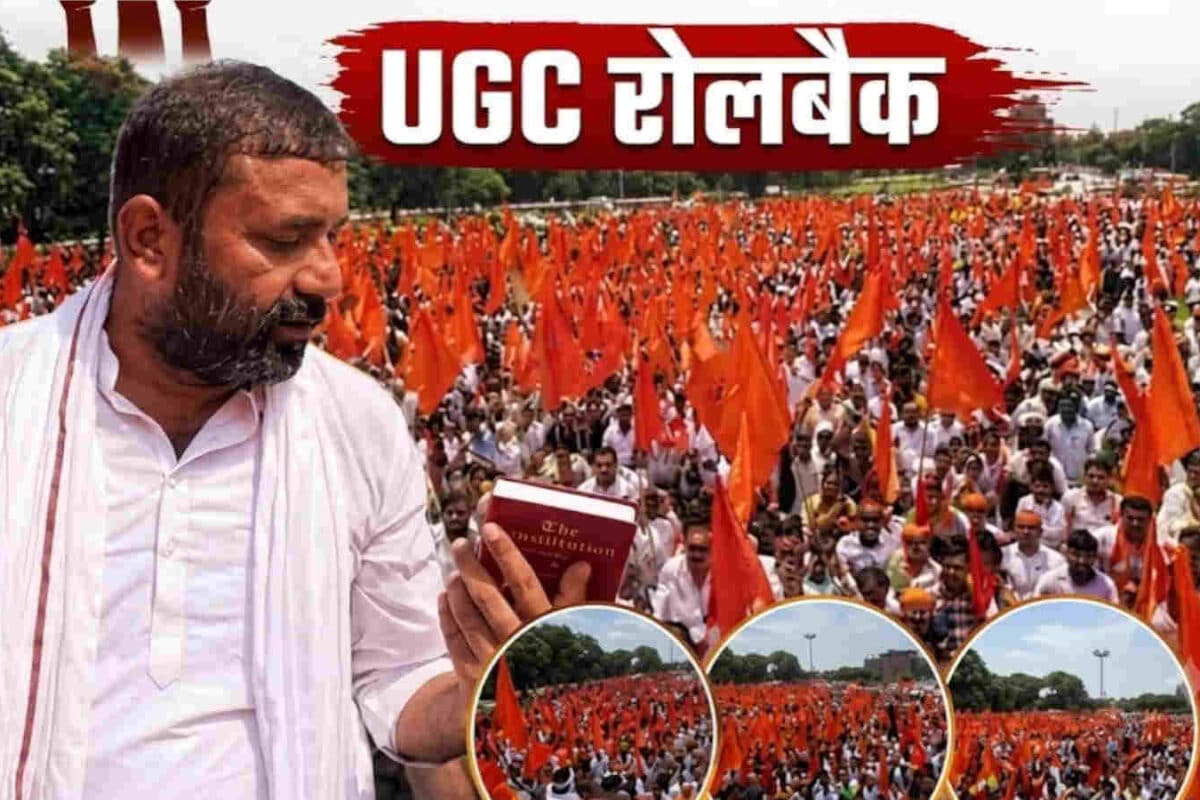
The political landscape of the Rajasthan local body elections has experienced a definitive tremor following the deep penetration of the UGC rollback movement spearheaded by Shri Rajput Karni Sena. As urban and rural bodies gear up for the electoral process, political analysts have closely monitored the shifting loyalties among traditional voter bases. The resonance of the movement, which initially gained momentum from the religious town of Deshnoke in Bikaner, has now permeated deep into the political nerve centers of the state, directly influencing municipal ward dynamics.
Tracing the genesis of this political ripple, the campaign began under the direct leadership of Shri Rajput Karni Sena President Mahipal Singh Makrana. The agitation, centered around the contentious University Grants Commission rollback demands, struck an immediate chord with community members and allied social organizations. What started as a focused ideological protest steadily transformed into an assertive grassroots mobilization strategy, systematically challenging established political equations across multiple districts in Rajasthan.
As the campaign trail traversed through various regions, its empirical footprint became increasingly visible in specific urban constituencies. In the capital city of Jaipur, particularly within the Rajput-dominated assembly segments of Jhotwara and Vidyadhar Nagar, the impact manifested palpably during the campaign phases. Observers noted unusual voting inclinations and pronounced dissatisfaction among key demographic cohorts, translating directly into heightened activity and support for independent candidates contesting the local body elections.
Weighing in on the ground reality, Mahipal Singh Makrana formally asserted that the collective appeal issued by the Karni Sena successfully resonated with Rajput and other upper-caste communities. According to his public assessments, these voters consciously chose to distance themselves from the ruling Bharatiya Janata Party as a mark of protest, redirecting their considerable electoral weight toward independent contenders instead. This calculated shift has added an unpredictable dimension to municipal ward results across the affected zones.
Looking closely at the broader regional implications within districts such as Kotputli-Behror and surrounding municipal jurisdictions, local communities and political watchers have debated the long-term fallout of this caste-based voter recalibration. The local economy and municipal governance expectations are intricately tied to community representation, and any fracture in traditional party loyalties compels local leadership to re-evaluate their outreach strategies, addressing deep-seated grievances before subsequent electoral cycles.
In sharp contrast to the claims advanced by the Karni Sena leadership, representatives of the Bharatiya Janata Party have categorically rejected assertions of any substantial voter erosion. Official party spokespersons maintained that the organizational machinery remains robust and that the core electorate continues to repose absolute faith in governance policies and developmental agendas, dismissing the reported shift toward independent candidates as localized and ephemeral.
As the administrative machinery wraps up the electoral procedures and public expectations settle around the newly emerging municipal leadership, the political ramifications of the UGC rollback movement will undoubtedly be scrutinized for years to come. Future political planning and coalition strategies within the state will need to factor in the demonstrated capacity of grassroots social movements to influence urban electoral outcomes.