
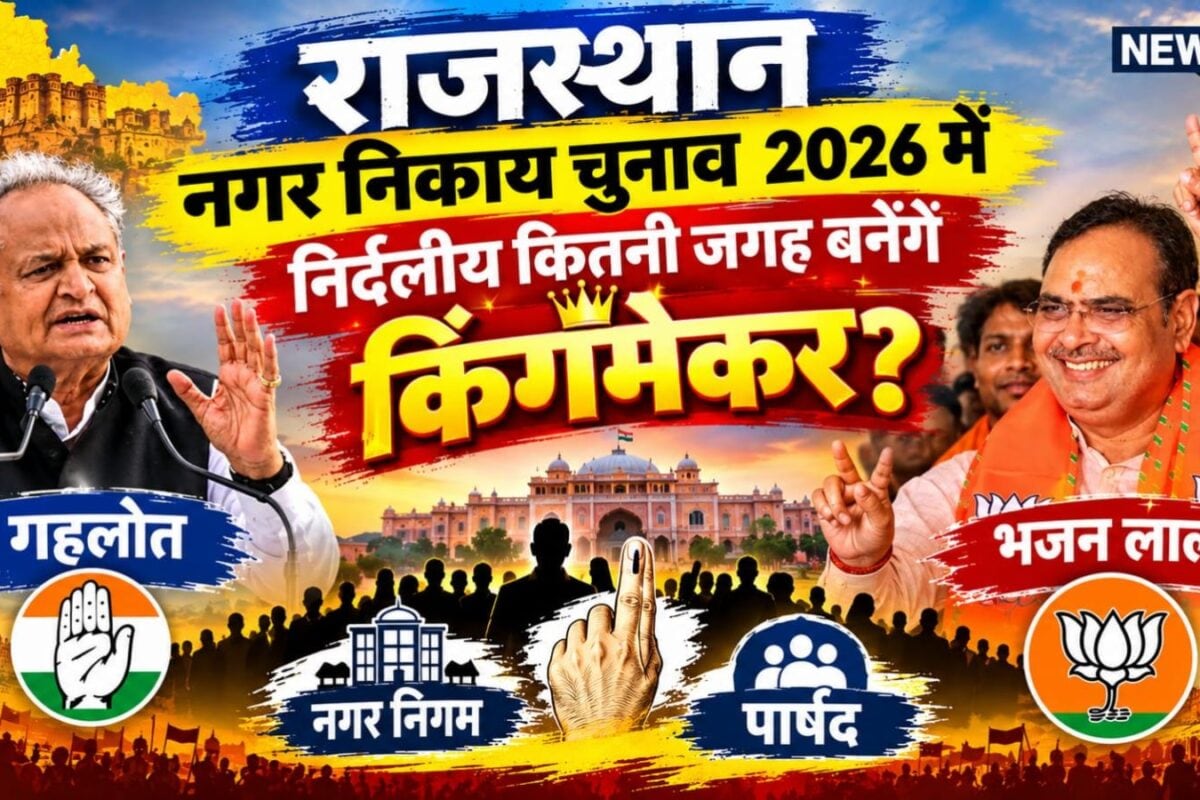
The political arena of Rajasthan has witnessed a monumental shift following the declaration of the Rajasthan local body elections 2026 results. While the Bharatiya Janata Party has emerged as the single largest party, and the Indian National Congress has firmly secured its position as the second-largest political force, the true narrative of this election cycle belongs to the independent candidates. Defying conventional political predictions, these non-affiliated contestants have captured a staggering number of wards, fundamentally altering the equation for governance at the grassroots level.
A retrospective analysis of previous local body elections in the state reveals that independent candidates have traditionally held pockets of local influence, driven by personal rapport, community leadership, and localized grievances. However, the sheer scale of their success in 2026 is unprecedented in recent electoral history. As the official results were tallied across the state, it became evident that voters deliberately chose local faces over rigid party symbols, signaling a deep-seated desire for decentralized representation and accountability at the municipal tier.
Delving into the exhaustive statistical matrix released by the election authorities, out of a total of 10,244 contested wards across various municipalities, independent candidates successfully captured 2,273 seats. This translates to an impactful share of approximately 22 percent of the total electoral seats. This substantial numerical presence ensures that neither the Bharatiya Janata Party nor the Congress can unilaterally command the required majority to form boards in several crucial municipal corporations and councils without actively courting these independent victors.
Political analysts and regional observers note that the telephone lines of successful independent candidates are already ringing continuously as major political parties scramble to secure their allegiance. Local community leaders, traders, and civic activists have expressed mixed reactions, with many emphasizing that independent dominance could either lead to unprecedented local development through rigorous bargaining for civic amenities or result in administrative instability if ideological alignments shift frequently during municipal proceedings.
Within the specific context of regional development, districts and urban pockets mirroring the socio-economic dynamics of Kotputli-Behror are experiencing heightened political activity. The local economy and municipal administration in these areas rely heavily on stable civic boards to approve budgets, sanction infrastructure projects, and manage essential public utilities. Consequently, the reliance of major political entities on independent victors places these localized leaders at the absolute center of upcoming developmental decision-making processes.
Administrative machinery across the state has begun preparations for the subsequent phases of democratic transition, including the formal administration of oaths to the newly elected members and the scheduling of mayoral and chairperson elections. State election observers and statutory officials are closely monitoring compliance with municipal guidelines to ensure transparency, prevent undue political coercion, and facilitate a smooth procedural transition as these fragmented councils prepare to elect their executive leadership.
Looking ahead, the upcoming weeks will test the political acumen and coalition-building capabilities of both major political parties as they negotiate power-sharing arrangements with the newly empowered independent leaders. Public expectations remain exceptionally high regarding water supply, sanitation, road infrastructure, and urban renewal. The ultimate success of the municipal boards formed in 2026 will depend heavily on how effectively these independent kingmakers leverage their newfound legislative weight for the genuine betterment of their respective urban constituencies.