
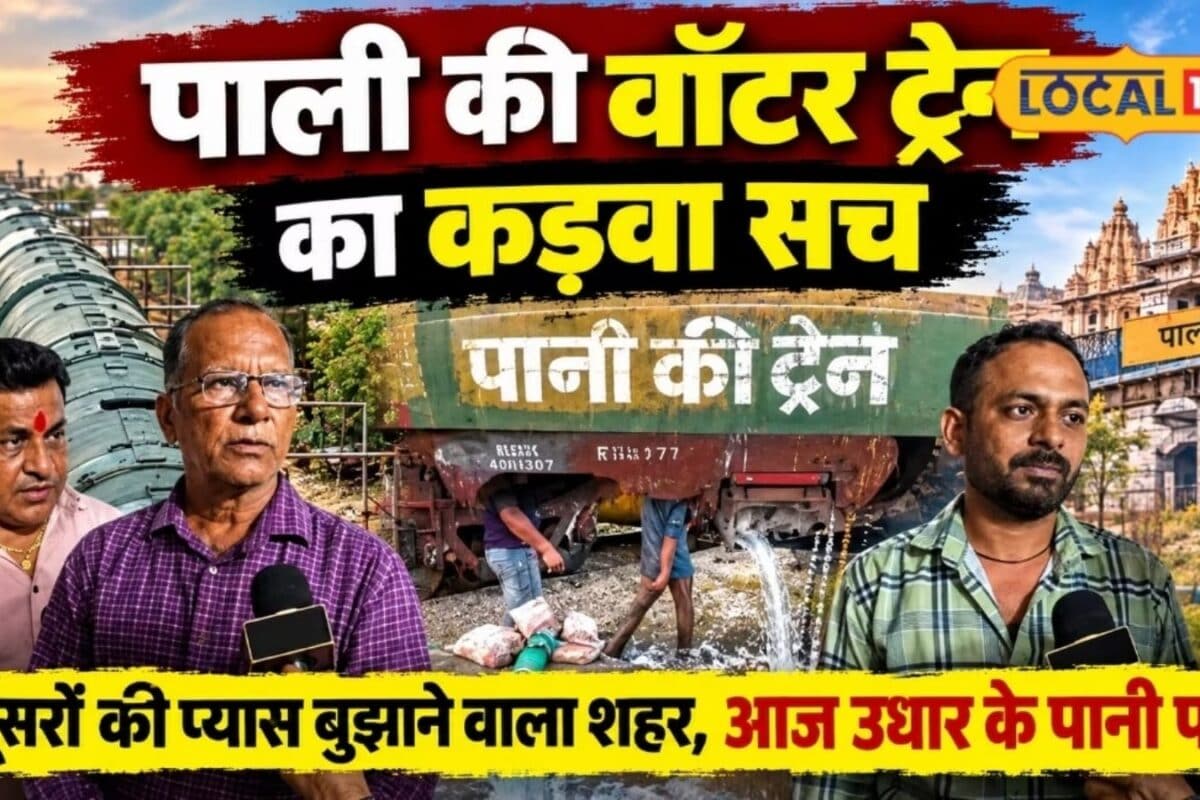
Pali is once again descending into a severe and alarming drinking water crisis as deficient monsoon rainfall severely impacts the inflow into the Jawai Dam. The city, which has historically stood as a vital economic and industrial hub in the region, now faces drastically reduced water supply across numerous localities. Municipal water distribution schedules, which previously ensured daily supply, have deteriorated to once every two or three days, leaving residents grappling with acute shortages and mounting daily hardships.
This reliance on emergency measures is not a novel phenomenon for Pali, as the city has a long history of depending on water trains to quench its thirst during drought-like conditions. The logistical tradition of running a water train from Jodhpur to Pali commenced back in 2002 and has been repeatedly invoked over the decades. Similar emergency interventions became critically necessary in the years 2009, 2016, 2019, 2021, and 2022, highlighting a persistent vulnerability in the region's water infrastructure that continues to plague local administrations.
Examining the ground reality reveals staggering financial and logistical challenges associated with operating these emergency water trains. The state administration pays the railway approximately 20 lakh rupees daily for transportation, yet a single train manages to deliver only 20 to 25 lakh liters of water per trip. When weighed against Pali's staggering daily requirement of over 5 crore liters, this transported volume represents a mere fraction of the actual demand, underlining the immense gap between supply and consumption.
Local citizens, community leaders, and business stakeholders have expressed profound frustration over the recurring reliance on temporary stopgap measures. Residents point out that while crores of rupees are funneled into railway freight payments during every crisis cycle, no substantive, long-term hydraulic or infrastructural overhaul has been successfully executed to guarantee self-sufficiency for the city, leaving households and commercial establishments perpetually vulnerable to erratic climatic patterns.
The cascading impact of this water scarcity extends far beyond domestic households, severely affecting the broader regional economy and surrounding communities. Industrial units, local traders, and agricultural networks dependent on the local water table face significant operational disruptions, which in turn threaten employment and economic stability throughout the wider district and its neighboring zones.
Administrative authorities and municipal bodies are currently scrambling to manage the crisis through rationing and emergency distribution frameworks, attempting to equitably distribute the limited water yielded by the Jawai Dam. Officials are reviewing the logistical feasibility and financial implications of reinstating the water train service from Jodhpur as a last resort to stave off absolute drought conditions within the municipal limits.
Looking ahead, public expectations and expert consensus strongly point toward the urgent necessity of formulating a permanent, visionary hydrological roadmap for Pali. Rather than repeatedly draining public exchequers on short-term freight payments to the railway every few years, sustainable water management policies, inter-basin water transfer projects, and rigorous watershed conservation must be prioritized to permanently insulate the city from future climatic shocks.