
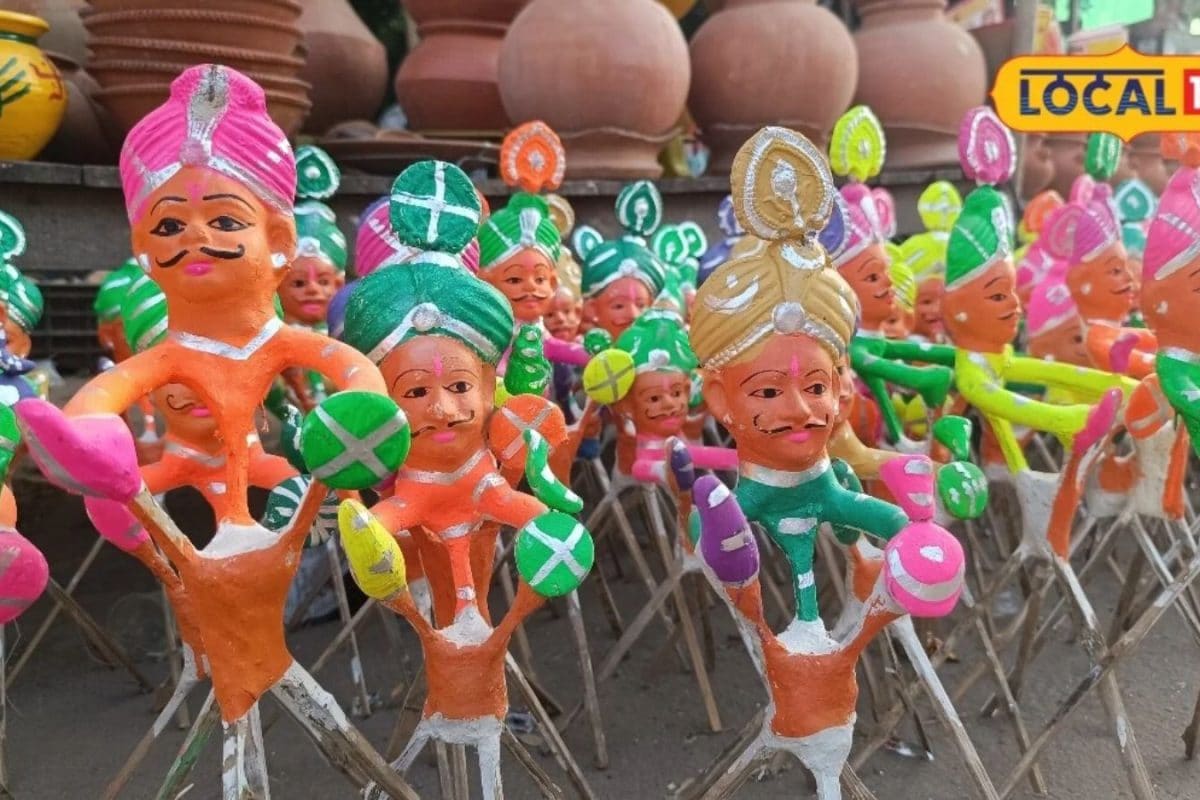
In the culturally rich Braj region, the traditional festival spanning from Dussehra to Kartik Purnima brings to light an ancient narrative from the Mahabharata era. This festival revolves around the incomplete love story of the valiant hero Barbarik and his beloved Jhanjhi, which has been preserved through generations of folklore and customary practices. The observance captures the profound emotional gravity and historical resonance of an era defined by great sacrifices and unfulfilled earthly promises.
According to the historical and mythological context of this tradition, Barbarik had promised to marry Jhanjhi before departing for the great battlefield. However, bound by a solemn vow to his mother, he made the supreme sacrifice of offering his head to Lord Krishna to ensure the righteousness of the war. Stricken with profound grief upon learning of Barbarik's supreme sacrifice, Jhanjhi took samadhi, thereby sealing their mortal romance in eternal tragedy and immortalizing their devotion.
Despite the tragic conclusion of their mortal journey, the collective cultural memory of the Braj region ensures that their bond is celebrated annually. During the designated period between Dussehra and Kartik Purnima, local traditions manifest through specific rituals where Tesu represents Barbarik and Jhanjhi represents his devoted lover. Through these structured ceremonial enactments, the community preserves the narrative fabric of their legendary romance.
Community elders, cultural custodians, and local participants actively engage in observing these rituals, emphasizing the importance of passing down such deep-rooted legends to younger generations. The observance serves not merely as a retelling of a tragic romance, but as a community-driven reaffirmation of cultural identity, loyalty, and the ultimate price of promises made in times of war and peace.
The regional impact of this festival within the broader cultural landscape of Uttar Pradesh and the Braj area extends to fostering communal harmony and historical awareness. Local artisans and families participate in crafting and honoring the effigies of Tesu and Jhanjhi, reinforcing economic and social ties through shared festive participation and collaborative community events.
While traditional festivals often require administrative oversight for crowd management and public safety during large gatherings, the celebration of Tesu and Jhanjhi largely remains an intimate yet culturally significant domestic and community-led ritual. Local committees and cultural organizations ensure that the authentic forms of the traditional songs and ceremonial steps are accurately transmitted without distortion.
Looking forward, community leaders and cultural historians anticipate that these ancient customs will continue to thrive despite modernization. By maintaining the annual symbolic marriage of Tesu and Jhanjhi from Dussehra to Kartik Purnima, the residents of Braj ensure that the legendary sacrifice of Barbarik and the enduring devotion of Jhanjhi remain perpetually alive in collective consciousness.
