
In an extraordinary political development that has sent ripples through local political circles, the Dholpur Municipal Council witnessed a stunning electoral outcome where the party with the highest number of ward victories was ultimately shut out from the top executive position. The municipal body comprises a total of sixty wards, setting the stage for a high-stakes battle for local dominance among competing political factions.
The foundational arithmetic of the municipal house initially favored the Indian National Congress, which demonstrated significant electoral strength by capturing twenty-seven seats in the ward elections. This commanding tally established Congress as the single largest political formation within the council, theoretically positioning them as the frontrunners to claim the coveted chairman's chair and steer the municipal administration for the upcoming term.
Despite holding the numerical advantage in ward representation, the Congress party failed to translate its majority into ultimate administrative control due to complex political realignments and strategic maneuvers within the council hall. The dynamics of local body elections often transcend simple party tallies, allowing alternative political pathways and coalition building to alter the expected outcomes drastically.
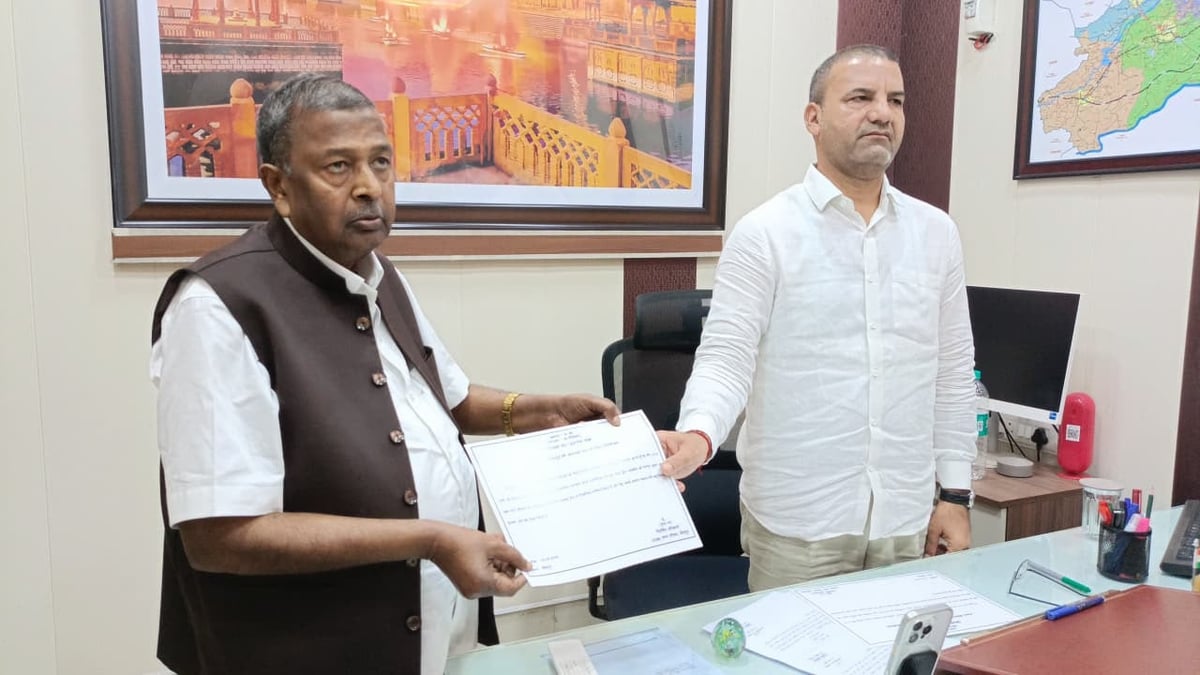
In a surprising twist that defied conventional political expectations, Girish Garg of the Bharatiya Janata Party emerged as the ultimate victor in the contest for the chairman's office. What makes this achievement particularly remarkable is the fact that Girish Garg had not contested the initial councillor elections from any of the municipal wards, yet he successfully secured the highest civic office.
The election proceedings culminated with Girish Garg being elected unopposed to the position of chairman, bypassing the traditional electoral hurdles typically faced by candidates seeking direct popular mandates at the grassroots ward level. This outcome underscored the specific statutory provisions and institutional mechanisms that govern municipal leadership selections in the state of Rajasthan.
Political observers and local analysts have extensively debated the implications of this election, noting how internal party strategies, tactical alliances, and adherence to municipal election laws can dramatically reshape governance outcomes. The transition of power in Dholpur serves as a striking illustration of how legislative provisions regarding executive posts can produce unexpected leadership results regardless of individual ward-level tallies.
As the newly constituted municipal administration under the leadership of Chairman Girish Garg takes charge, attention now shifts toward the execution of civic duties, urban development projects, and administrative accountability. The citizens of Dholpur and local stakeholders remain watchful regarding how the leadership will address urban infrastructure and municipal services following this fiercely contested political chapter.