
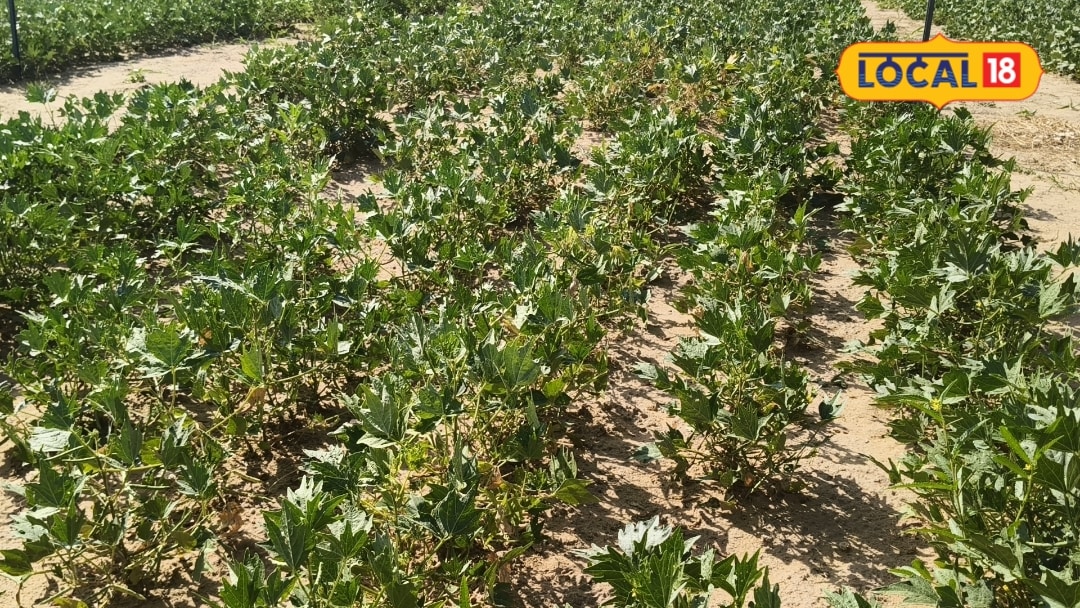
In a landmark development for dryland agriculture, Bikaner's resilient moth bean (moth) is poised to achieve global recognition. Swami Keshwanand Rajasthan Agricultural University, located in Bikaner, Rajasthan, has officially dispatched more than 70 distinct moth bean genotypes to international research destinations. This ambitious initiative aims to test the production capacity and resilience of these indigenous crop varieties under diverse climatic conditions and in water-scarce regions across the globe, marking a significant milestone in agricultural research.
Moth bean, traditionally cultivated in the hyper-arid zones of Western Rajasthan, is renowned for its exceptional drought tolerance and nutritional profile. Historically, the crop has been the backbone of rainfed farming in Bikaner and surrounding districts, surviving on minimal moisture where other crops fail. Over the decades, researchers at Swami Keshwanand Rajasthan Agricultural University have meticulously preserved and developed these genotypes to enhance yield and disease resistance, laying the groundwork for this international scientific exchange.
The logistics of sending over 70 genotypes abroad involve rigorous phytosanitary clearances and international scientific protocols. These genotypes represent a vast genetic diversity, selected specifically for their ability to withstand extreme heat and prolonged dry spells. By testing these varieties in different international locations, scientists hope to gather critical data on how Rajasthan's native crops perform under varying soil compositions and atmospheric pressures, which could eventually lead to global cultivation rights and commercial export opportunities.
Agricultural scientists and researchers at the university emphasize that this move is not just about academic research but about addressing global food security in the era of climate change. According to experts involved in the project, the successful adaptation of Bikaner's moth bean in foreign soils will validate the traditional farming wisdom of Rajasthan on a global stage. Local farmers have expressed immense pride, noting that their traditional crop, which was once considered a humble poor man's food, is now being recognized as a potential solution to global aridity challenges.
The implications of this international venture extend far beyond Bikaner, directly impacting agrarian communities in the Kotputli-Behror district and broader Rajasthan. As a region that frequently grapples with depleting groundwater levels and erratic monsoon patterns, Kotputli-Behror stands to benefit immensely from advanced research on drought-resistant crops. A successful global trial could lead to improved seed varieties being reintroduced locally, enhancing crop yields, stabilizing farmer incomes, and establishing Kotputli as a key hub for high-quality moth bean cultivation and processing.
The administration and agricultural departments of Rajasthan have welcomed this initiative, promising full policy support to facilitate such international collaborations. State officials are looking to establish robust supply chains and quality control mechanisms to ensure that if global demand rises, local farmers are equipped with the necessary infrastructure. Plans are also being discussed to set up specialized training programs for farmers in Kotputli-Behror and other districts to adopt scientific cultivation practices for these high-performing genotypes.
Looking ahead, the international trials are expected to yield preliminary data within the next few crop cycles. If the results are favorable, it will pave the way for formal bilateral agreements and commercial seed distribution networks. The long-term vision is to position Rajasthan as a global leader in climate-resilient agriculture, transforming the state's arid lands into a source of sustainable food solutions for water-stressed nations worldwide.