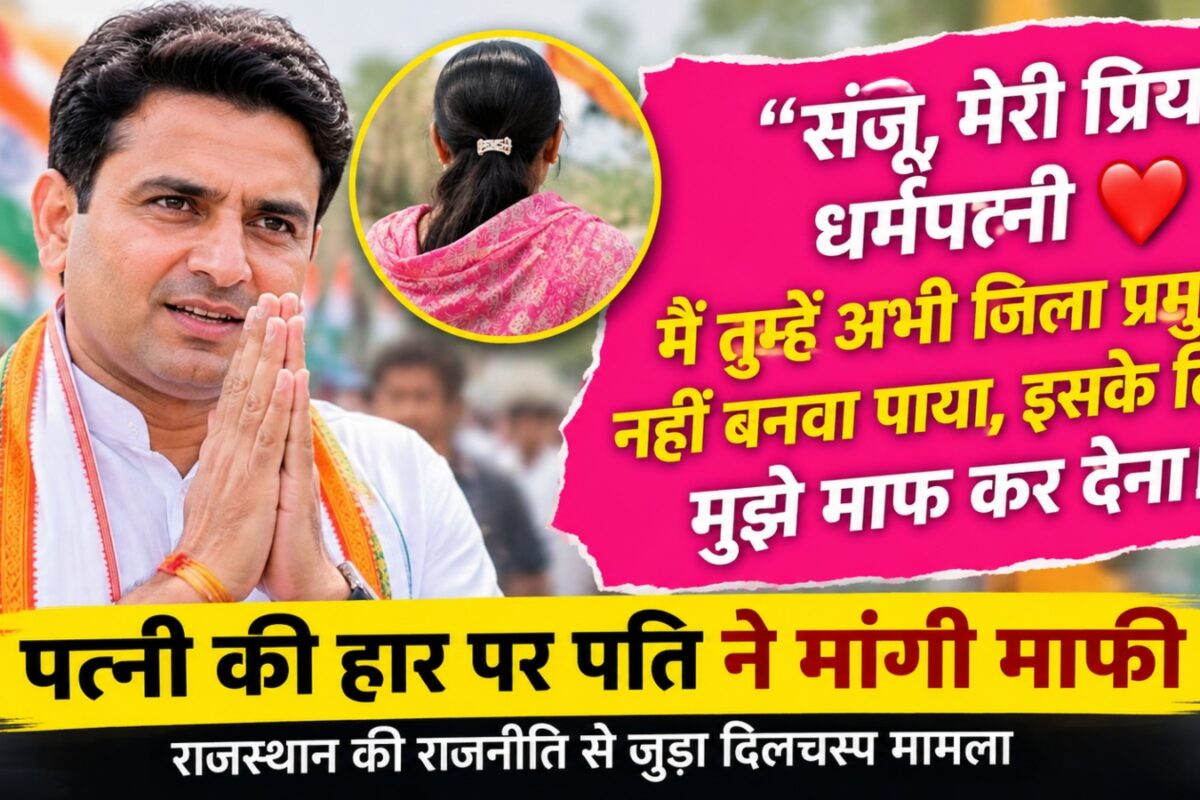
In the politically charged landscape of Rajasthan, a deeply emotional post shared on social media by a senior political figure in Alwar has drawn widespread attention from citizens and analysts alike. Bannaram Meena, the former Chairman of Saras Dairy, took to a popular social media platform to express his profound regret following the defeat of his wife, Santosh Meena, in the closely watched district head election. The emotional outpouring highlighted the intense personal and psychological toll that high-stakes local political contests can exact on candidates and their immediate families, transforming a routine administrative election into a deeply personal narrative of dashed expectations and familial remorse.
The historical context of this electoral battle traces back to the ambitious decision made by Santosh Meena to step away from a secure professional trajectory to enter the turbulent arena of public service and electoral politics. Demonstrating immense dedication to the political ambitions of the Bharatiya Janata Party in the region, Santosh Meena took the monumental step of opting for voluntary retirement from her official career when she still had approximately 13 years of service remaining. Such a career-defining sacrifice underscores the immense gravity with which candidates and their supporters approach these prestigious district-level leadership positions, viewing them as platforms for profound public influence and lasting community development.
However, the hard realities of grassroots electoral math delivered a stunning blow to the Bharatiya Janata Party camp when the final vote tallies were officially declared. In the decisive electoral showdown, Santosh Meena suffered a comprehensive defeat at the hands of the opposing Congress candidate, losing the contest by a significant margin of 23 votes. The final breakdown of the electoral tally revealed the extent of the political setback, with the Bharatiya Janata Party candidate securing a meager 8 votes in total. This stark numerical deficit not only highlighted the formidable consolidation of opposition forces but also shattered the high-level strategic calculations made by the party leadership in Alwar district.
In the immediate aftermath of this crushing defeat, the personal dimension of the political failure overshadowed party strategy, prompting Bannaram Meena to publish his heartfelt public message. Directly addressing his wife in the viral social media post, he wrote with profound anguish, 'Sanju, please forgive me, I could not make you the district head.' This raw display of vulnerability resonated deeply across digital networks throughout Rajasthan, triggering intense public discussions about the emotional burdens borne by political families. While the post was subsequently deleted by Bannaram Meena, who later offered explanations for its removal, the digital footprint of his emotional confession had already captured the imagination of the public.
The reverberations of this political defeat and the subsequent viral controversy extended well beyond the immediate boundaries of the election hall, touching the socio-political dynamics of the broader region, including Kotputli-Behror and neighboring districts. Local community members, political observers, and grassroots workers engaged in vigorous debates regarding the shifting equations of local governance and the viability of high-profile candidates who abandon secure government careers for volatile political adventures. The incident served as a stark reminder of the unpredictable nature of local body elections in Rajasthan, where party loyalties, internal realignments, and last-minute arithmetic can decisively upend the most carefully laid political strategies.
From an administrative and institutional standpoint, the district head election process in Alwar underscored the rigorous protocols and intense competitive pressures that govern local self-government institutions in the state. Election officials managed the polling and counting procedures under strict regulatory frameworks, ensuring transparency despite the high political stakes involved. The outcome demonstrated how statutory electoral mechanisms operate independently of the personal sacrifices made by candidates, reinforcing the reality that democratic mandates are ultimately determined by floor strength and numerical superiority within the electoral college rather than individual career sacrifices.
As the dust settles on the Alwar district head election controversy, the political landscape in the region prepares for the next phase of local governance and institutional rebuilding. For the Bharatiya Janata Party in Rajasthan, the episode serves as a critical learning experience regarding internal coordination, strategic planning, and the management of high-profile candidacies. Meanwhile, Santosh Meena and Bannaram Meena face a challenging period of personal and professional readjustment following the abandonment of her long-term career and the stinging electoral defeat, leaving the local political community to ponder the heavy personal costs of electoral ambition.