
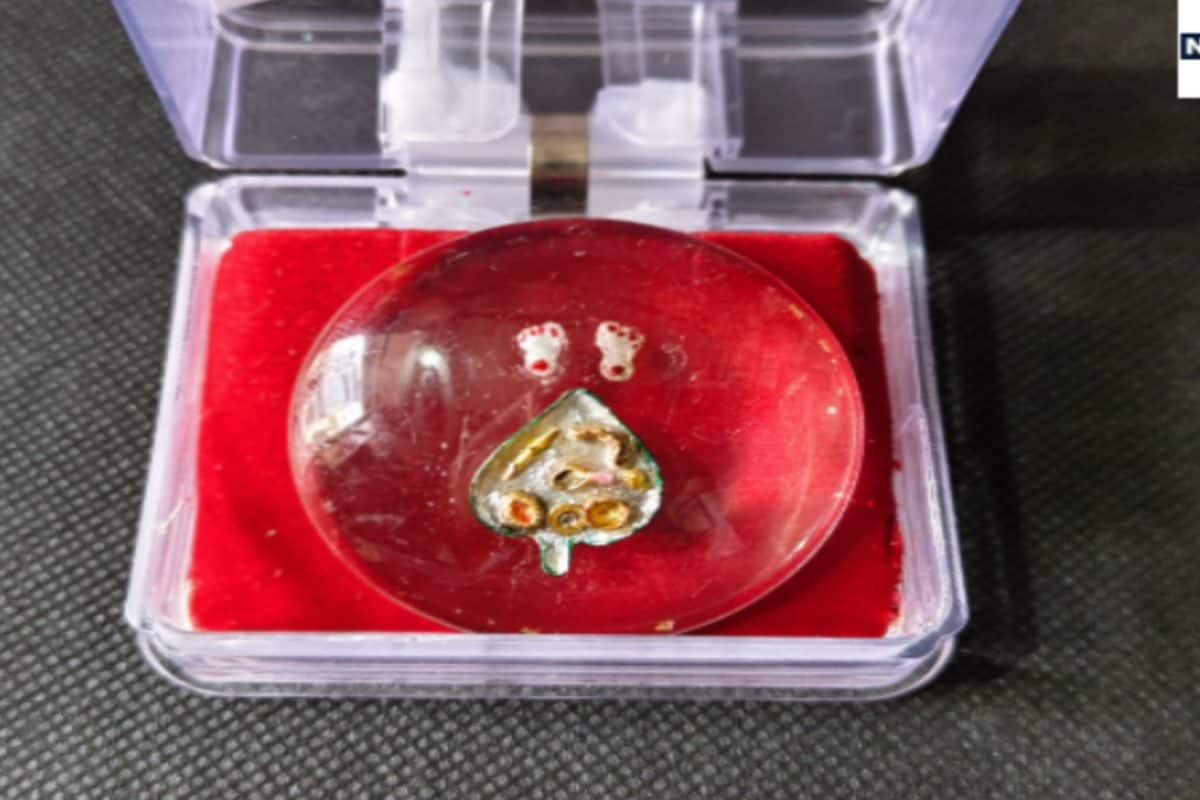
In a remarkable display of extraordinary craftsmanship, renowned international micro-gold artisan Iqbal Sakka, based in Udaipur, has unveiled his latest miniature masterpiece ahead of the festive season. The artist has successfully crafted a meticulously detailed silver worship plate measuring a mere one centimeter in diameter. This staggering creation captures the traditional essence of Indian ritual devotion on a micro-scale, presenting a complete set of worship items intricately fashioned from precious metals.
Micro-art forms require immense precision, absolute steady hands, and extreme patience, traits that Iqbal Sakka has consistently demonstrated over decades of dedicated artistic practice. Originating from Udaipur, Sakka has carved a distinct niche for himself globally by challenging the limits of human vision and hand-eye coordination. His persistent pursuit of miniaturized excellence has continuously drawn international acclaim, positioning traditional Indian micro-craftsmanship prominently on the global map of unique artistic achievements.
The newly unveiled worship plate features an astonishingly tiny assortment of traditional items, including a fully formed lamp, a miniature coconut, microscopic grains of rice, specks of vermilion, and an incredibly small silver coin. Due to the infinitesimal proportions of these components, the entire arrangement remains invisible to the naked eye, necessitating a specialized magnifying lens for any observer to properly appreciate the intricate detailing and precision involved in its manufacturing process.
Art enthusiasts, cultural experts, and local citizens have expressed profound admiration for Sakka's unwavering dedication to his craft. While large-scale commercial productions dominate the festive markets, artisans like Sakka preserve ancient cultural motifs through extraordinary modern miniaturization techniques. Observers and community members frequently note that such unprecedented artistic endeavors bring immense pride to the region, inspiring younger generations to explore specialized traditional arts.
Although the primary creation originates within Udaipur, the widespread acclaim generated by such micro-artworks resonates deeply across neighboring regions, including the Kotputli-Behror district. Local artisans and cultural councils within developing administrative zones often look toward master craftsmen like Sakka as inspirational benchmarks for preserving indigenous artistry amidst rapid modernization and commercial homogenization.
Administrative bodies and cultural institutions have frequently acknowledged the monumental contributions of veteran artisans who elevate national prestige through independent creative milestones. While direct statutory intervention or commercial funding remains limited for such niche micro-art forms, municipal and cultural departments regularly celebrate these milestones during regional exhibitions and festive state celebrations to honor exceptional talent.
Looking ahead, Iqbal Sakka maintains an active schedule focused on pushing the boundaries of micro-art even further, aiming to inspire future artists through dedicated exhibitions and continuous record-breaking endeavors. With his official count now standing at an impressive 221 world records, Sakka remains committed to securing further global accolades, ensuring that Indian micro-gold and silver craftsmanship continues to set unparalleled global standards for years to come.
