
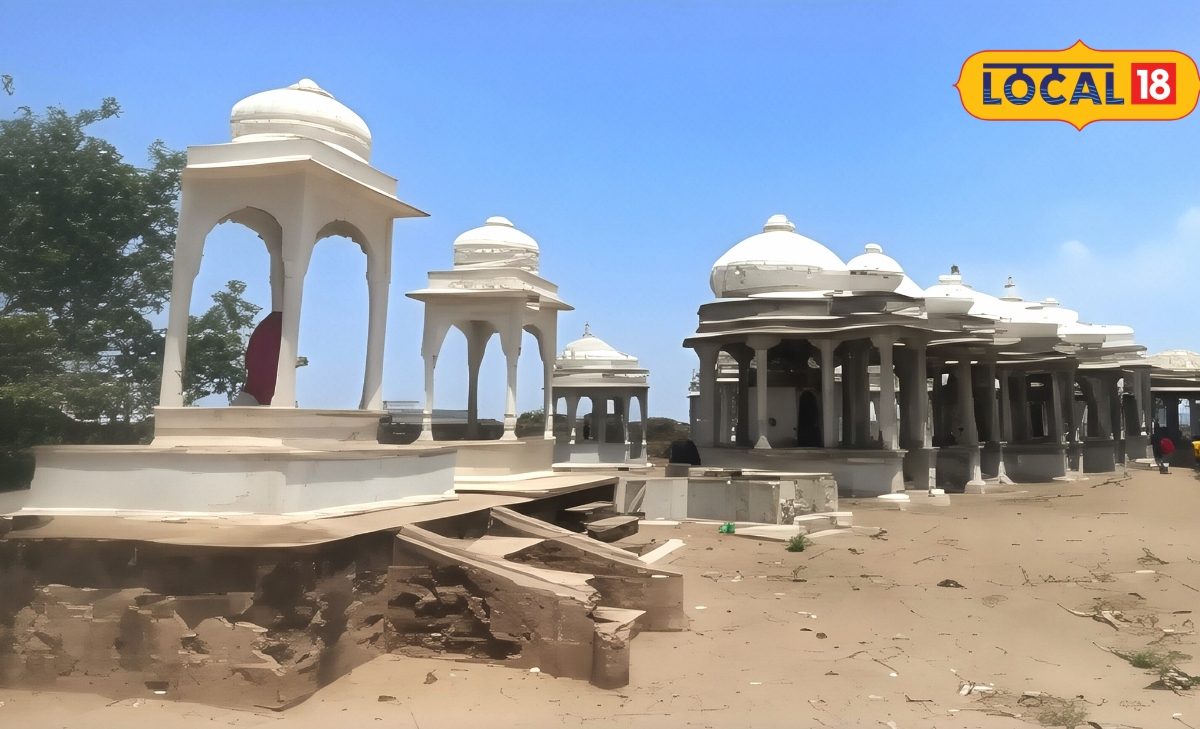
The historical town of Sirohi stands as a testament to rich royal heritage, prominently centered around the revered Saraleshwar Mahadev temple complex. This sacred and culturally significant site intricately preserves the glorious history of the Deora Chauhan dynasty through a collection of magnificent, artistic royal chhatris. Located adjacent to the serene Mandakini Kund, these architectural marvels have historically served as the solemn cremation grounds for the esteemed Sirohi Royal Family, anchoring centuries of dynastic lineage.
Delving into the historical context and origins, these royal cenotaphs offer profound insights into the socio-political evolution of the region under the Deora Chauhan rulers. The complex is not merely a memorial site but a vibrant open-air museum of medieval Rajput history. The establishment of these structures near the sacred water body of Mandakini Kund highlights the deep spiritual and cultural connection the royal household maintained with the Saraleshwar Mahadev temple and its surrounding sanctified landscape.
Examining the architectural and structural details, the Saraleshwar chhatris represent a masterclass in regional craftsmanship. They seamlessly integrate traditional Rajputana architectural styles with distinct influences from the Solanki and Parmar artistic traditions. The intricate design vocabulary includes elevated platforms, exquisitely carved stone pillars, and majestic domed roofs that collectively enhance the visual grandeur and aesthetic symmetry of these historical monuments.
Art historians and heritage experts studying the site have noted the remarkable antiquity preserved within the complex. Several older chhatris and structural elements proudly display distinctive architectural motifs and construction techniques characteristic of the 14th century and the 15th century. This precise chronological markers provide invaluable physical evidence of the continuity of royal patronage and masonry skills across multiple generations in Sirohi.
The cultural resonance of the Saraleshwar heritage extends far beyond immediate local boundaries, significantly shaping the regional identity of Sirohi and surrounding administrative districts. Scholars and heritage enthusiasts frequently visit the location to study the synthesis of diverse architectural schools. The preservation of these sites fosters a deeper appreciation for medieval Indian history and encourages cultural tourism within the region.
In terms of administrative oversight and conservation, local heritage custodians and civic bodies recognize the imperative need to protect these delicate structures from environmental degradation. Proper maintenance protocols are essential to safeguard the carved pillars, raised platforms, and ancient domes against weathering, ensuring that the legacy of the Deora Chauhan rulers remains intact for future generations.
Looking toward the forward outlook and preservation timeline, experts emphasize the necessity of structured heritage management plans for the Saraleshwar chhatris near Mandakini Kund. By maintaining rigorous documentation, archaeological surveillance, and community engagement, the administrative authorities aim to secure the long-term structural integrity of these historical cenotaphs, perpetuating the storied legacy of the Sirohi Royal Family.
