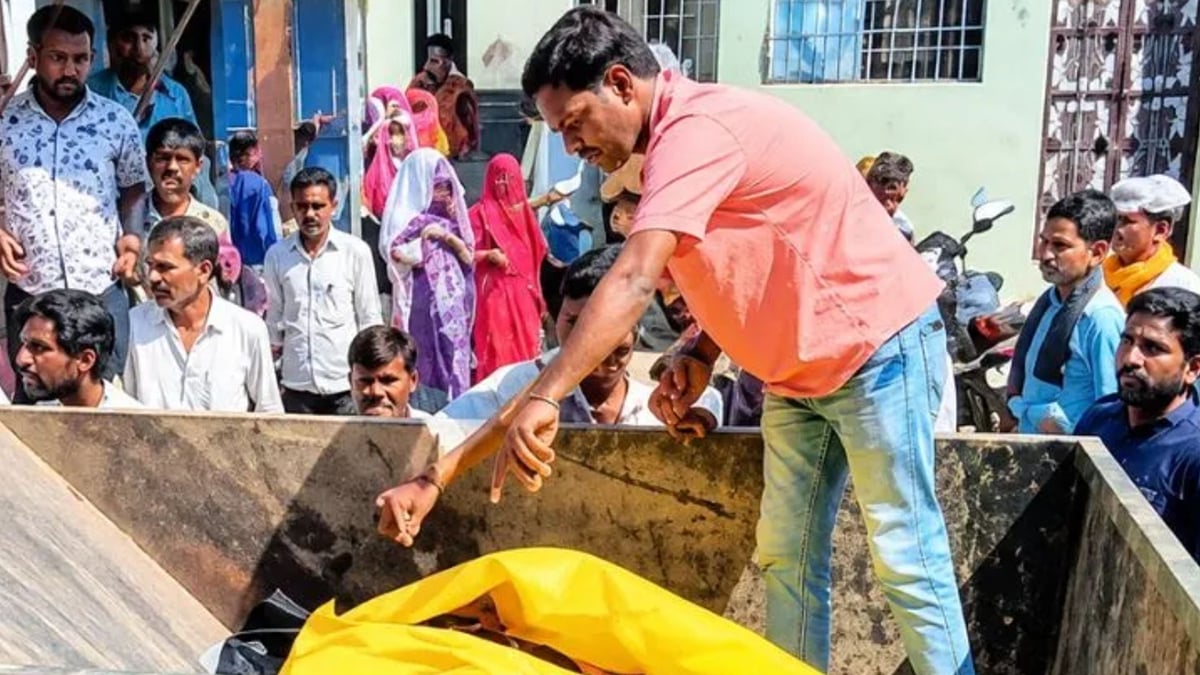
In an appalling incident that has sent shockwaves across Rajasthan, the mortal remains of a sanitation worker named Rakesh Valmiki were transported in a municipal garbage vehicle from Khanpur in Jhalawar district to Sangod. The harrowing event unfolded after the deceased sanitation employee was discovered lifeless inside a local drain under deeply distressing circumstances. Instead of receiving the basic dignity of a designated mortuary transport or hearse, the bereaved family had to rely on a vehicle typically meant for waste collection to move the body.
The incident brings to light deep-seated systemic failures in local administrative protocols and emergency response mechanisms at public healthcare and municipal facilities. Sanitation workers like Rakesh Valmiki are the backbone of urban cleanliness, often operating under hazardous conditions without adequate safety gear, yet their vulnerability is starkly exposed during moments of profound personal crisis. The absence of a dedicated hearse or ambulance service at the critical hour highlights a severe lapse in basic humanitarian and logistical provisions by the concerned authorities.
As details of the incident emerged, the stark ground reality of administrative neglect became glaringly evident to civil society observers and local community members. The logistical failure at the hospital, which lacked even a basic mortuary van, forced grieving relatives into an unthinkable compromise just to perform the final rites of their loved one in Sangod. Local administrative stakeholders and municipal bodies face mounting scrutiny over why standard emergency protocols were entirely absent when citizens needed them the most.
Community leaders, local trade associations, and citizen groups have voiced vehement condemnation over the deplorable manner in which the mortal remains were handled. Representatives of sanitation worker unions pointed out that those who maintain public hygiene are routinely denied dignity even in death, reflecting a wider institutional apathy. Demands are growing louder for immediate accountability from municipal officials and the immediate suspension or penalization of negligent personnel responsible for the logistical failure.
The regional impact of this incident extends far beyond Jhalawar district, resonating across administrative jurisdictions in Rajasthan, including Kotputli-Behror, where local municipal boards are now facing rigorous internal audits regarding their emergency transport preparedness. Citizens and regional workers' councils are utilizing this tragic benchmark to demand binding protocols ensuring that municipal and health infrastructures maintain functional hearses round-the-clock, preventing any repetition of such deeply humiliating occurrences.
In response to the mounting public outrage and widespread condemnation, senior district administrators have initiated preliminary inquiries to ascertain the exact sequence of events that led to the non-availability of the mortuary vehicle. Officials have assured the public that a thorough investigation is underway to determine administrative lapses at both the municipal office and the local medical facility. Statutory oversight bodies are also monitoring the developments closely to ensure that corrective measures are implemented swiftly.
Looking ahead, community stakeholders and family members of the deceased expect transparent accountability and concrete structural reforms within the municipal administration of Jhalawar and Khanpur. The incident serves as an urgent reminder for local governments across Rajasthan to upgrade their emergency welfare logistics and prioritize the fundamental dignity of sanitation workers. Future oversight meetings are expected to address resource allocations for dedicated mortuary transport across all regional health centers.