
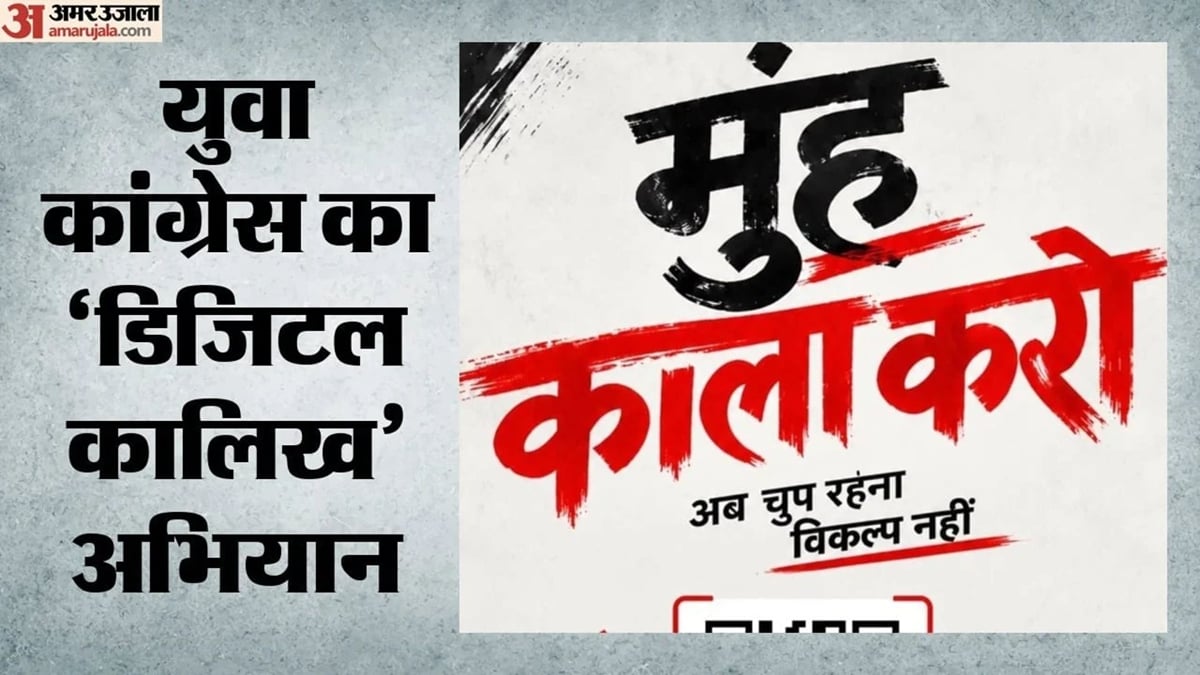
The political landscape in Jaipur witnessed a sharp escalation of tensions as the Youth Congress officially launched a high-profile digital campaign in direct response to controversial remarks made by Rajasthan Bharatiya Janata Party (BJP) President Madan Rathore concerning Pakistan. The opposition party has leveraged modern digital infrastructure to channel widespread public resentment, establishing a dedicated online platform designed to actively register dissent and connect citizens who are aggrieved by the remarks made by the senior political leader.
The genesis of this intense political confrontation traces back to recent public statements delivered by Madan Rathore, which immediately drew sharp condemnation from various political quarters, most notably the Congress party and its frontal youth organization, the Youth Congress. In the wake of these remarks, political observers noted a rapid polarization of discourse across Rajasthan, prompting opposition strategists to move beyond traditional street demonstrations and adopt technology-driven mobilization techniques to broadcast their message across a broader demographic.
As part of the newly launched digital initiative, the Youth Congress has systematically deployed online networking tools and a specialized website portal to coordinate public outreach efforts. While traditional physical protests often remain restricted by logistical hurdles, this digital strategy aims to aggregate public opinion on a massive scale. Organizers have structured the online interface to facilitate seamless engagement, allowing participants from diverse backgrounds to register their protest virtually against the statements issued by the BJP state president.
Stakeholders from both political factions have articulated contrasting viewpoints regarding the unfolding controversy. Representatives of the Youth Congress maintain that the remarks made by Madan Rathore reflect poorly on the political discourse and demand immediate, unconditional public accountability. Conversely, supporters and leaders within the BJP have defended their state president, alleging that the opposition is deliberately attempting to distort factual contexts for political mileage ahead of upcoming administrative and legislative priorities.
The regional impact of this ongoing controversy and the subsequent digital mobilization is steadily rippling outward from the state capital into surrounding administrative districts, including Kotputli-Behror. Local political units and grassroots party workers in these areas are increasingly being galvanized to utilize the newly launched web portal, thereby translating a state-level ideological clash into active grassroots discussions concerning national identity, political decorum, and responsible governance.
Administrative authorities and local law enforcement agencies in Jaipur and neighboring districts are closely monitoring the situation to ensure that public demonstrations, whether conducted virtually or through physical assemblies, remain peaceful and within the boundaries of statutory protocols. While no direct administrative interventions or formal statutory restrictions have been imposed upon the digital campaign thus far, state intelligence units maintain a vigilant stance over potential escalations in political friction.
Looking toward the immediate horizon, political analysts predict that this digital mobilization strategy will serve as a precursor to more intense ideological battles between the BJP and the Congress across Rajasthan. The Youth Congress intends to expand the reach of its website-based campaign in the coming weeks, while BJP leadership prepares counter-strategies to neutralize the political damage. Public expectations remain centered on whether senior leadership from either party will issue formal clarifications to de-escalate the mounting tensions.
