
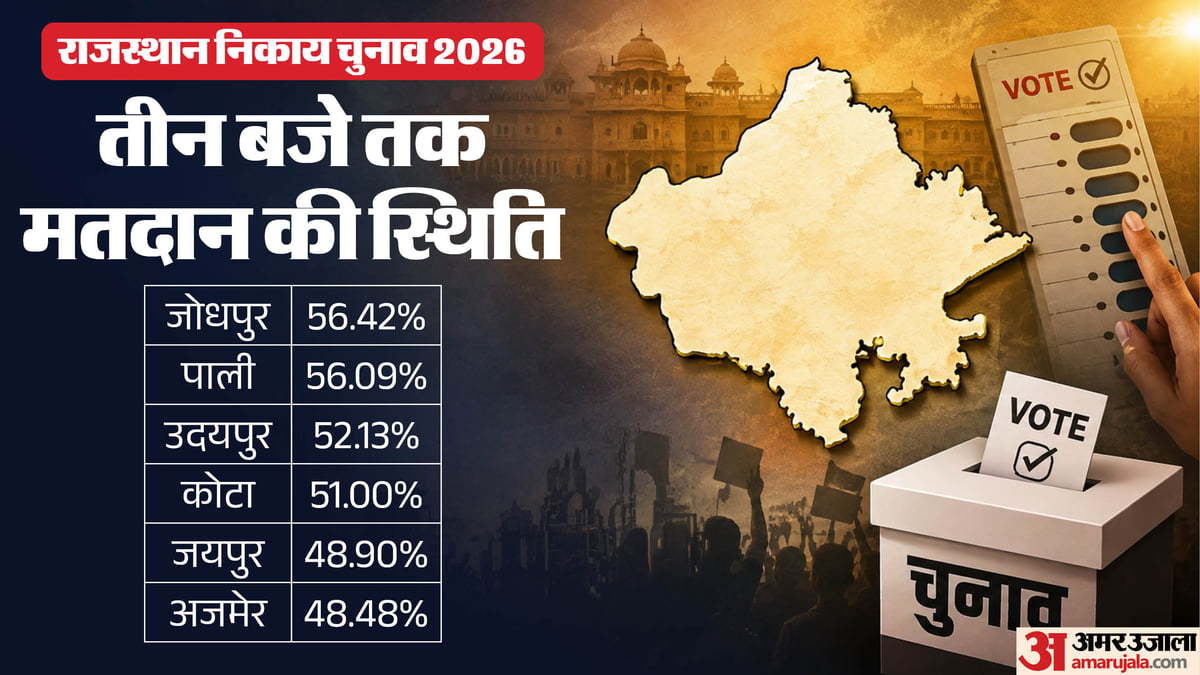
The democratic exercise across Rajasthan reached a significant juncture as 147 municipal bodies recorded an overall voter turnout of 57.38 percent by three PM. Citizens stepped out in large numbers to exercise their franchise, demonstrating active civic engagement and a commitment to local democratic processes. The election administration maintained rigorous oversight to ensure a smooth, orderly, and transparent voting procedure across all designated polling booths.
Local body elections hold profound historical significance in India's administrative framework, serving as the foundational bedrock of grassroots democracy. These elections empower local communities to choose their direct representatives who manage civic infrastructure, sanitation, water supply, and urban development. Over the decades, municipal elections have evolved into fiercely contested battles that reflect the political pulse and aspirations of urban and semi-urban populations alike.
The ground reality during the polling hours highlighted stark contrasts in voter enthusiasm across different regions. Statistical data released by election officials confirmed that by three PM, the aggregate voter turnout reached 57.38 percent across 147 civic bodies. Among major urban centres, Jodhpur recorded notable participation, whereas Ajmer and Jaipur witnessed comparatively lower voter enthusiasm, raising discussions among political analysts and election observers.
A deeper examination of the statistics revealed phenomenal participation at the grassroots level. Specifically, Dhorimanna municipality located in Balotra district outpaced all other regions, registering a remarkable voter turnout of 85.53 percent. This extraordinary level of participation underscores the deep interest and resolve of local residents in shaping their municipal governance and holding local leaders accountable.
The ongoing elections carry substantial implications for regional development, local economies, and community welfare. Municipal bodies control critical budgets allocated for local development, making the outcome of these elections crucial for traders, business owners, and ordinary citizens. Efficient civic management directly enhances the ease of living and commercial vitality within these municipal jurisdictions.
Administrative machinery remained on high alert throughout the voting hours to address any logistical challenges, technical glitches, or security concerns. District election officers, police personnel, and polling staff worked in close coordination to maintain law and order. Special arrangements were implemented to assist elderly voters, women, and persons with disabilities to ensure unhindered participation.
As the final hours of polling conclude, attention shifts toward the upcoming counting process and the formation of local governing boards. Political parties and independent candidates await the results anxiously, while citizens hope for transparent governance and improved civic amenities. The final turnout figures and subsequent election outcomes will undoubtedly shape the political dynamics of Rajasthan's local administration for the foreseeable future.