
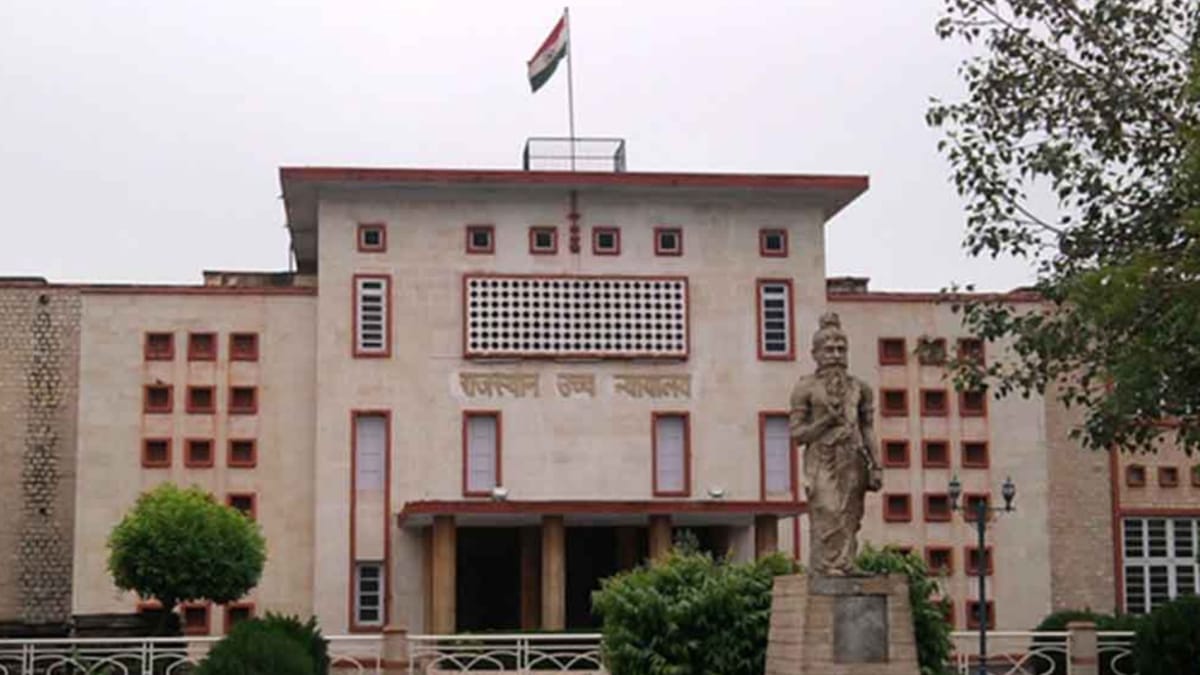
The Rajasthan High Court has delivered a significant ruling declaring the Transport Department's practice of levying road tax on private cars registered in other states as illegal. Delivering a stern clarification on statutory compliance, the court held that administrative authorities cannot demand tax nor impound vehicles without the mandatory issuance of a formal statutory notification under the law.
The issue stems from enforcement drives conducted by the Transport Department across Rajasthan, where officials intercepted private vehicles bearing registration plates from other states. The department had been demanding road tax from these non-state private car owners and subsequently seizing vehicles when the demands were not met, prompting affected vehicle owners to challenge the legality of these actions before the high court.
In its detailed observation, the high court emphasized that administrative enforcement must strictly operate within established statutory boundaries. The bench noted that the Transport Department lacked the necessary statutory notification required to impose road tax on out-of-state private cars temporarily plying within Rajasthan, rendering both the tax demands and the subsequent vehicle seizures entirely unauthorized.
Legal analysts and motorists have welcomed the judicial intervention, affirming that regulatory bodies must adhere to strict legislative procedures before imposing financial obligations on citizens. Travelers highlighted that arbitrary enforcement and the threat of vehicle confiscation caused severe disruption to inter-state travel, underscoring the necessity of this high court ruling.
The verdict carries notable implications for Rajasthan, particularly along strategic transport corridors such as the Kotputli region. Given its geographic position connecting neighboring states, thousands of private cars registered outside Rajasthan cross local highway networks daily. The high court's decision ensures that these commuters will no longer be subjected to unnotified tax recoveries or unauthorized vehicle impoundment.
Following the court's judgment, the Transport Department is required to halt all unauthorized tax collection activities targeting out-of-state private cars. Departmental administration must now align its operational guidelines with statutory requirements, ensuring that no tax enforcement takes place without appropriate legislative authorization and official notification.
The high court's ruling sets a firm legal precedent regarding procedural correctness in public administration and tax collection. Motorists across the region expect transport authorities to strictly abide by the judicial directives, ensuring transparent highway administration and preventing future non-statutory enforcement measures.
