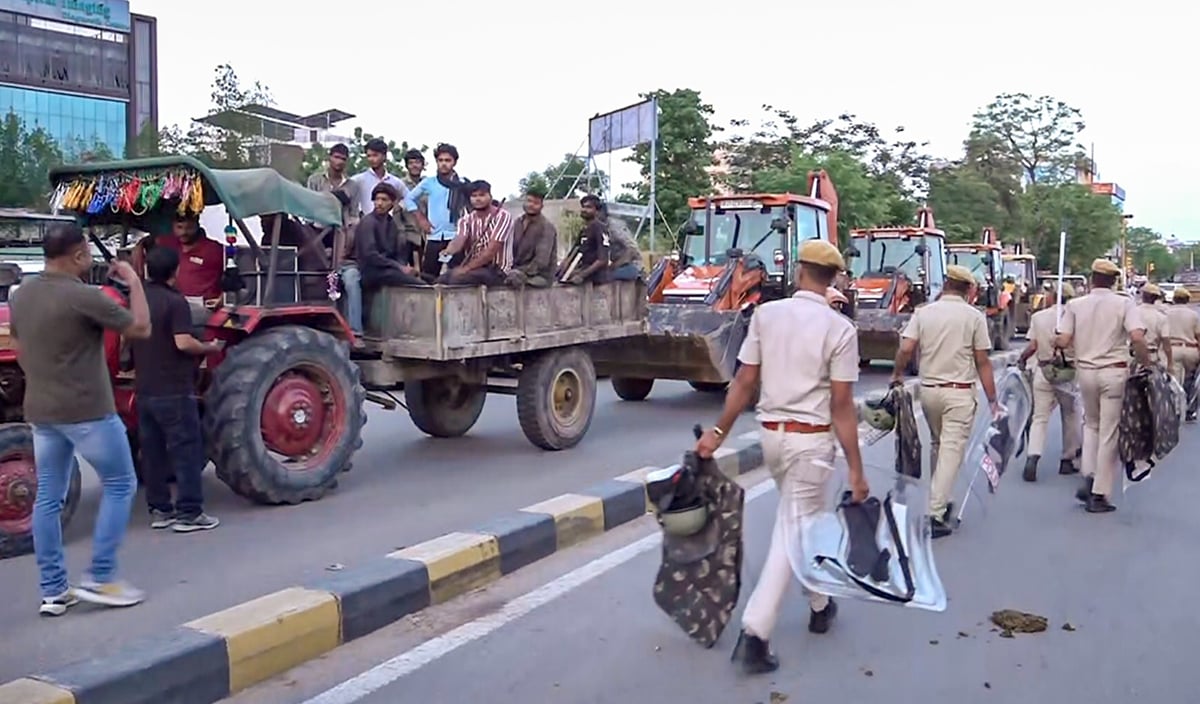
In a major infrastructural undertaking aimed at easing traffic congestion, the Jaipur Development Authority (JDA) has deployed heavy machinery and bulldozers along the bustling New Sanganer Road in Jaipur. The primary objective of this intensive administrative operation is to clear all encroachments and structures obstructing the comprehensive 160-foot road-widening project, which has been in the planning pipeline to accommodate the escalating vehicular traffic in the metropolitan area.
The historical context of this infrastructural initiative dates back several years, as urban planners and civic authorities have consistently flagged New Sanganer Road as a critical transportation bottleneck. Rapid urbanization and exponential growth in the number of commuter vehicles traversing this key arterial route necessitated decisive administrative intervention to upgrade the existing road infrastructure to modern urban standards, thereby facilitating smoother transit for daily commuters and freight carriers alike.
The ground reality during the enforcement drive presented a scene of intense administrative mobilization, with police forces and civic teams securing the perimeter as excavators began dismantling permanent and semi-permanent structures. According to official preliminary assessments and field reports, more than 250 residential properties and commercial establishments fall directly within the demarcated 160-foot alignment zone, translating into massive infrastructural and economic disruption for families and business owners who have operated in the area for decades.
As the demolition operations progressed, heightened tensions emerged on the ground, with affected traders, shopkeepers, and homeowners voicing profound distress over the abrupt displacement. The core grievance raised by the local business community centers around the pressing need for adequate financial compensation and structured rehabilitation packages, as many merchants argue that losing their commercial spaces without prior institutional support threatens their financial survival and long-term economic stability.
While the immediate disruption is concentrated within the urban boundaries of Jaipur, the wider ramifications of such major arterial expansions are keenly observed across surrounding districts, including Kotputli-Behror, where regional commercial supply chains and commuter patterns are closely linked to the state capital's infrastructure network. Ensuring efficient connectivity between regional trade hubs and metropolitan commercial centers remains a fundamental objective of state-level urban development policies.
In response to the mounting protests and representations submitted by the displaced traders, JDA officials have maintained that all affected parties were issued prior notices in accordance with statutory urban development guidelines. The administration contends that the execution of the 160-foot road-widening project is an inescapable necessity for the larger public interest, designed to alleviate perennial traffic congestion and modernize urban transit corridors for future generations.
Looking forward, the Jaipur Development Authority has outlined a rigorous timeline to complete the clearance of all remaining debris and expedite the subsequent construction and carpeting of the widened road sections. While public expectations remain divided between the necessity of modern civic infrastructure and the immediate hardships faced by the 250-plus property owners, civil authorities continue to monitor the site to ensure law and order prevail throughout the duration of the project.