
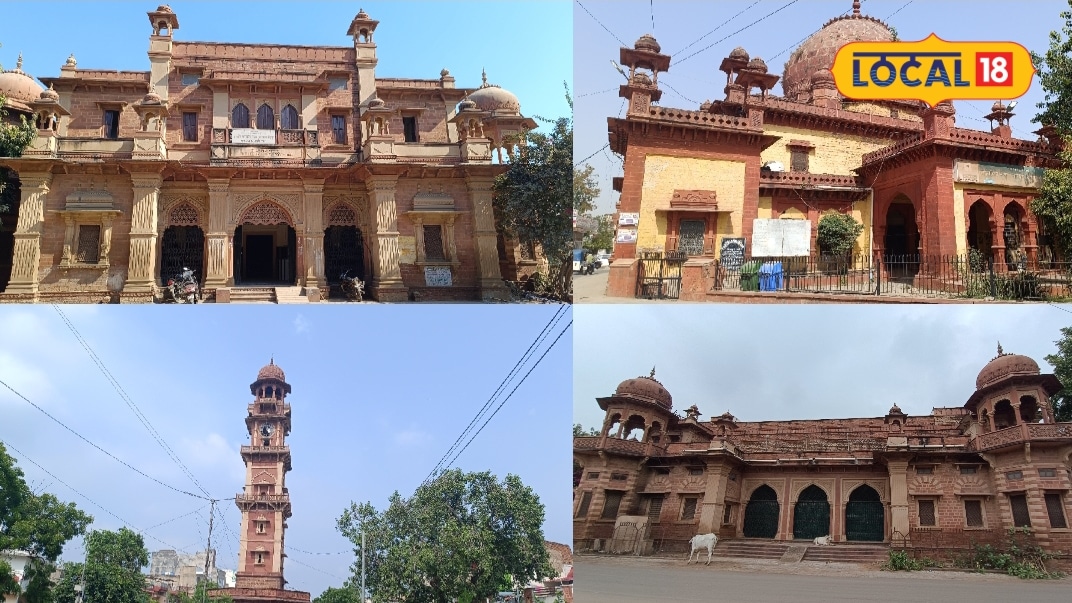
Travel enthusiasts and history lovers exploring the state of Rajasthan now have a remarkable opportunity to witness extraordinary architectural heritage without placing any heavy burden on their personal finances. In the historic city of Dholpur, visitors can thoroughly explore three magnificent historical buildings by spending a mere sum of ten rupees. This budget-friendly travel experience has quickly captured the attention of culture enthusiasts, offering deep insights into the region's rich historical legacy through an extraordinarily economical itinerary.
A detailed examination of the logistical framework reveals that the entire expenditure of ten rupees is exclusively allocated for the local auto-rickshaw fare from the central bus stand to the heritage precinct. Notably, the entry to all three prominent historical landmarks is completely free of charge for every visitor. This tourist-friendly administrative approach ensures that historical education and architectural appreciation remain accessible to individuals from all economic backgrounds without financial barriers.
The first significant landmark included in this economical heritage trail is the historic municipal building, established in the year 1904. This structure stands as a testament to the administrative architecture and civic evolution of the region during the early twentieth century, reflecting distinct structural designs crafted predominantly from regional red sandstone. The brilliant reddish hues of the stone masonry provide an awe-inspiring visual spectacle for photography enthusiasts and architectural researchers alike.
Dominating the local skyline is the second major architectural marvel, the towering Nihal Tower, commonly known as the Ghantaghar or clock tower, which rises to a majestic height of 150 feet. Constructed during the colonial era, this monumental clock tower represents extraordinary engineering prowess and serves as a prominent geographical landmark for the entire city. Standing tall for over a century, the tower narrates the tales of bygone eras and the administrative transformations witnessed by the region.
Completing this trio of historical treasures is the historic library established in the year 1935, which houses an astounding collection of 30 thousand rare books. This literary repository serves as an invaluable treasure trove for academicians, historians, and students who wish to delve deep into rare manuscripts and historical texts. The institution preserves decades of intellectual heritage, offering scholars an unprecedented window into historical literature and cultural documentation.
Beyond the architectural splendor, these three monuments collectively echo the profound socio-political struggles of Indian revolutionaries who fought valiantly for national independence. The walls of these structures and the surrounding precincts carry memories of resistance and patriotic fervor, providing contemporary citizens with a poignant reminder of the nation's arduous freedom struggle. Educational tours and heritage walks organized around these sites foster a deeper sense of national pride and historical consciousness among younger generations.
Local tourism authorities and municipal administrators have continuously emphasized the importance of preserving these architectural wonders while promoting sustainable regional tourism. By maintaining free public entry to the municipal building, Nihal Tower, and the historic library, the administration encourages greater domestic tourism and cultural exploration. Experts anticipate that such affordable heritage models will serve as a successful blueprint for other districts seeking to boost local heritage tourism without commercial exploitation.