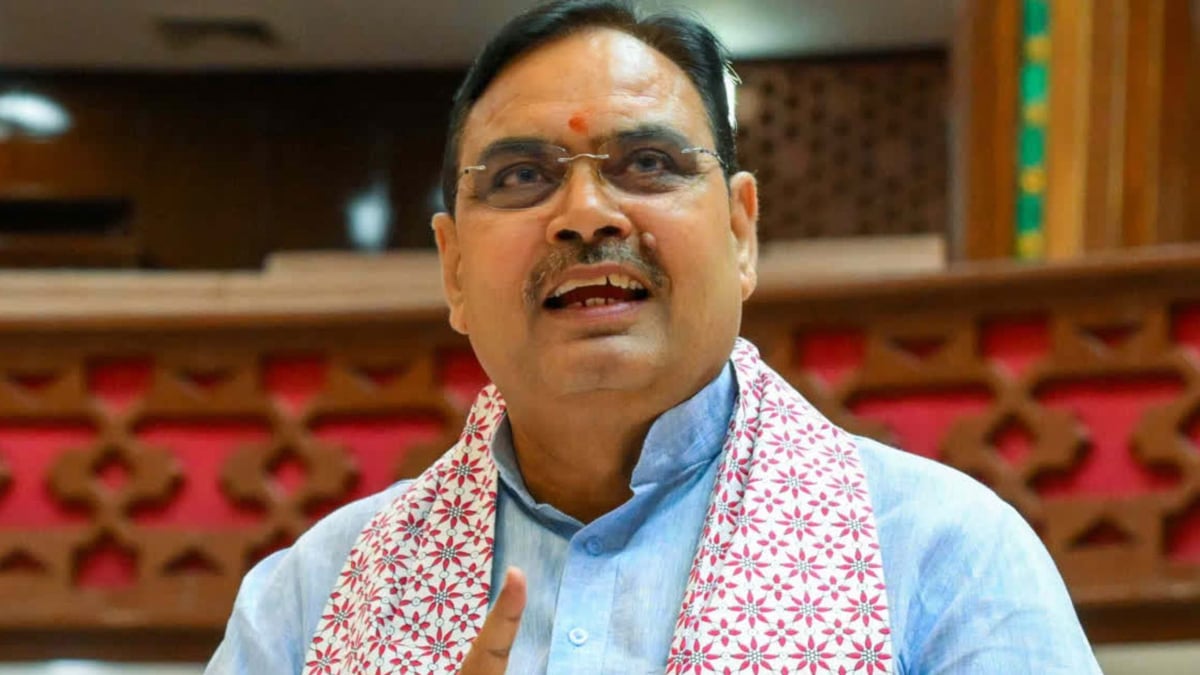
Rajasthan Chief Minister Bhajanlal Sharma launched a severe verbal offensive against the Congress party regarding the ongoing controversy surrounding SIR. Addressing the critical discourse, the Chief Minister underscored that political adversaries are repeatedly attempting to undermine the credibility of established constitutional institutions through baseless allegations and continuous public criticism.
The current political friction traces its origins to intensified debates concerning administrative transparency, institutional autonomy, and policy implementation. Over recent months, political disagreements over governance models have steadily escalated into broader ideological standoffs between the ruling administration and opposition factions across various public platforms.
As discussions regarding institutional integrity continue to dominate the political sphere, various stakeholders have expressed divergent viewpoints regarding the functioning and accountability of statutory bodies. The intensifying discourse reflects deep-seated administrative challenges and differing governance priorities held by rival political entities within the state legislature and public domains.
Political analysts and local observers note that the ongoing war of words between Chief Minister Bhajanlal Sharma and the Congress leadership has significantly altered the regional political climate. Representatives from different political factions have articulated contrasting interpretations of institutional roles, further polarizing public discourse on governance and accountability.
Within the Kotputli-Behror region and surrounding districts, the statewide political friction has sparked extensive discussions among local communities, trade associations, and civic groups. Citizens and local leaders are closely monitoring how these high-level political confrontations might influence regional administrative efficiency and local developmental initiatives in the near future.
In response to the growing political confrontation, administrative authorities and institutional spokespersons have emphasized the importance of maintaining public trust in constitutional frameworks. Official statements reiterate that institutional mechanisms operate independently under established legal guidelines, aiming to ensure absolute transparency and adherence to democratic principles.
Looking ahead, political observers anticipate that the debate surrounding SIR and the sanctity of constitutional bodies will remain a central theme in the state's political landscape. Upcoming legislative sessions and administrative reviews are expected to feature further intense deliberations as political parties prepare for future electoral challenges and policy battles.