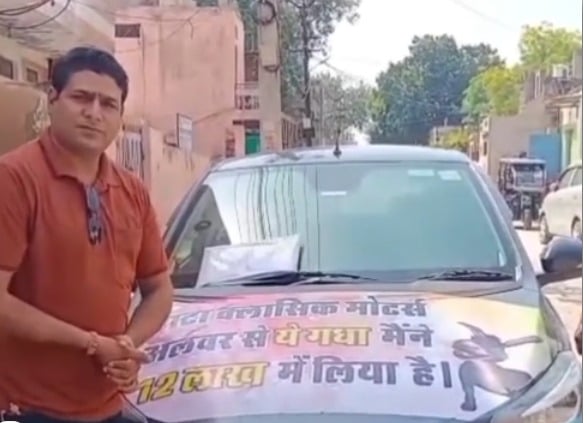
In an unusual and striking demonstration of consumer discontent, an administrative official in Alwar, Rajasthan, has registered a strong protest against Tata Motors by targeting an electric vehicle. The protest, which quickly garnered significant attention from onlookers and local residents alike, involved pasting posters bearing the image of a donkey directly onto the passenger vehicle. This method of expressing grievances underscores deep-seated frustrations regarding the performance or service associated with the automobile.
The roots of this protest trace back to customer grievances and alleged service shortcomings related to modern electric mobility solutions entering the Indian market. As adoption rates for electric vehicles increase across various sectors, consumer expectations regarding reliability, maintenance support, and overall vehicle performance have scaled correspondingly. When these expectations remain unmet, friction between buyers and major automotive manufacturers often intensifies, leading to public expressions of discontent.
At the center of this specific controversy is a high-value automobile valued at approximately 12 lakh rupees. The considerable financial investment involved amplifies the gravity of the consumer's grievance, transforming a standard dispute over product quality into a prominent local talking point. Financial commitments of this magnitude naturally lead vehicle owners to demand flawless operational standards and immediate redressal of technical malfunctions from major manufacturers like Tata Motors.
The administrative officer identified in the protest is Deepak Sharma, whose official standing added considerable weight and visibility to the demonstration. While individuals from various walks of life frequently utilize social media or legal forums to air grievances, the choice of a visual, public protest directly on the disputed asset itself represents an extraordinary escalation. Observers and local residents gathered to witness the spectacle, which brought immediate attention to the unresolved issues tied to the vehicle.
The repercussions of this event extend well beyond the immediate boundaries of Alwar, resonating across the wider Kotputli-Behror district and neighboring administrative zones. Regional consumers, prospective electric vehicle buyers, and local automotive dealers are closely monitoring the situation to gauge how major corporations handle customer dissatisfaction. Such incidents impact consumer confidence and influence purchasing decisions within the rapidly evolving regional automotive market.
Administrative oversight and statutory consumer protection frameworks play a crucial role in mediating disputes between individual purchasers and multinational corporations. While formal consumer forums exist for legal recourse, public demonstrations of this nature often compel corporate entities to expedite their customer service responses. Local authorities and consumer rights advocates continue to observe the developments, emphasizing the necessity of robust grievance redressal mechanisms.
Looking forward, this incident serves as a significant case study in modern consumer activism within the region. The timeline for resolving the underlying dispute between Deepak Sharma and the manufacturer will likely set a precedent for how similar high-value automotive grievances are addressed in the future. Public expectation remains high for a transparent resolution that addresses the core technical or service concerns associated with the 12 lakh rupee electric vehicle.