
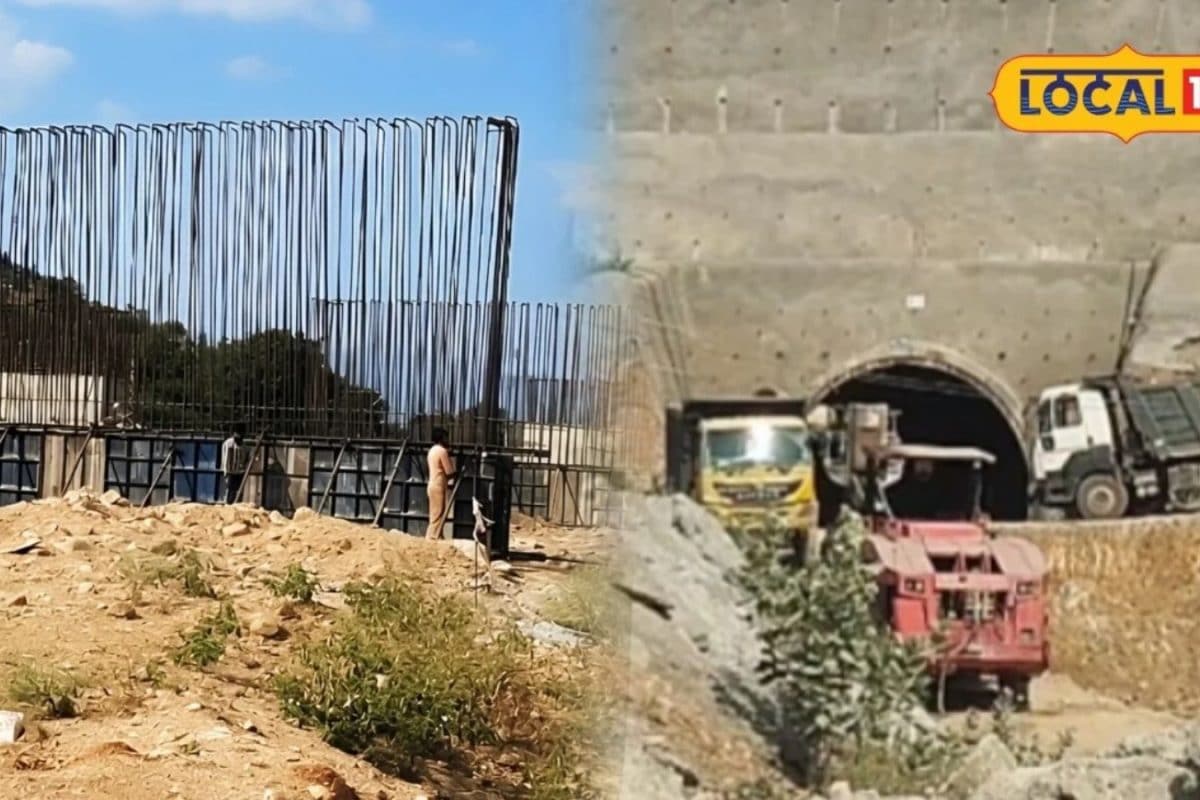
Construction work on the extensive Taranga Hill to Abu Road via Ambaji new rail line project is moving forward at a rapid pace, marking a major milestone in regional connectivity. The ambitious infrastructure undertaking, valued at 3,050 crore rupees, aims to bridge crucial geographical gaps and link vital pilgrimage and commercial centers in the region. Spanning a total distance of 116.65 kilometers, this monumental railway line is engineered to transform transportation logistics across the rugged terrain of the Aravalli hill ranges.
The historical context of this railway route dates back to decades of local demands for improved connectivity between religious shrines and trade hubs situated in remote, hilly landscapes. For generations, travelers and traders navigating between Taranga Hill, Ambaji, and Abu Road faced immense geographical challenges due to the lack of a direct rail link. Recognizing the immense potential for economic integration and pilgrimage tourism, central and regional administrative bodies prioritized this strategic route to unlock long-dormant economic opportunities in the territory.
Delving into the ground reality and financial investments, the project commands a massive budget of 3,050 crore rupees, allocated meticulously across various structural components. Engineering teams are currently executing some of the most challenging feats of modern construction along the 116.65 km alignment. Notably, this includes the excavation of a 2.27-kilometer long tunnel directly through the formidable Aravalli hills, alongside the erection of an 80-meter high special bridge at Surpagla, showcasing advanced structural engineering and meticulous planning.
Local stakeholders, including regional traders, temple trusts, and business owners, have expressed overwhelming optimism regarding the development of the 15 stations planned along the route. Representatives from the marble industry and local markets note that the absence of heavy freight and passenger rail services previously restricted their commercial expansion. Business associations anticipate that once operational, the railway will drastically reduce logistics expenditure, facilitate seamless movement of raw materials, and attract larger volumes of domestic and international travelers.
While the immediate geographical focus centers on the Aravalli region, the broader economic ripples of the project extend favorably toward surrounding districts and commercial corridors. Improved logistical efficiency is projected to stimulate ancillary enterprises, generate local employment opportunities, and integrate smaller trading posts into national supply chains. Economists and regional planners emphasize that enhanced infrastructure of this scale serves as a permanent catalyst for sustainable regional development and industrial growth.
Administrative oversight and engineering monitoring remain rigorous to ensure that the monumental works adhere to stringent safety, environmental, and structural standards. Specialized geological surveys and environmental impact assessments continue to guide excavation procedures, particularly during the boring of the 2.27 km tunnel and the construction of the 80-meter high bridge at Surpagla. Authorities are maintaining close coordination with contractors to mitigate ecological disruptions while maintaining strict adherence to project timelines.
Looking forward, the overarching timeline dictates that the entirety of the 116.65 km rail network, incorporating all 15 proposed stations, is expected to reach completion by the year 2026-27. Public anticipation remains high as successive phases of track laying, tunnel reinforcement, and bridge assembly approach finalization. Upon operational launch, the completed corridor is poised to redefine regional mobility, cement cultural ties, and inaugurate a prosperous era of industrial and religious tourism.
