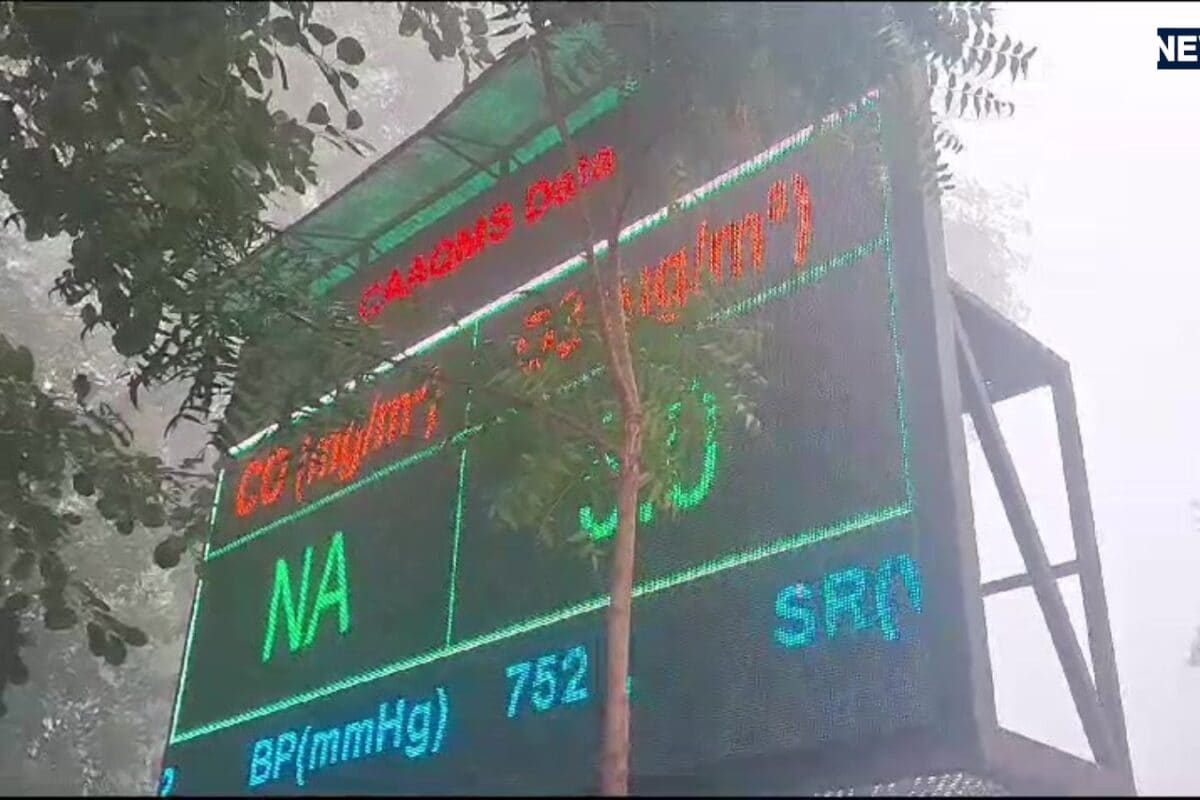
The residents of Sri Ganganagar woke up to a severely compromised atmosphere on Thursday as toxic haze enveloped the urban landscape, driving air pollution to alarming heights. According to the latest environmental metrics recorded across the region, the municipal Air Quality Index (AQI) surged dramatically to reach 277. This steep upward trajectory marks a profound deterioration in the breathable air quality of the city, causing immediate alarm among environmental watchers, health administrators, and the general public alike.
A critical comparative evaluation of the environmental data reveals that the air quality has plummeted rapidly over a span of less than forty-eight hours. Official recordings indicate that the city's AQI stood at a relatively moderate, yet already concerning, 205 on Wednesday. The exponential leap of 72 points within a single day underscores a worsening environmental crisis that continues to plague the northern agricultural belts during this specific seasonal transition.
The compounding accumulation of particulate matter in the lower atmosphere has severely restricted visibility and created a persistent layer of smog over Sri Ganganagar. Medical practitioners and local health authorities have expressed grave concern over the immediate health repercussions of these soaring pollution numbers. Prolonged exposure to such high concentrations of pollutants is directly linked to acute respiratory distress, cardiovascular complications, and a systemic decline in public health standards.
In response to the rapidly escalating environmental threat, the local health department has mobilized emergency advisories to protect vulnerable demographics within the community. Officials have explicitly urged children, elderly citizens, and individuals suffering from chronic respiratory conditions such as asthma to restrict outdoor movement. The advisory stresses that staying indoors and utilizing protective gear is paramount during peak pollution hours to mitigate potential health hazards.
The ongoing environmental crisis in Sri Ganganagar also echoes broader regional concerns regarding air quality management, sustainable agricultural residue handling, and vehicular emission controls. While the municipal boundaries grapple with the immediate fallout of the 277 AQI reading, neighboring administrative districts are closely monitoring the atmospheric drift, recognizing that localized pollution episodes often carry wider interstate and regional repercussions.
Administrative authorities are facing mounting pressure to evaluate the efficacy of current mitigation measures and enforce stricter compliance protocols across industrial and transport sectors. The sudden escalation from Wednesday's figure of 205 highlights the unpredictable volatility of local wind patterns and stagnation coefficients, which frequently trap pollutants near the surface level without adequate dispersion mechanisms.
As the community navigates this severe pollution episode, public expectations remain centered on proactive intervention from regulatory bodies and sustained public health monitoring. The health department has reiterated its commitment to tracking the situation closely, promising further updates and localized advisories as long as the severe air quality index persists across Sri Ganganagar.