
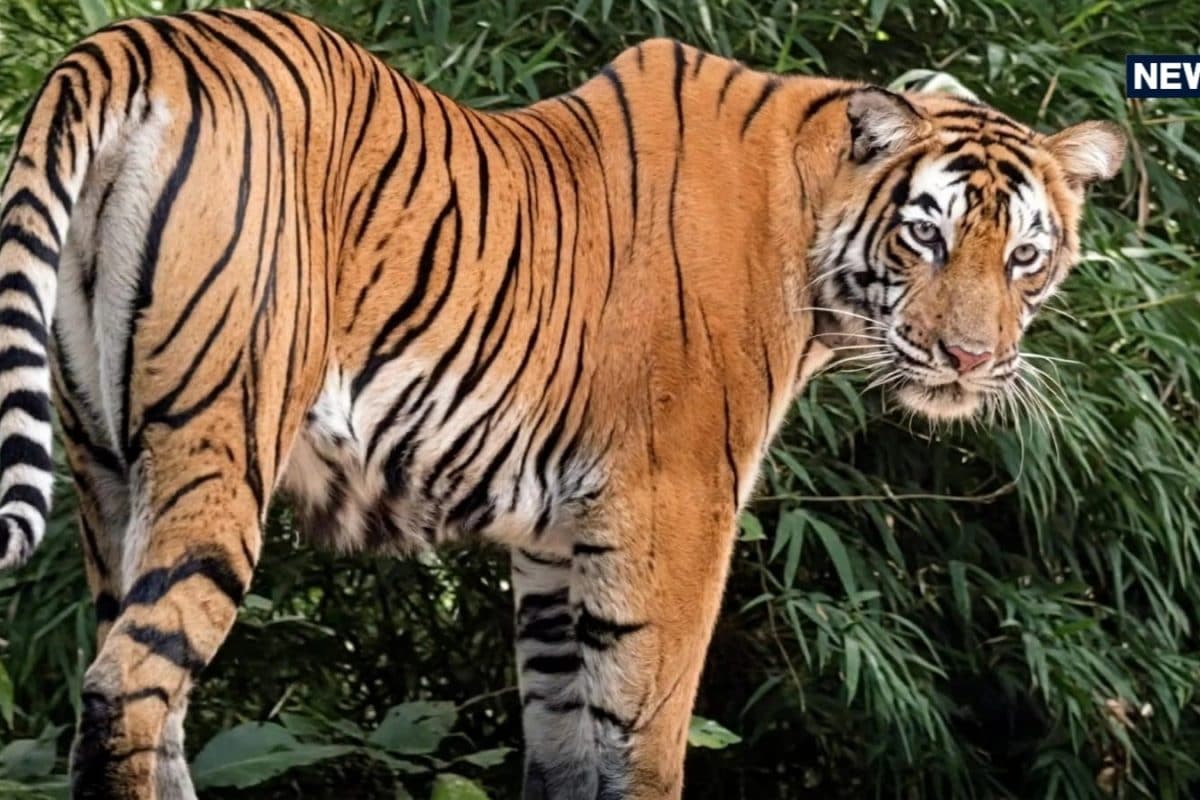
In a striking display of wildlife confidence and natural grace, Tigress ST-30 of the Sariska Tiger Reserve captivated observers with a tranquil daytime appearance on the auspicious festival of Diwali. The notable wildlife encounter took place along the Kali Ghat to Tehla route, situated within the verdant boundaries of the revered sanctuary located in Alwar district. The episode underscores the increasing frequency of daytime predator sightings as the reserve's ecosystem continues to flourish under systematic conservation efforts.
The remarkable sighting was brought to light by Mahant Rohit, who was returning from offering traditional prayers and chola at the ancient and highly revered Pandupol Hanuman Temple. Around one o'clock in the afternoon, while traversing the winding forested pathways, the Mahant noticed the magnificent feline calmly positioning herself atop the roadside security wall. Demonstrating complete fearlessness, the tigress paced along the architectural boundary, offering a breathtaking view to the fortunate travelers passing through the corridor.
Documenting the historic moment, Mahant Rohit swiftly captured the tigress on his camera, preserving visual evidence that has since cascaded across digital platforms and electrified wildlife enthusiasts across the region. The footage showcases the unbothered demeanor of ST-30, highlighting how well-adjusted the sanctuary's apex predators have become to the designated transit routes utilized by pilgrims and local commuters visiting the Pandupol shrine, particularly during major festive celebrations.
Forest department officials and conservation circles have noted that this sighting holds special ecological significance regarding the lineage and territorial dynamics of Sariska. Earlier this same year, Tigress ST-30 was frequently observed moving through the reserve accompanied by her four cubs. Wildlife biologists point out that these four cubs have now reached an advanced stage of maturity, actively transitioning toward independence and beginning the crucial ecological process of establishing their distinct territorial boundaries within the expansive reserve.
The continuous resurgence of tiger populations within Alwar's protected boundaries has significantly amplified regional tourism, drawing thousands of nature lovers, conservationists, and spiritual tourists toward the Sariska Tiger Reserve and surrounding landmarks like the Pandupol Hanuman Temple. Local economic stakeholders, commercial enterprises, and hospitality providers in the broader Kotputli-Behror region consistently experience positive economic momentum during major festive periods due to the massive influx of wildlife enthusiasts and pilgrims converging on the sanctuary.
In response to the growing density of both human visitors and apex predators, administrative authorities and forest management teams maintain strict surveillance protocols along critical transit corridors such as the Kali Ghat and Tehla routes. Forest officials regularly issue advisory notices to motorists and pilgrims, urging strict adherence to safety guidelines, prohibiting unauthorized halting, and mandating respectful distances from wildlife to ensure seamless coexistence between human activities and the natural habitat of the reserve.
Looking ahead, wildlife experts and forest administrators remain optimistic about the long-term conservation outlook for Sariska Tiger Reserve, anticipating further natural expansion of the tiger population. As Tigress ST-30 and her maturing progeny navigate the changing landscape of their protected home, continuous monitoring, community cooperation, and stringent protective measures will remain vital in preserving the ecological balance and ensuring safe pilgrimage routes for future generations.
