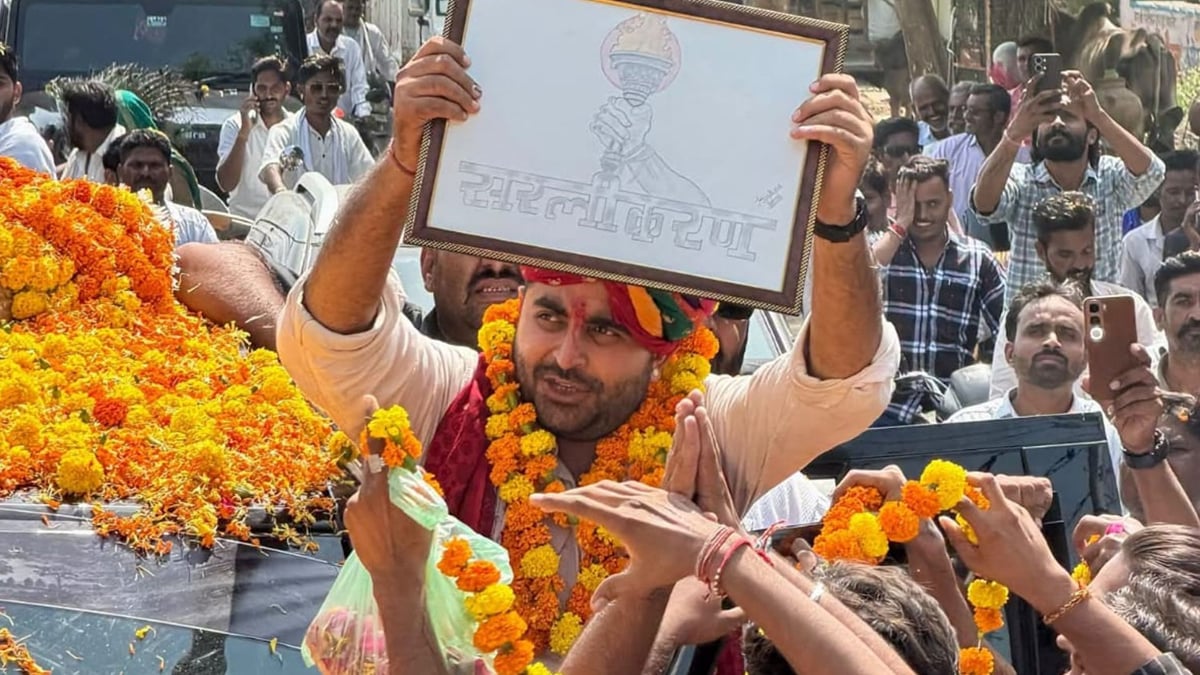
The ongoing journey demanding the simplification and practical modification of Economic Weaker Section (EWS) reservation rules has reached Jodhpur, led prominently by independent legislator Ravindra Singh Bhati. The arrival marked a significant milestone in the ongoing state-wide movement, drawing massive public attention and large crowds of enthusiastic supporters who gathered to welcome the leader despite the advanced hours of the night.
The genesis of this significant march lies in the persistent grievances and administrative complexities faced by aspirants under the current EWS reservation framework. Activists, community leaders, and affected youth have repeatedly pointed out procedural hurdles that obstruct eligible candidates from availing the intended benefits, prompting the initiation of this focused mobilization under the leadership of Ravindra Singh Bhati.
As the yatra progressed into Jodhpur, the ground reality reflected intense emotional and logistical engagement from local participants. Demonstrating unprecedented enthusiasm, supporters utilized a heavy-duty JCB machine to shower copious amounts of flower petals on Ravindra Singh Bhati as his convoy arrived, symbolizing the high public stakes and emotional resonance attached to the cause of reservation reform.
Throughout the late hours of the night, youth contingents and local stakeholders remained steadfastly stationed at the welcome site, engaging in discussions regarding the core demands of the yatra. The persistence of the gathered populace underscores a profound community demand for policy transparency, procedural ease, and equitable enforcement of economic reservation criteria across regional educational and employment sectors.
While the immediate epicenter of the recent demonstration remains Jodhpur, the reverberations of such widespread mobilizations carry considerable implications for regional governance, socioeconomic discourse, and youth aspirations across surrounding districts, including the administrative jurisdictions of the wider state where employment and reservation policies are closely monitored.
Administrative authorities and local law enforcement agencies maintained a vigilant oversight presence to manage the massive influx of supporters and ensure public safety during the late-night gathering. Official channels continue to observe the trajectory of the movement as public demands for formal regulatory reviews gain momentum through these organized public tours.
Looking ahead, the organizers and participants of the yatra intend to sustain their advocacy efforts, pressing relevant legislative and administrative bodies to deliberate on the proposed amendments. The unwavering participation of youth well into the night signals that the dialogue surrounding EWS rule simplification will remain a prominent fixture in the regional sociopolitical landscape for the foreseeable future.