
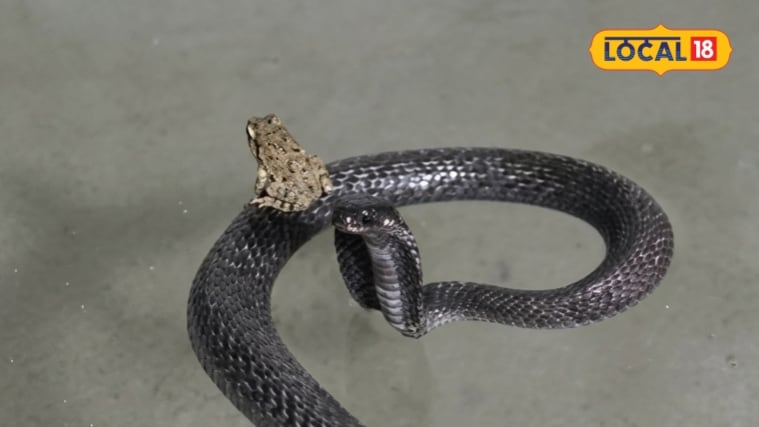
In an extraordinary display of natural behavior that captured regional attention across Rajasthan, a rare wildlife encounter emerged from the Mandal area in Bhilwara district. Residents of Chhatri Kheda village discovered a frog calmly seated atop a snake within the enclosed confines of a domestic water storage tank. The astonishing sight of a natural prey resting peacefully upon its predator quickly became a subject of widespread discussion across rural and urban communities alike, underscoring the unpredictable survival dynamics displayed by wildlife during confined circumstances.
Upon discovering the unusual interaction inside the water reservoir, alarmed household members immediately alerted neighbors and village elders to prevent any harm to the trapped creatures or local residents. Recognizing the delicate nature of the situation, the villagers contacted experienced wildlife rescuer Kuldeep Singh Ranawat. The encounter quickly generated intense interest, as footage of the predator and prey peacefully coexisting in the water tank circulated widely across digital platforms, captivating viewers throughout Rajasthan.
Arriving swiftly at the scene, rescuer Kuldeep Singh Ranawat conducted an in-depth assessment of the water structure to execute an intervention without injuring either specimen. With technical precision and deliberate care, both the snake and the frog were safely brought to the surface. Ground details reported verified that neither animal sustained physical trauma during the operation, after which both were transported and released safely into a dense natural forest habitat away from human habitations.
The incident has drawn thoughtful reflections from environmental observers and regional representatives who closely monitor community-wildlife encounters. Local representatives highlighted ongoing ground realities, noting that seasonal changes often drive reptiles and amphibians into domestic spaces in search of moisture and shelter. Stakeholders emphasized that such rare events demonstrate the primal survival instinct of animals, where immediate peril can temporarily supersede natural predatory behavior, while commending the villagers for opting for humane rescue over extermination.
The occurrence has reverberated across neighboring districts, including Kotputli, where rural and semi-urban households maintain similar subterranean water storage tanks. Local stakeholders in Kotputli noted that unmonitored water tanks frequently turn into unintentional hazards for local fauna, leading to sudden contamination or risks to household members. The event has prompted domestic communities across the region to inspect household infrastructure and recognize the importance of peaceful coexistence with native biodiversity.
Administrative observers and wildlife safety advocates have reiterated the necessity of statutory awareness and adherence to proper response mechanisms when wild creatures are detected in residential areas. Authorities continually advise that untrained individuals must not attempt independent handling of reptiles, as improper intervention risks lethal bites or avoidable harm to protected species. The deployment of certified wildlife rescuers remains the recommended procedure for safeguarding both human life and regional fauna.
Looking ahead, community organizations and regional observers across Rajasthan are advocating for structured guidelines concerning the maintenance and secure covering of domestic water bodies. Ground teams continue to encourage prompt reporting to official animal rescue hotlines whenever dangerous fauna are spotted within residential vicinities. By prioritizing trained interventions and ecological awareness, communities can successfully balance household sanitation with compassionate wildlife preservation.