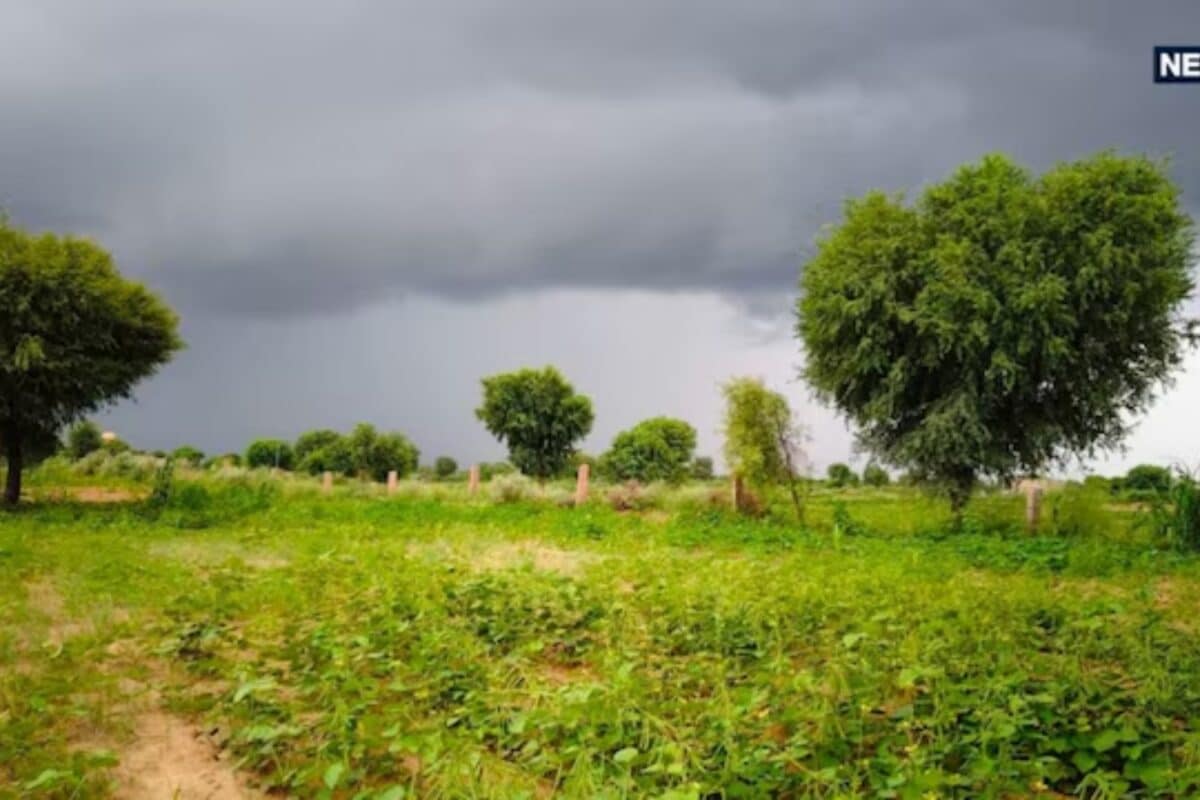
As the regional weather patterns undergo a notable seasonal transition across the state of Rajasthan, meteorological observations for 13 October indicate a predominantly dry phase taking hold of most geographical zones. Citizens and regional observers across various districts are witnessing a clear meteorological shift, wherein active precipitation systems have temporarily receded, leaving large tracts of land under clear skies and stable atmospheric conditions. This meteorological behavior marks a transitional phase in the local climate, which routinely affects agrarian planning and daily routine activities throughout the territory.
A closer examination of the meteorological history and regional topography reveals that Rajasthan experiences stark climatic contrasts between its eastern and western sectors. While the eastern divisions traditionally receive more consistent moisture during active monsoon withdrawals, the western frontier districts, particularly areas proximate to the Thar Desert and bordering zones, rely heavily on localized convective currents and erratic western disturbances. The ongoing weather scenario on 13 October reflects this historical pattern, wherein the regional divisions experience contrasting atmospheric trajectories rather than a uniform state-wide climatic phenomenon.
Delving into the specifics of the current meteorological dispatch, official observations confirm that rainfall activity across Eastern Rajasthan has hit a definitive pause, resulting in completely dry conditions expected throughout 13 October. Conversely, the western expanse of the state, specifically targeting the Bikaner division, presents a slightly different micro-climate where isolated pockets may experience light rainfall. Furthermore, meteorological models project that northwestern Rajasthan and its immediate surrounding territories could also witness similar light precipitation spells extending across the timeline of 13 and 14 October.
Local farming communities, rural laborers, and agricultural stakeholders have expressed mixed reactions regarding this ongoing weather modulation. While dry conditions in Eastern Rajasthan facilitate the harvesting and drying processes of mature seasonal crops, agricultural planners in western regions keep a close watch on the Bikaner division forecasts. The anticipated light showers, though localized and minimal in quantitative volume, hold significance for soil moisture retention in specific agrarian pockets where cultivators continuously monitor precipitation charts to safeguard their yields.
Examining the localized impact on Kotputli-Behror and surrounding districts, the prevailing dry weather regime ensures uninterrupted daily commerce, transit operations, and municipal activities. The absence of heavy downpours or disruptive meteorological disturbances allows local transport networks, educational institutions, and commercial markets to function smoothly without weather-induced impediments. Nevertheless, local administrative units and community leaders remain vigilant, keeping channels of communication open with regional weather monitoring cells to disseminate timely advisories should any unexpected atmospheric developments occur.
Responding to the current climatic conditions, meteorological authorities and administrative departments have maintained a routine monitoring stance without escalating the alert level. Specifically, the department has not issued any warnings or severe weather advisories for 13 October, indicating that the predicted light rainfall in western zones does not pose any immediate risk to public safety, infrastructure, or civic amenities. District administrations continue to receive routine updates from state forecasting centers to ensure comprehensive preparedness across all local governance levels.
Looking toward the forward outlook and immediate timeline, meteorologists anticipate that the weather conditions will remain largely stable through 13 and 14 October, characterized by dry spells in the east and minor, isolated showers in the northwest. Public expectations and institutional planning are aligned with these projections, as community members prepare for a mild transition into the post-monsoon period. Continuous observational tracking by meteorological experts will remain instrumental in providing accurate updates as the regional climate evolves over the coming days.