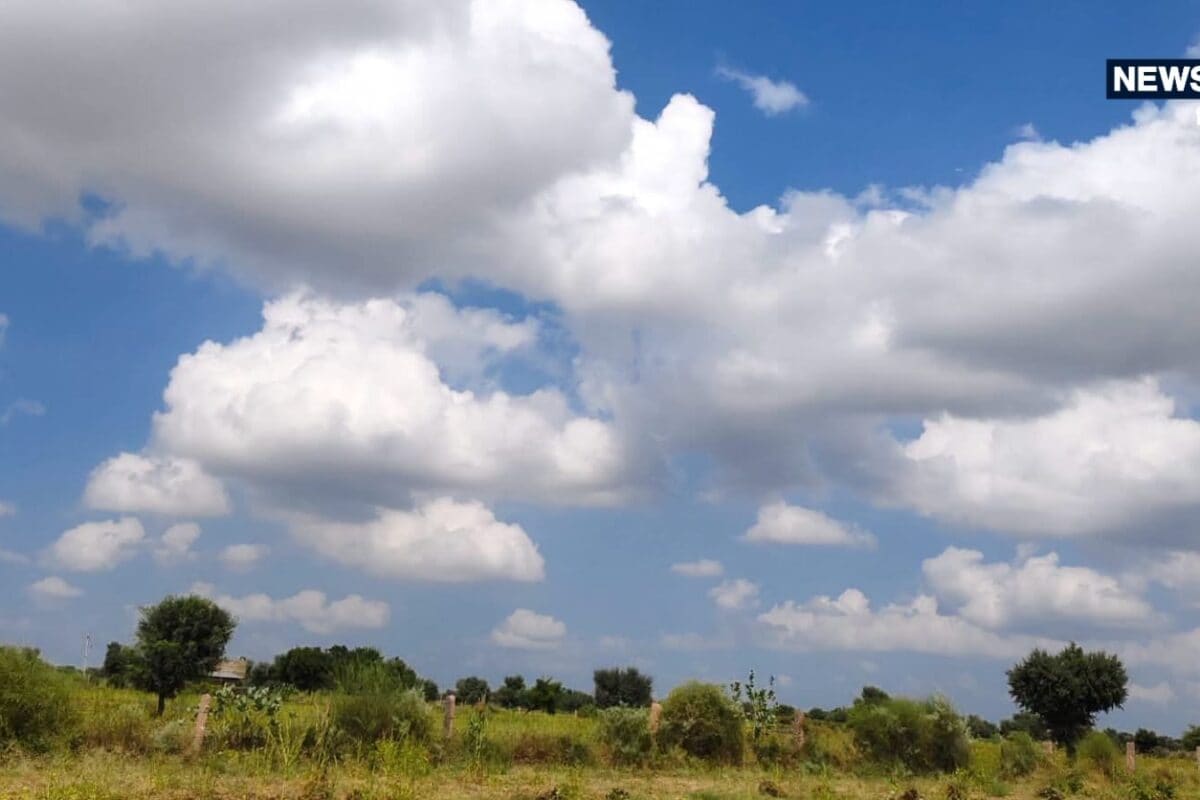
The southwest monsoon in Rajasthan has officially entered its final phase of withdrawal, according to the latest updates released by the Indian Meteorological Department (IMD). Meteorological assessments confirm that conditions are entirely favorable for the complete exit of monsoon currents from the remaining parts of the state within the next 24 hours. This transition marks the conclusion of the rainy season, steering the region toward predominantly dry atmospheric conditions across both eastern and western sectors.
Reviewing the climatic progression over the past season, meteorologists note that the overall spatial distribution of rainfall has been uneven, creating localized agrarian anxieties. Historical precipitation patterns for this monsoon cycle showed significant temporal breaks, affecting crop development in several districts. As the seasonal winds recede, the state transitions into an inter-monsoonal dry spell characterized by clear skies and intensified solar radiation during daytime hours.
Examining the current ground reality and temperature recordings across the state, weather stations have reported consistent warmth, with Phalodi registering the highest maximum temperature at 40.2 degrees Celsius. Despite the sweltering daytime conditions, nighttime temperatures offer a perceptible measure of comfort to residents. Over the next five days, meteorologists project that maximum temperatures will remain largely stable without any major fluctuations, keeping days warm and nights pleasant.
Community stakeholders, including farmers, local traders, and civic representatives, have expressed growing concerns regarding the prolonged dry phase and its implications for late-season agriculture. Agricultural communities point out that the lack of adequate soil moisture during critical maturation phases could impact upcoming sowing schedules. Local business sectors note that climatic uncertainties heavily influence rural purchasing power, making timely administrative interventions crucial for economic stability.
Focusing on the regional impact across Rajasthan, including urban hubs like Jaipur and Bikaner, the prolonged dry spell necessitates careful monitoring of water reserves and agricultural inputs. Communities in these areas are preparing for a brief continuation of dry weather before any atmospheric disturbance alters the current thermal regime. The juxtaposition of hot days and cooler nights requires residents to adjust their daily routines and energy consumption patterns accordingly.
In response to the deficient rainfall recorded in numerous sectors, administrative authorities have initiated planning for extensive surveys across the state. Official records indicate that a comprehensive survey of drought-like conditions is formally proposed for 117 tehsils spread across 34 districts. State machinery is gearing up to assess agricultural losses and groundwater depletion to ensure targeted relief measures reach the most affected populations.
Looking toward the forward outlook and upcoming weather timeline, the IMD predicts that the weather will remain predominantly dry on October 3, with no special weather warnings currently issued for any district. However, a significant atmospheric shift is anticipated on the evening or night of October 6, originating in northern Rajasthan. Following this, isolated to scattered rainfall activity is possible on October 7 and 8 across select northern and eastern districts, with thunderstorm and rainfall activities expected to intensify between October 9 and 11.