
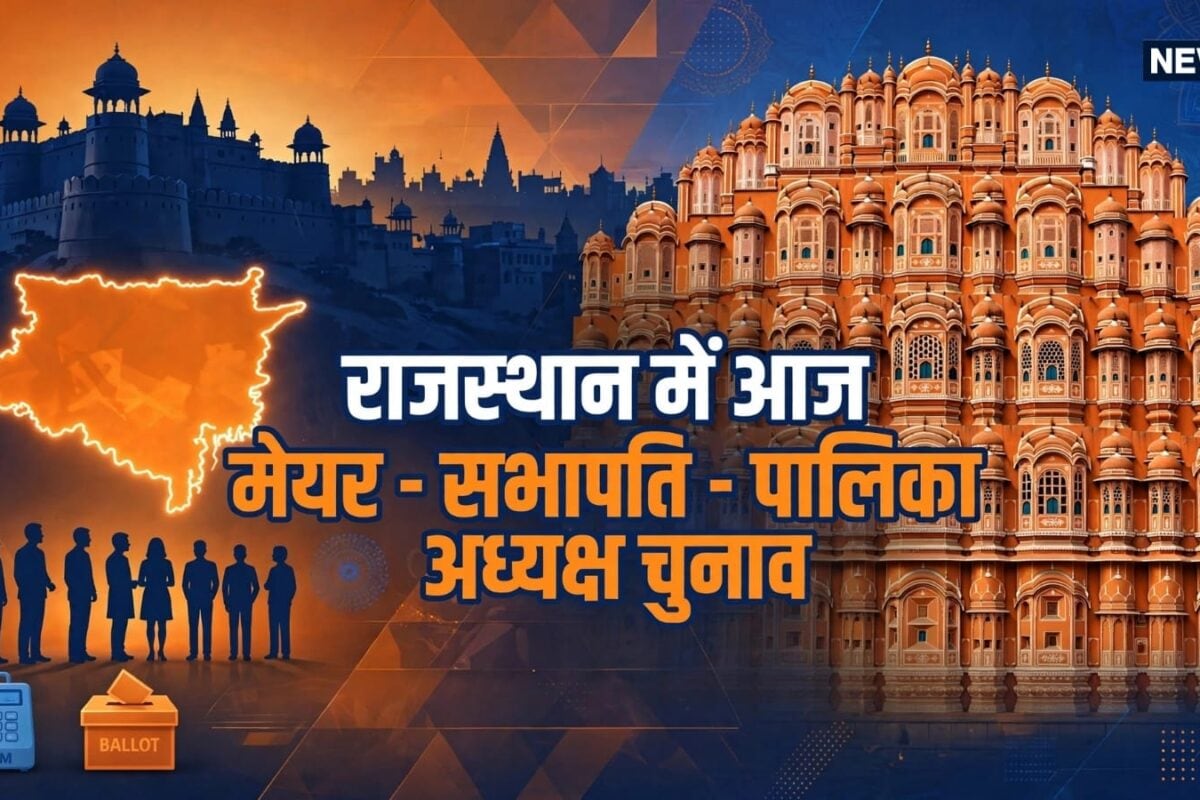
Rajasthan is witnessing a monumental political showdown as urban local body elections for the year 2026 formally determine the leadership of cities across the state. With intense polling underway, the political spotlight remains firmly fixed on the strategic movements of major political forces, including the Bharatiya Janata Party and the Congress, alongside independent councillors whose roles have become decisive in several municipal boards.
The electoral calendar for these civic elections spans a rigorous schedule, originating with councillor polls conducted across 309 municipal bodies on September 9 and September 11. Following these initial phases, authorities mandated repolling in several specific wards to ensure absolute electoral integrity before paving the way for the high-stakes election of chairpersons and mayors.
Administrative transparency and fierce political contests have marked the proceedings, highlighted by the fact that 32 municipal bodies successfully elected their chairperson candidates unopposed even before the formal polling date. Notably, the Bharatiya Janata Party secured significant early momentum when its mayoral candidates in Bharatpur and Bhilwara were elected completely unopposed, setting a competitive tone for the remaining urban centers.
The current phase of elections witnesses direct political confrontations for mayoral positions across prominent historical and commercial hubs including Udaipur, Bikaner, Alwar, Pali, and Ajmer. Simultaneously, the political equation for the crucial municipal corporations of Jaipur, Jodhpur, and Kota has been scheduled specifically for September 25, drawing intense scrutiny from political analysts and party strategists alike.
A defining feature of this electoral cycle has been the extensive resort politics and strategic confinement of councillors observed in numerous regions prior to voting day. With independent councillors holding substantial bargaining power, the arithmetic behind securing the chairperson posts has grown remarkably intricate, forcing both the Bharatiya Janata Party and the Congress to engage in intense negotiation and internal coordination.
Amidst this state-wide political turbulence, the most striking narrative emerges from Gangapur City, where the Congress party has orchestrated a historic political transition. By securing a resounding victory through Krishna Kumar Goyal, the Congress has successfully wrested control of the Gangapur City Municipal Council, breaking a prolonged fifteen-year drought of political dominance in the region.
As election proceedings progress toward their final phases with upcoming polls in major metropolitan corporations on September 25, the overarching impact of these urban body elections extends deeply into local governance and community development. Local administrations have deployed stringent security and logistical protocols to guarantee peaceful voting, while citizens and business communities closely monitor how the newly elected leadership will address urban infrastructure and municipal welfare in the coming years.