
The Rajasthan State Eligibility Test for the year 2026 officially commenced on Sunday across multiple designated venues, drawing widespread attention from aspirants, educators, and administrative authorities alike. As one of the most significant academic evaluation milestones in the region, the examination serves as a critical stepping stone for candidates aspiring toward higher educational and professional teaching qualifications. The statewide conduct of this examination, however, immediately encountered turbulent developments right from the early morning hours, signaling severe logistical pressures on the organizing bodies.
Historically, eligibility examinations conducted across the state of Rajasthan have carried immense significance, often serving as the primary gateway for candidates seeking lectureship and assistant professor positions within higher education institutions. The inception of the SET framework aligns with national regulatory standards designed to maintain rigorous academic benchmarks across universities and colleges. Consequently, the stakes associated with this examination are exceptionally high for thousands of educated youths who have dedicated years to rigorous preparation, hoping to secure stable professional futures amidst evolving employment landscapes.
Logistical preparations for the examination involved a massive deployment of resources, spanning across seven divisional headquarters across the state. A total of 429 examination centers were meticulously established to accommodate the vast multitude of aspirants appearing for the test. Official records indicate that an overwhelming total of 1.77 lakh candidates registered and turned up at various examination halls to undertake the rigorous assessment, reflecting the sheer scale and magnitude of the administrative undertaking.
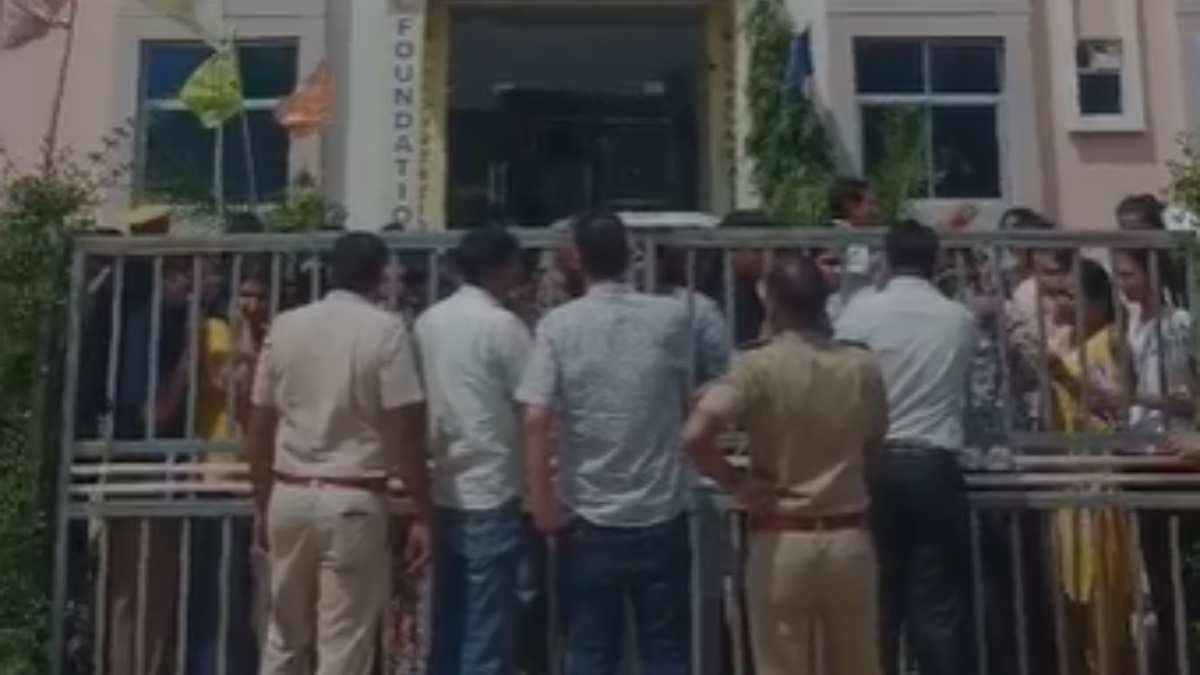
Despite extensive prior planning by the authorities, ground realities on the morning of the examination exposed severe logistical vulnerabilities. The most intense disruption occurred in the capital city of Jaipur, where agitated candidates and observers raised serious concerns after examination papers reached specific centers significantly behind schedule. The resulting confusion triggered immediate uproar and protests at affected venues, as anxious aspirants feared compromise, unfair time loss, and administrative apathy regarding their academic careers.
The administrative fallout from the Jaipur delay quickly resonated across various regional districts, including surrounding areas like Kotputli, where candidates and local academic circles expressed deep apprehension over the systemic lapses. Local communities and educational observers in these peripheral districts closely monitored the developments, recognizing that delays and mismanagement at primary divisional hubs often create cascading effects, inducing psychological stress among candidates who travelled long distances from rural and semi-urban localities to reach their assigned venues.
In response to the mounting public anger and administrative chaos, local supervisory officials and law enforcement personnel rushed to the disturbed centers to restore order and pacify the protesting candidates. Assurances were reportedly issued by the supervising authorities to address the concerns arising from the delayed distribution of question papers, with officials reviewing time-compensation protocols to ensure that no deserving candidate suffers undue disadvantage due to administrative shortcomings.
As the examination proceedings eventually stabilized following immediate intervention, the focus now shifts toward post-examination evaluations and strict administrative audits of the dispatch chain. Educational administrators face mounting pressure to deliver absolute transparency and ensure that future evaluation cycles are executed with flawless precision, thereby restoring absolute faith among the state's academic community and the 1.77 lakh candidates who participated.