
The political landscape of Rajasthan's urban local bodies has received its definitive final outline with the official declaration of the re-polling results for nine specific wards. These wards, distributed across Jaipur, Jodhpur, Kota municipal corporations, and the Suket municipality, had faced initial delays in result compilation due to technical malfunctions encountered in electronic voting machines during the primary voting schedule.
Addressing these procedural discrepancies, the election commission took swift cognizance of the situation and mandated fresh polling across the affected booths on Wednesday to uphold the democratic sanctity of the electoral process. The re-poll was conducted under stringent administrative security and rigorous oversight, ensuring that every registered voter exercised their franchise without disruption or hindrance.
Following the successful conclusion of the re-polling exercise, the administrative machinery initiated the counting of votes on Thursday morning under strict surveillance and in the presence of authorized political representatives and candidates. The comprehensive tallying process revealed a decisive mandate split across the participating urban centers, bringing an end to weeks of anxious speculation among party workers and leadership alike.
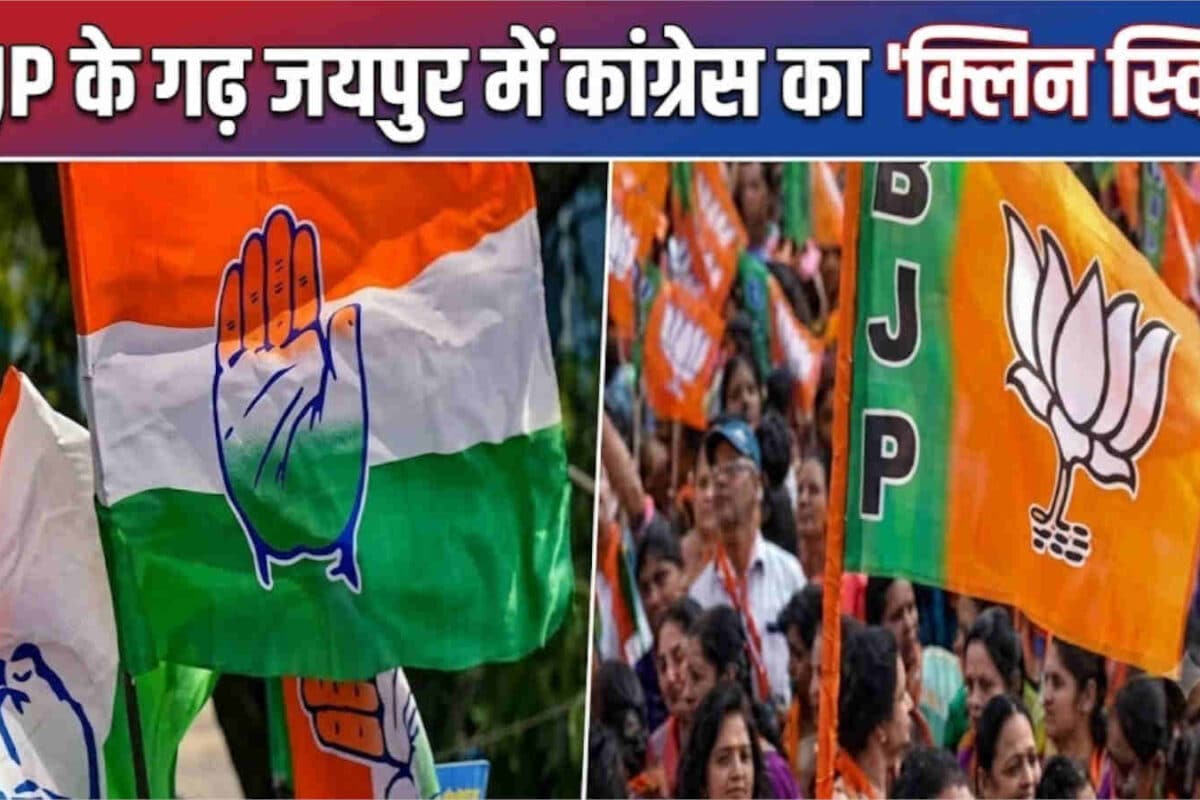
An analytical breakdown of the outcomes from the nine contested seats indicates a notable resurgence for the Congress party within the capital city, where it successfully consolidated its political standing. Overall, out of the nine contested wards that went to the polls during this supplementary phase, the Congress party emerged victorious on six seats, whereas the Bharatiya Janata Party secured success across three seats.
The conclusion of these results marks the completion of the entire municipal election cycle across the state of Rajasthan, with all constituent wards now having their duly elected representatives in place. This comprehensive closure allows urban local governance structures to transition smoothly from the electoral phase to the administrative consolidation of municipal bodies across the districts.
With the final electoral picture now completely clear and transparent, the focus of the state election administration and political parties has shifted immediately toward the next crucial constitutional milestone. The official schedule dictates that the crucial elections for choosing the municipal heads across these local bodies will take place on the twenty-first of September.
Local governance authorities, administrative officials, and elected representatives are now preparing for the upcoming mayoral and chairperson elections, which will finalize the executive leadership of these urban bodies. The successful and peaceful culmination of the re-poll process underscores the resilience of the local democratic framework and sets a stable foundation for effective municipal administration in the upcoming tenure.