
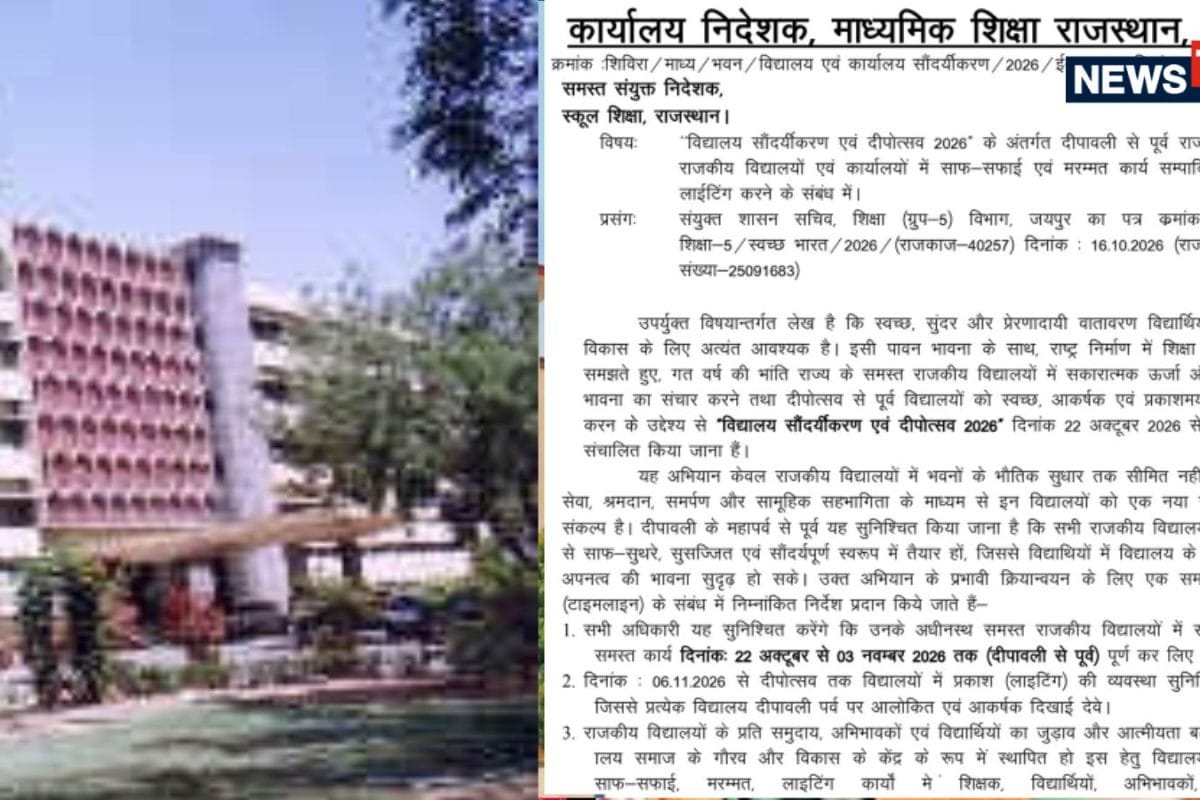
In an unprecedented administrative move that has ignited statewide controversy, the Rajasthan Education Department has issued a formal directive requiring government schools to organize deep cleaning, painting, maintenance, and attractive lighting arrangements ahead of the auspicious Diwali festival entirely through public participation and voluntary donations.
The controversial mandate was issued under the direct instructions of the state Education Minister, Madan Dilawar, stipulating that educational institutions must engage students and local residents in physical voluntary labor for cleanliness drives. Furthermore, schools have been instructed to secure financial resources independently for repairs, aesthetic improvements, and decorative lighting without receiving any monetary grant from the state government treasury.
A rigorous examination of the ground realities within the state's educational ecosystem reveals staggering logistical burdens. Across Rajasthan, there are more than 63 thousand government schools currently operational, providing foundational education to approximately 7 million children. However, the administrative machinery remains critically strained due to acute staff shortages, featuring a total sanctioned cadre of 400 thousand teachers against which nearly 150 thousand positions are lying completely vacant.
Adding to these systemic challenges, a significant proportion of school infrastructure across rural and urban districts consists of dilapidated buildings requiring urgent structural restoration, making aesthetic enhancements a secondary and impractical priority for overburdened educators.
The directive has encountered fierce resistance from prominent educator representatives and employee unions across the region. The President of the Rajasthan Teachers Association, Siyaram Sharma, vehemently denounced the government order, categorizing it as an arbitrary decree that fundamentally undermines the dignity and core responsibilities of professional educators.
Teacher union leaders have articulated a unified stance emphasizing that the primary legal and moral obligation of a teacher is to impart quality academic instruction to students within the classroom environment, rather than being compelled to solicit financial contributions and donations from local communities and impoverished households.
As education administrators attempt to navigate the logistical aftermath of the directive, the broader discourse continues to center around the financial autonomy of public institutions, administrative accountability, and the systemic allocation of resources required to maintain acceptable standards of infrastructure and educational quality across the region's vast network of government schools.
