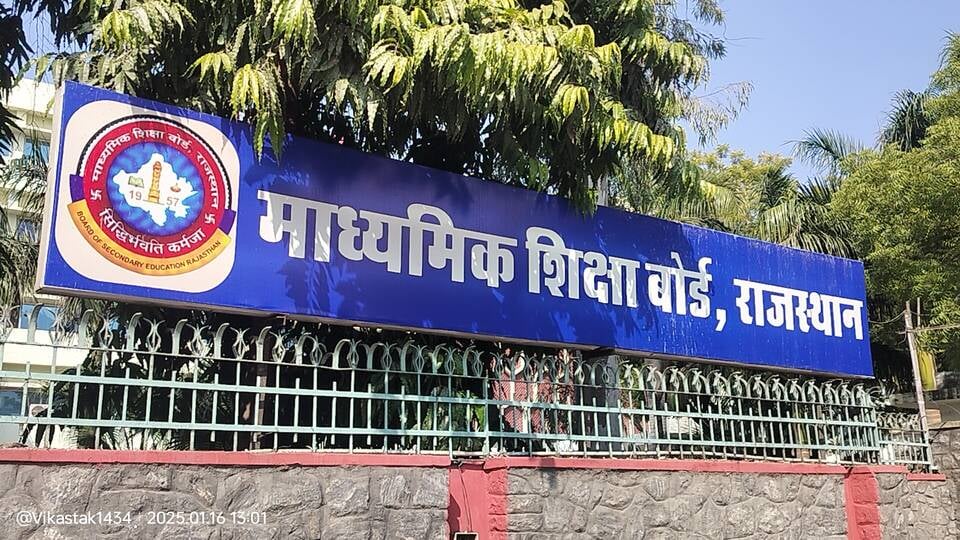
In a monumental policy overhaul declared by the education administration, the state of Rajasthan has officially transformed the structural framework of secondary education. Effective as of October 5, 2026, the 10th-grade board examination system will no longer follow the traditional single annual test model. Instead, the examinations will now be systematically organized twice a year, providing students with multiple opportunities to successfully clear their academic milestones without losing a full academic year.
This sweeping reform comes after extensive deliberations regarding student welfare, mental health, and the reduction of examination-related anxiety that has historically plagued the educational sector. Historically, students who failed one or two subjects faced an agonizing wait for supplementary examinations, often leading to prolonged academic uncertainty and psychological distress. The abolition of the conventional supplementary system is designed to replace this outdated mechanism with a continuous, structured bi-annual assessment architecture.
Ground details reported by the Kotputli Bureau indicate that the logistical framework required to execute bi-annual board examinations is monumental, involving massive resource allocation, secure question paper distribution, and extensive evaluation protocols. Ground details reported highlight the sheer scale of administrative coordination needed across multiple examination centers in Rajasthan. Educational authorities have assured that necessary infrastructural adjustments are being implemented to accommodate the doubled examination frequency without compromising academic integrity.
Local stakeholders and educational representatives have actively engaged with the administrative changes, offering nuanced perspectives on how these modifications will manifest in daily school operations. Local representatives highlighted ongoing ground realities, noting that while the reduction in academic pressure is commendable, meticulous planning is essential to prevent teacher burnout and administrative fatigue. Discussions among parent-teacher associations reflect a cautious optimism regarding the timely declaration of results under the new bi-annual system.
Within the Kotputli-Behror district, the local academic community is closely monitoring how these changes will impact students, teachers, and coaching institutions. Educational institutions in Kotputli are currently reviewing their academic calendars to align internal assessments with the new bi-annual board schedule. Local business owners and community members have also discussed the broader socio-economic implications of a more flexible examination schedule on student retention and higher education readiness.
At the administrative level, state education officials have maintained continuous oversight, issuing comprehensive guidelines to schools regarding syllabus distribution and grading standards. Statutory oversight bodies are actively monitoring the transition phase to ensure absolute transparency, fairness, and standardized evaluation across both examination cycles. Training programs for educators are being rolled out to familiarize them with the updated evaluation metrics required under the bi-annual examination framework.
Looking forward, the educational outlook for Rajasthan in late 2026 and beyond centers on the successful implementation and stabilization of this dual-examination policy. Public expectations remain high as students and parents anticipate a more supportive and forgiving educational ecosystem. As the first cycle under the new rules approaches, the Kotputli News bureau will continue to monitor developments and report on the unfolding impact across the region.