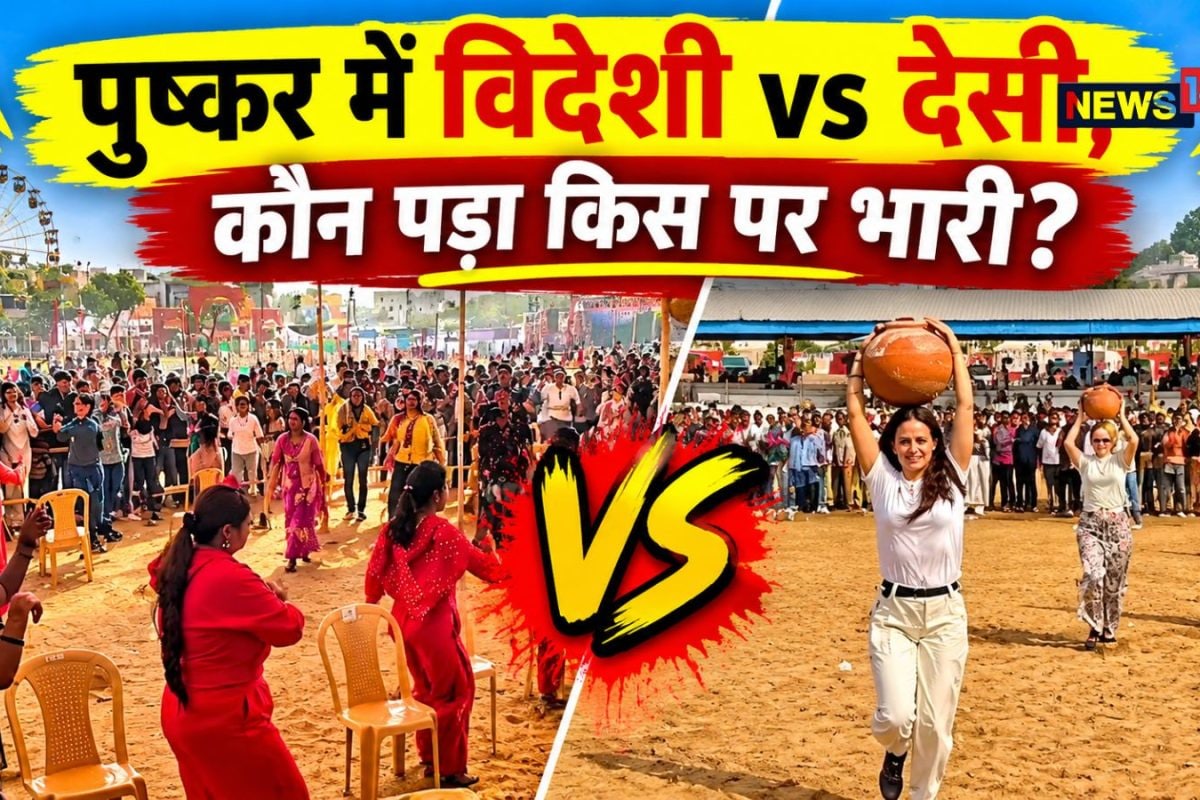
The sixth day of the International Pushkar Fair 2026 witnessed an extraordinary display of traditional athleticism and cultural pride as women from four foreign nations and diverse Indian states competed in highly anticipated rural sports events. Held against the backdrop of the iconic desert landscape, the festivities drew immense crowds eager to witness the rich heritage and competitive spirit of the participants. The primary attractions of the day were the traditional earthen pot race, locally known as the matka race, and the highly competitive musical chair race.
Historically, the Pushkar Fair has served as a vital cultural melting pot, bridging ancient Rajasthani traditions with contemporary global tourism. Originating as a massive livestock and religious congregation around the sacred Pushkar Lake, the annual event has progressively evolved into a global tourism hub. Over decades, cultural competitions highlighting indigenous skills have become a cornerstone of the festival, aiming to preserve local traditions while offering international visitors a deep immersion into the indigenous lifestyle of rural Rajasthan.
On the ground, the logistical execution of the competitions involved meticulous planning by the event coordinators, accommodating eighteen Indian women alongside international contestants representing four distinct countries. The tension and excitement reached their peak during the matka race, where participants balanced heavy earthen pots on their heads while sprinting across the designated track. Demonstrating exceptional stamina and equilibrium, Naina Devi from Churu secured the first position, followed by Sharda from Pali in second place, and Komal from Jodhpur claiming the third position.
The competitive fervor extended equally into the musical chair event, which featured a dynamic mix of eighteen Indian women and international delegates from four countries. In this high-stakes contest of agility and quick reflexes, Shobhit Jain from Jaipur emerged victorious in first place, while Maina from Churu captured the second spot, and Manu Saxena from Noida secured the third position. Spectators and local traders expressed immense pride in the achievements of the domestic participants, noting that such victories elevate the confidence of rural and urban women alike on an international platform.
The overarching regional impact of these events on districts such as Kotputli-Behror and the wider Rajasthan region is profound, significantly boosting tourism revenue and local small-scale enterprises. Artisans, handicraft vendors, and local merchants reported substantial economic activity driven by the influx of domestic and international tourists who flocked to the fairgrounds in heavy numbers. The cultural resonance of these traditional sports reinforces community bonding and stimulates regional economic growth, cementing the fair's status as a premier global destination.
Administrative authorities and festival organizers maintained stringent oversight to ensure the smooth conduct of the events, prioritizing participant safety, crowd management, and logistical coordination. Municipal and district officials worked in close tandem with security personnel to handle the massive influx of visitors, ensuring that all cultural programs proceeded without disruption. Medical teams and hydration stations were strategically positioned along the competition tracks to support athletes throughout the physically demanding races.
Looking toward the remainder of the festival timeline, expectations remain exceptionally high for subsequent cultural programs, folk music performances, and traditional exhibitions. The resounding success of the competitions on the sixth day sets a high benchmark for the remaining schedule, ensuring sustained public engagement and media interest. Organizers and community leaders anticipate an even larger turnout of tourists in the concluding days, further amplifying the socio-economic and cultural legacy of the Pushkar Fair.