
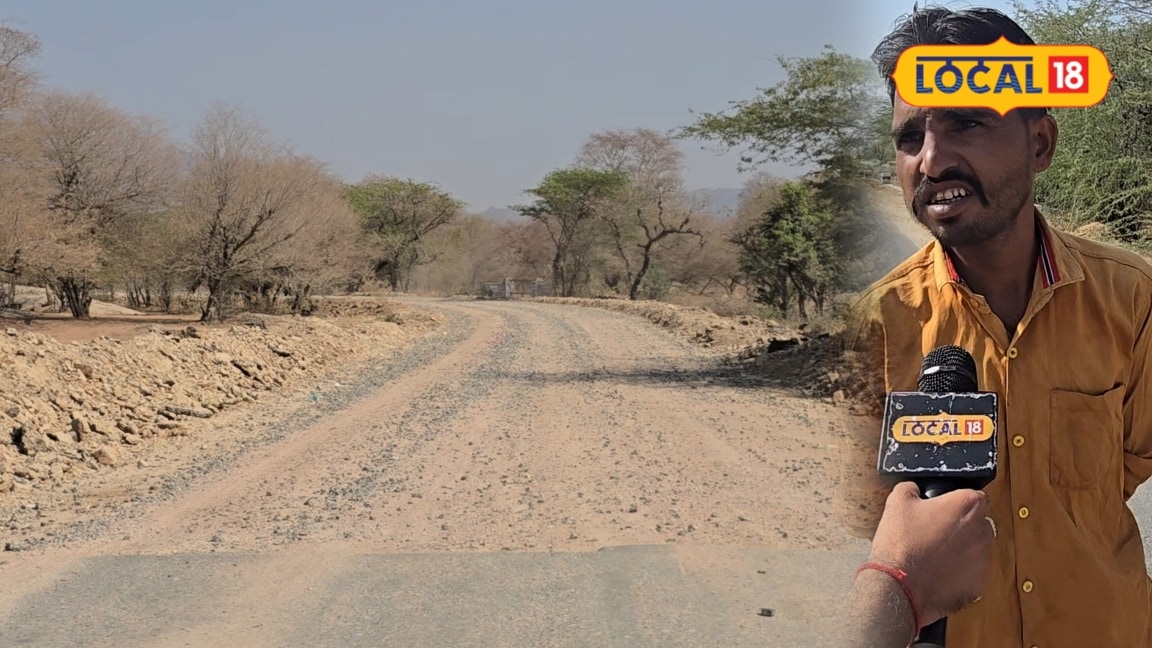
In the Pali district of Rajasthan, an alarming infrastructural failure has turned a crucial daily commute into a hazardous ordeal for hundreds of residents. The main arterial route connecting Desuri to Jojawar has remained critically incomplete for the past 12 months, leaving commuters to navigate a perilous landscape on a daily basis. While the overarching connectivity project was initiated to streamline regional transport, a glaring oversight has stranded public infrastructure development midway through execution.
The administrative and infrastructural background of this route reveals a troubling pattern of delayed project delivery and fragmented execution. Connecting key rural and semi-urban settlements across the terrain, the Desuri-Jojawar corridor was envisioned as a backbone for local economic mobility and safe vehicular movement. However, despite substantial resource allocation and completion of major portions on both flanks, bureaucratic inertia has stalled progress on the critical middle segment.
A rigorous ground assessment highlights the staggering severity of the infrastructural gap in question. Specifically, the intermediate stretch measuring between 2 to 3 kilometers—situated precisely between Sumer and Lampi—remains utterly neglected, unpaved, and structurally hazardous. This treacherous segment is presently strewn with large, sharp stones protruding aggressively from the earth, rendering vehicular traction extremely difficult and creating an environment of constant peril.
The direct human cost of this prolonged construction delay is borne heavily by everyday commuters, particularly two-wheeler riders who traverse the forest-adjacent route. Reports from the ground confirm that daily travelers, including students, workers, and emergency commuters, experience frequent vehicular skidding and severe physical injuries due to the treacherous terrain. The absence of basic safety barriers, warning signs, or leveled tarmac exacerbates the vulnerability of all citizens attempting to use the pathway.
Beyond the immediate physical dangers, the breakdown of this connectivity route imposes a stifling economic and social burden on the wider regional community. Transport delays, vehicular damage, and the psychological fear of traversing the forest stretch have severely restricted seamless mobility between Pali, Desuri, Jojawar, Sumer, and Lampi. Local traders and agricultural workers find themselves constrained by the inability to transport goods efficiently, thereby impeding regional prosperity.
In response to the mounting crisis, local residents, community representatives, and affected motorists have repeatedly petitioned district authorities to rectify the road anomaly. Public outrage continues to intensify as citizens question the rationale behind leaving a vital arterial link half-finished for an entire year. The collective demand from the grassroots emphasizes absolute accountability and immediate operational deployment to finish the pending 3-kilometer stretch.
As public pressure mounts, community leaders and civil society members await a definitive timeline and remedial action plan from the responsible engineering departments. The overarching consensus demands that administrative machinery shed its apathy and prioritize the completion of the Sumer-Lampi section before further injuries or fatalities occur. Ensuring the structural integrity of this vital transportation corridor remains an urgent necessity for the safety and welfare of the entire district.
