
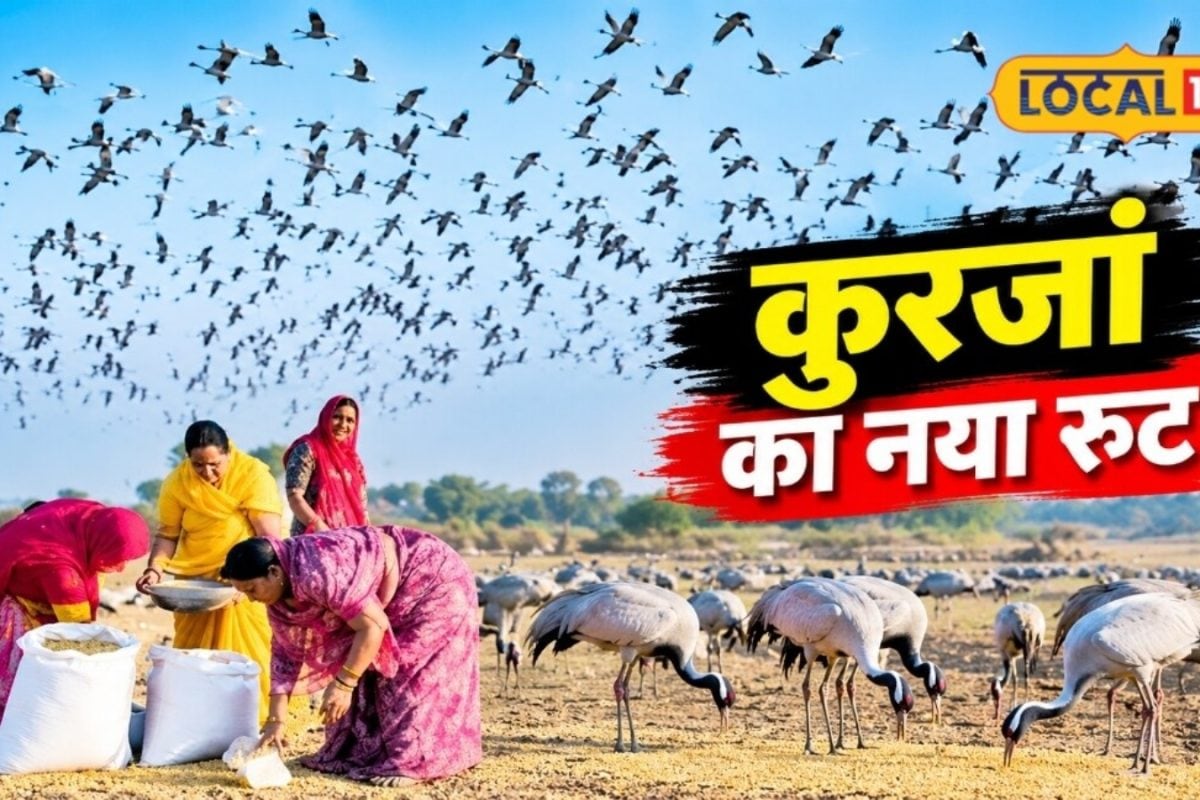
In an extraordinary display of avian navigation and environmental adaptation, the migratory demoiselle cranes originating from distant habitats in Russia and Mongolia have officially altered their traditional flight route. This historic seasonal shift has substantially shortened their arduous migration journey to the arid landscape of Rajasthan by an incredible 1200 kilometers. Ornithologists and wildlife observers note that such extensive route modifications highlight the remarkable adaptability of these magnificent birds to shifting global climatic patterns and ecological conditions.
Historically, these migratory visitors followed complex, extended pathways across continents, navigating treacherous mountain ranges and unpredictable weather systems to reach their favored wintering grounds in western India. The traditional route required immense physical exertion and exposed the flocks to numerous environmental hazards over thousands of kilometers. By redefining their flight trajectory, the birds have optimized their energy expenditure, allowing them to arrive in the Marwar region with significantly better physical resilience.
The arrival of these majestic birds has transformed the local landscape, particularly across the Marwar region, which serves as a crucial seasonal sanctuary for them. Local communities and dedicated Good Samaritans have reported massive flocks landing across designated sectors. Recognizing the immediate needs of these exhausted travelers after their abbreviated yet demanding journey, local residents have mobilized resources to ensure their survival and well-being during the winter season.
Expressing deep dedication to wildlife preservation, local humanitarians and wildlife enthusiasts have actively stepped up across various pockets of the region. In the Jodhpur district, specifically within the historical Mandor area, dedicated citizens have established comprehensive arrangements for providing daily grains and clean drinking water. These community-driven initiatives reflect a profound cultural ethos of wildlife protection and coexistence that has historically defined the region.
While the immediate focal point of this migratory phenomenon remains centered around Jodhpur and Mandor within Marwar, the broader ecological implications resonate throughout the state of Rajasthan. The presence of these birds enriches the local biodiversity and fosters a renewed sense of environmental stewardship among neighboring districts. Communities across the region are increasingly recognizing the vital importance of preserving traditional water bodies and feeding grounds to support these international visitors.
Local administrative bodies and conservation groups are closely monitoring the flocks to ensure their safety and undisturbed stay throughout the season. Local authorities, in collaboration with community leaders, are reviewing protective measures around key congregation sites in Mandor and surrounding zones. These coordinated efforts aim to mitigate any potential human-wildlife conflicts and protect the natural habitat from encroachment or industrial disturbance.
Looking ahead, wildlife experts and local volunteers plan to maintain these vital sustenance operations throughout the entirety of the migration season. As environmental conditions continue to evolve, researchers will closely track whether this newly adopted flight route becomes a permanent generational habit for the demoiselle crane populations originating from Russia and Mongolia. Meanwhile, the heartwarming community response in Mandor and across Marwar continues to set a shining example of grassroots wildlife conservation.
