
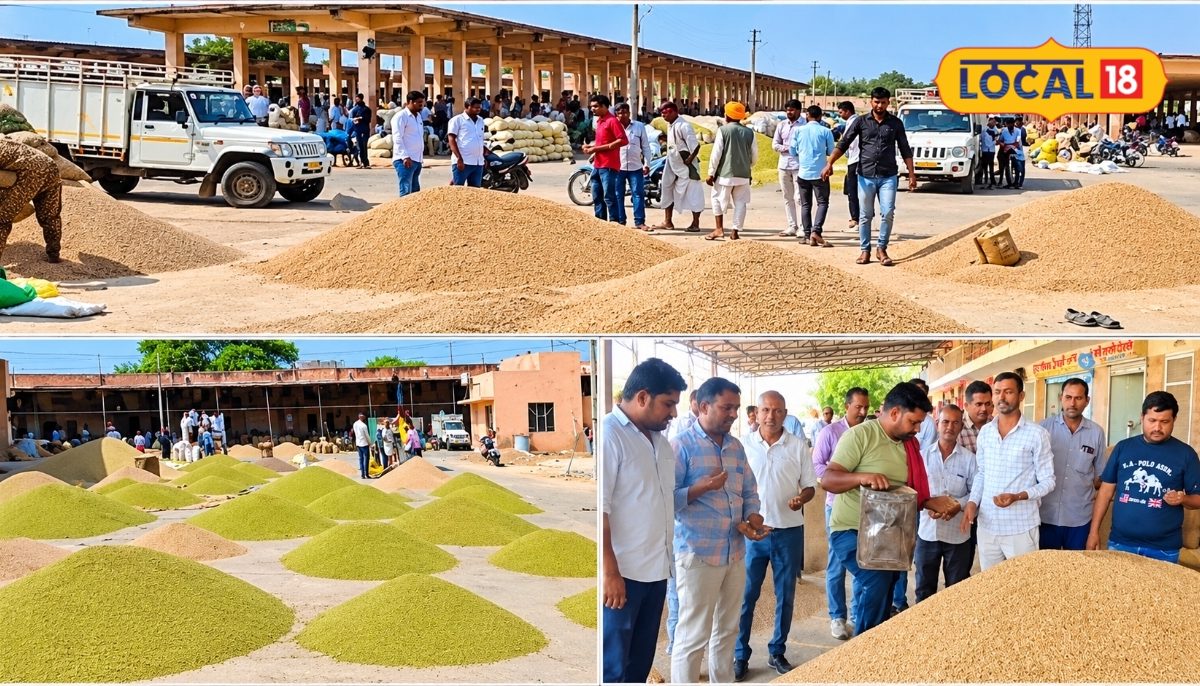
Agricultural produce markets in Nagaur and Merta are currently witnessing a steady and continuous influx of Kharif season crops, drawing significant attention from local farming communities and regional traders alike. As the harvesting season progresses across the region, mandis have become bustling hubs of commercial activity where farmers arrive daily to assess market trends and finalize sales. The prevailing climate and successful agricultural yields have contributed to a robust supply chain within these designated trading centers, establishing a competitive environment for numerous essential commodities.
Historically, the mandis in Nagaur and Merta have served as vital economic lifelines for rural cultivators, operating as primary centers for price discovery and commercial transactions in western and central Rajasthan. Over successive agricultural seasons, these marketplaces have evolved to accommodate a broader spectrum of agricultural produce, reflecting both changing cropping patterns and fluctuating market demands. The establishment of structured trading mechanisms ensures that cultivators can bring their harvested yields to a regulated platform, thereby safeguarding their interests against arbitrary pricing and fostering a transparent marketplace.
Recent market evaluations and transactional reports from the trading floors indicate distinct pricing structures across various agricultural commodities. Notably, green gram or moong has recorded a significant transaction rate, touching up to 8500 rupees per quintal, which reflects steady domestic demand and quality variations. Simultaneously, spices such as cumin have demonstrated even higher valuation, with top-grade produce reaching up to 22500 rupees per quintal. In addition to these prominent crops, ongoing market activities encompass a diverse array of agricultural produce including guar, moth bean, fennel seeds, psyllium husk, and mustard, each experiencing distinct price fluctuations based on moisture content, grade quality, and buyer participation.
Local farming representatives, agricultural traders, and commission agents have expressed varied perspectives regarding the current pricing trends and market dynamics. Cultivators emphasize that while premium rates for commodities like cumin and moong provide much-needed financial relief, rising operational costs and input expenditures continue to challenge their overall profit margins. Traders, on the other hand, note that market valuations are strictly governed by broader national supply and demand fundamentals, alongside export requirements for specific spices and pulses, which collectively dictate the daily trading brackets observed within the mandis.
The economic impact of these mandi rates extends well beyond the immediate boundaries of Nagaur and Merta, influencing agricultural commerce and rural prosperity across adjacent administrative zones, including Kotputli-Behror district. As local markets adjust to shifting agricultural yields and regional price signals, commercial transactions within these hubs serve as benchmark indicators for traders operating throughout the broader state territory. The financial liquidity generated through successful crop sales directly supports rural households, stimulates local retail markets, and strengthens the foundational economy of the surrounding agricultural communities.
In response to the active trading environment, mandi authorities and administrative committees are closely monitoring daily operations to ensure fair trade practices, transparent weight measurements, and timely payment settlements for all participating farmers. Officials have reiterated their commitment to maintaining orderly conduct within the trading yards, preventing unauthorized deductions, and providing adequate infrastructural support to handle peak seasonal arrivals. These administrative measures are designed to reinforce confidence among cultivators and uphold the integrity of the regulated agricultural marketing system.
Looking ahead, agricultural experts anticipate that market rates will continue to fluctuate in accordance with seasonal arrivals, storage trends, and broader macroeconomic factors influencing domestic agricultural trade. Farmers are advised to maintain regular contact with local mandi committees, assess quality parameters carefully, and utilize official information channels to determine the most advantageous time for marketing their produce. As the Kharif season transitions further, sustained cooperation between administrative bodies, traders, and agricultural producers will remain essential for maintaining a stable and equitable marketplace.
