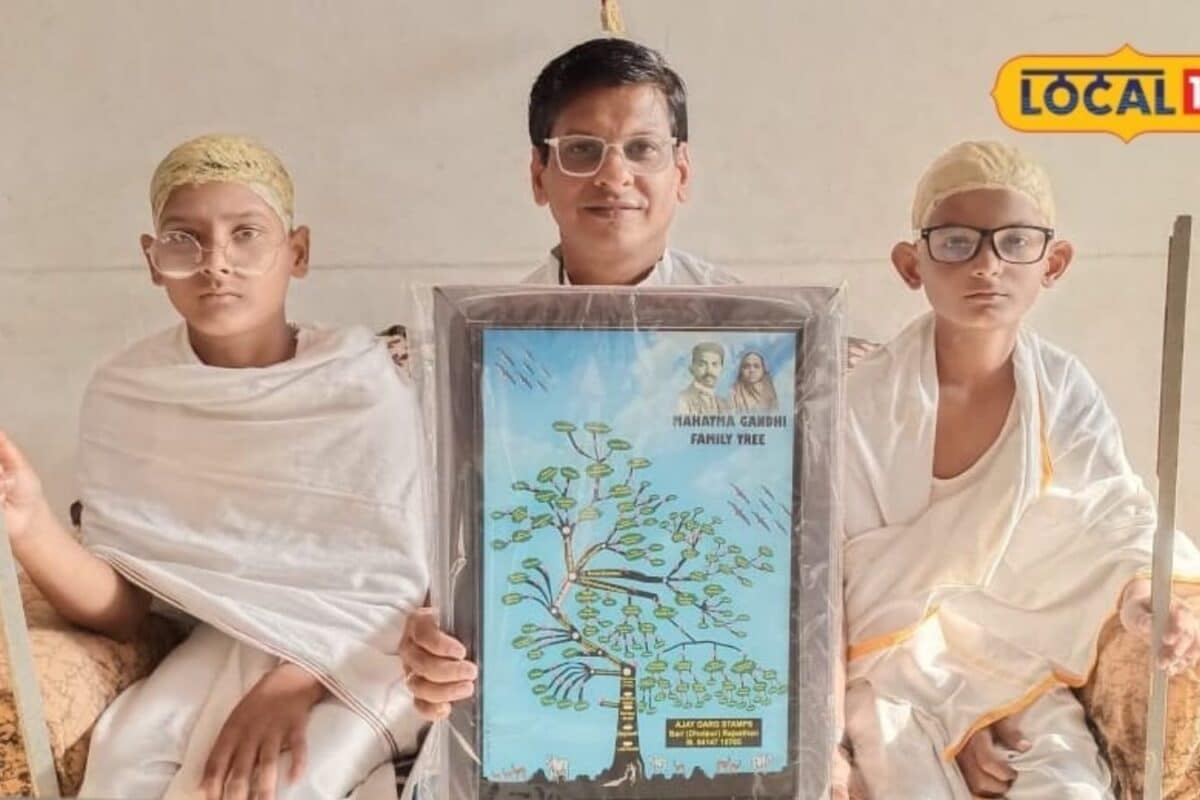
Kotputli Bureau — In a significant cultural and historical documentation effort, dedicated archivist Ajay Garg from Bari, Dholpur, has established an extraordinary collection dedicated to the Father of the Nation, Mahatma Gandhi. Marking the ongoing national commemorations, this comprehensive repository includes rare postage stamps issued by approximately 170 countries worldwide, alongside historical coins, specialized books, postcards, and authenticated historical documents that chronicle the life and philosophy of Mahatma Gandhi.
Providing deep historical context, the collection traces its origins to decades of meticulous preservation efforts aimed at safeguarding the ideologies of India's independence movement. Historians and local stakeholders note that preserving such artifacts is crucial for understanding the global resonance of Gandhian principles, transforming scattered historical fragments into an organized, accessible educational archive for researchers and students across the region.
Examining the ground details and statistical scale of the collection, the repository features exceptionally rare items, including the original salt tax receipt dating back to the historic Dandi March of 1930. Furthermore, the collection houses the very first postage stamp set issued in honor of Mahatma Gandhi in 1948, complemented by numerous commemorative coins issued by the Government of India, representing significant financial and historical value.
Local stakeholders and representatives highlighted the ongoing ground realities of cultural preservation, emphasizing that Ajay Garg has successfully reconstructed the intricate 12-generation genealogical tree of Mahatma Gandhi. Citizen groups, educational experts, and community leaders have expressed deep appreciation for these efforts, noting that direct engagement with tangible history fosters a stronger civic consciousness among the youth of Kotputli, Rajasthan, and neighboring districts.
Assessing the regional impact on the Kotputli-Behror district and the broader local economy, cultural exhibitions organized by Garg serve as powerful mediums for community education. Local educational institutions and administrative bodies frequently collaborate to showcase these rare artifacts, thereby enriching the cultural fabric of Rajasthan and inspiring students to explore the foundational values of truth and non-violence.
Addressing the administrative response and institutional oversight, cultural preservation committees and local authorities have lauded the meticulous categorization of these historical documents. Statutory bodies and heritage preservation societies continue to monitor and support such private archival initiatives, ensuring that fragile documents like the Dandi March tax receipts receive adequate preservation environments and public recognition.
Looking toward the forward outlook and future procedures, plans are underway to expand the reach of these exhibitions through digital archiving and district-wide educational tours. Public expectations remain high as local stakeholders anticipate enhanced institutional backing to establish a permanent museum space, ensuring that Mahatma Gandhi's enduring legacy is preserved for future generations through October 2026 and beyond.