
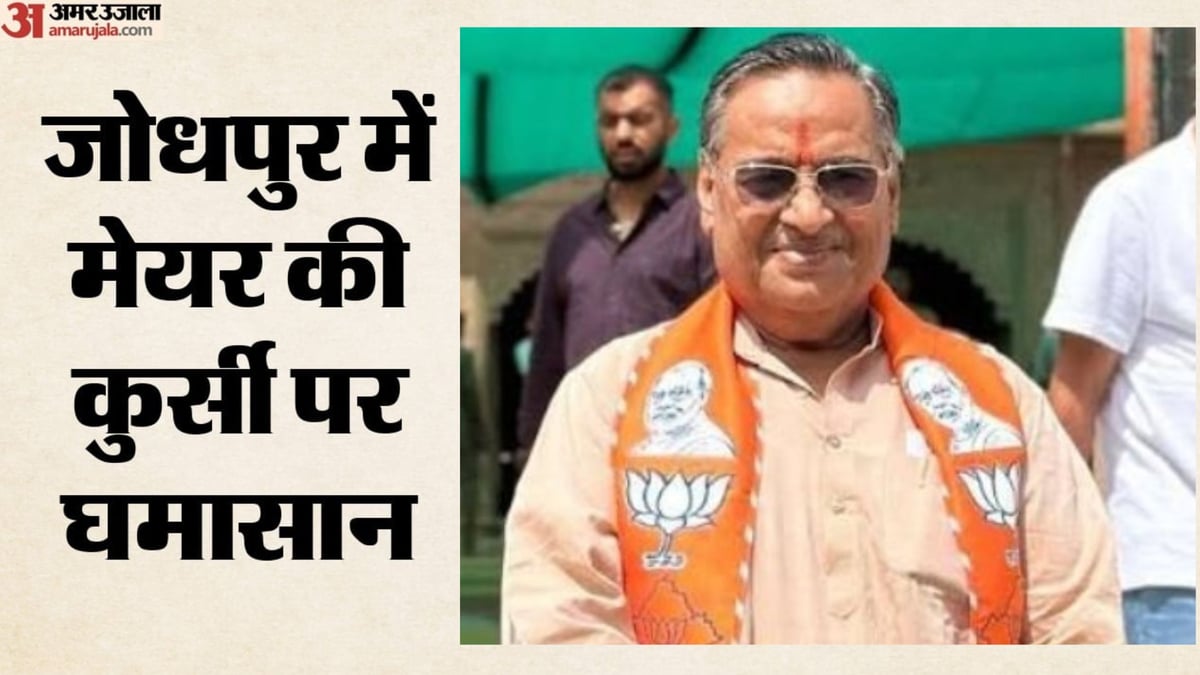
The political landscape of Jodhpur has witnessed a dramatic turn of events as the suspense surrounding the Jodhpur Municipal Corporation mayoral election officially comes to an end. With both major political forces declaring their respective candidates for the coveted mayoral post, the stage is now set for a fiercely contested electoral battle. The announcement has immediately galvanized party workers, political analysts, and local residents who are closely monitoring the unfolding political dynamics within the municipal body.
Tracing the historical context of local urban governance in Jodhpur, the municipal corporation elections have always served as a critical barometer of political influence in the region. Municipal politics in this historical city traditionally involve complex strategic calculations, party loyalties, and shifting alliances among elected representatives. The current electoral cycle has been characterized by intense behind-the-scenes negotiations, culminating in the final selection of candidates who represent the contrasting strategies of the two leading national parties.
Delving into the specifics of the candidate selection, the Bharatiya Janata Party has strategically placed its trust in experienced local leadership by fielding Prasanna Chand Mehta. Crucially, Mehta enters this high-stakes mayoral contest as the duly elected councillor from ward 82, bringing direct grassroots representative credentials to the electoral arena. His established connection with the electorate of his ward forms a vital pillar of the Bharatiya Janata Party strategy to capture the mayoral seat through proven municipal experience.
Conversely, the opposition Congress party has chosen a different tactical approach by nominating Rajendra Solanki for the mayoral race. Significantly, unlike his Bharatiya Janata Party opponent, Rajendra Solanki did not contest the recent municipal corporation election as a councillor. This nomination introduces an intriguing element to the political contest, showcasing the opposition party's reliance on organizational strength and overarching strategic planning rather than immediate ward-level electoral incumbency.
While the immediate political theater is concentrated within Jodhpur, the ripples of these urban local body elections extend far beyond municipal boundaries, influencing regional political equations across western Rajasthan including districts such as Kotputli-Behror. Local economic stakeholders, traders, and urban communities are keenly observing how the eventual outcome of this mayoral contest will impact civic administration, infrastructure development funding, and the execution of municipal welfare schemes in the coming years.
On the administrative front, election authorities and municipal officials have intensified preparations to ensure a transparent, orderly, and peaceful electoral process. Comprehensive logistical frameworks, security arrangements, and statutory compliance measures are being rigorously implemented by the administration to oversee the polling and counting procedures. Officials have reiterated their commitment to maintaining strict adherence to electoral guidelines and municipal laws throughout the entire duration of the election cycle.
Looking toward the forward outlook, the timeline for the upcoming voting procedures and final results announcement is generating immense public anticipation. As both Prasanna Chand Mehta and Rajendra Solanki gear up for intense campaigning and political maneuvering, citizens and public observers await to see which candidate successfully secures the mandate of the electoral college. The ultimate outcome will not only determine the leadership of the Jodhpur Municipal Corporation but also establish important psychological momentum for upcoming political engagements in the state.