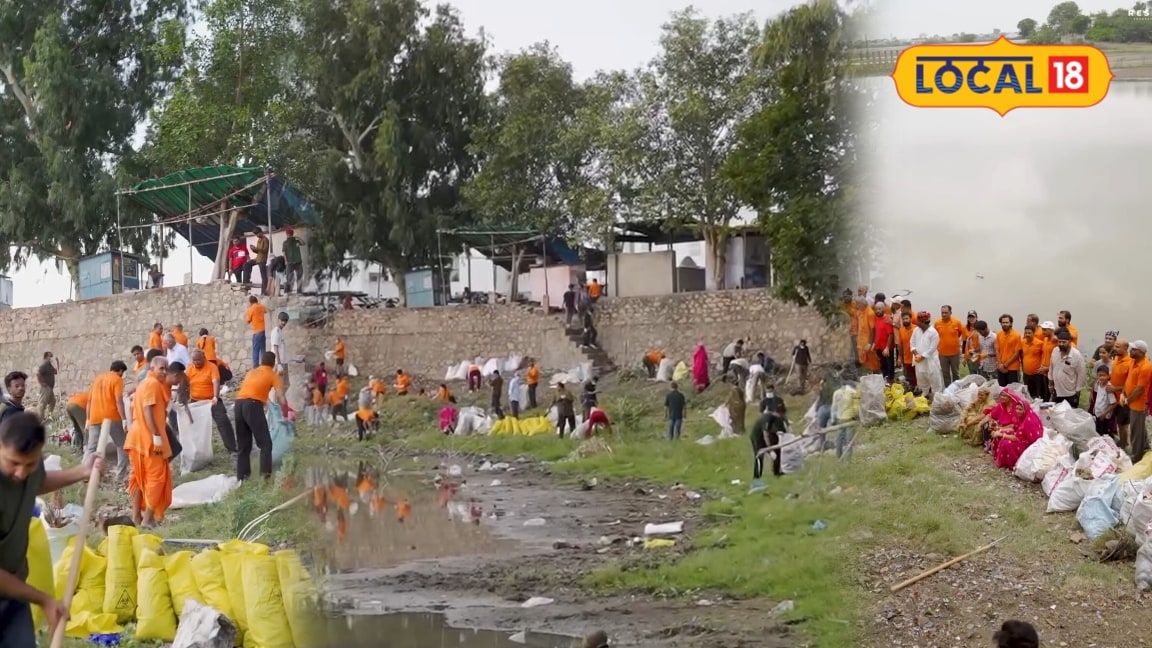
In a powerful display of civic duty and environmental stewardship, Pandit Jeevraj Shrimali stepped directly into the historic Lordiyaa Talab in Pali to spearhead an intensive cleanliness drive alongside local youth. This decisive intervention was urgently necessitated by a rapidly deepening water crisis that threatened the very survival of the region's most cherished traditional water reservoir. For months, the once-pristine water body had been severely choked by massive accumulations of domestic waste and non-biodegradable plastic materials, which completely compromised its ecological integrity and water retention capacity.
Historically, Lordiyaa Talab in Pali has served as an indispensable lifeline for the local population, quenching the thirst of generations and sustaining the surrounding agrarian and domestic ecosystems during periods of extreme drought. Constructed as a masterwork of traditional water harvesting, the reservoir stands as a monumental testament to ancient hydrological wisdom in the arid landscape. However, decades of systemic neglect, unchecked urban expansion, and rampant dumping of solid municipal waste transformed this vital heritage asset into an environmental hazard, severely disrupting natural percolation and water storage.
As the situation deteriorated into an alarming ecological emergency, Pandit Jeevraj Shrimali organized a dedicated task force comprising local volunteers, environmental enthusiasts, and energetic youth from Pali. Demonstrating exemplary personal resolve, Shrimali descended into the polluted basin of Lordiyaa Talab to lead the grueling manual extraction operations from the front. Over the course of the rigorous cleanup campaign, the determined collective successfully hauled out hundreds of tons of accumulated garbage, sludge, and discarded plastics, systematically clearing the choked drainage and catchment zones of the historic water body.
The grassroots initiative resonated deeply across the community, drawing widespread appreciation from senior citizens, environmental experts, and local traders who had long lamented the degradation of Lordiyaa Talab. Observers and community leaders noted that official apathy had left the historical site vulnerable to permanent ruin, making the direct community intervention led by Jeevraj Shrimali both timely and indispensable. Citizens emphasized that the sheer volume of waste extracted highlights the catastrophic scale of civic irresponsibility that plagues urban water management systems across the region.
The successful restoration of water retention capacities in Lordiyaa Talab carries profound implications for the broader regional water security framework extending toward Kotputli-Behror and surrounding districts. As groundwater tables continue to plummet under the pressure of erratic monsoonal patterns and over-extraction, the revival of traditional percolation structures like Lordiyaa Talab is vital for maintaining ecological balance and agricultural viability. The initiative has successfully underscored how decentralized community action can directly mitigate the worsening local water scarcity crisis that threatens rural and urban livelihoods alike.
Following this massive voluntary cleanup drive, local civil society organizations have formally demanded sustained administrative oversight and institutional protection for Lordiyaa Talab to prevent recurrent dumping. Stakeholders have urged the municipal authorities in Pali to install perimeter fencing, deploy continuous monitoring mechanisms, and establish designated solid waste disposal facilities to safeguard the newly restored reservoir. Public pressure is mounting on municipal bodies to institutionalize periodic maintenance protocols so that the painstaking physical labor undertaken by Jeevraj Shrimali and the local youth is not squandered.
Looking ahead, the inspiring campaign led by Pandit Jeevraj Shrimali at Lordiyaa Talab is anticipated to spark a broader regional movement for heritage water body restoration across Pali and neighboring districts. Community leaders plan to conduct awareness workshops and formation committees dedicated to continuous water body monitoring ahead of the upcoming seasonal cycles. Ultimately, this monumental effort stands as an enduring reminder that active citizen participation remains the most potent weapon in safeguarding historical ecological treasures for future generations.