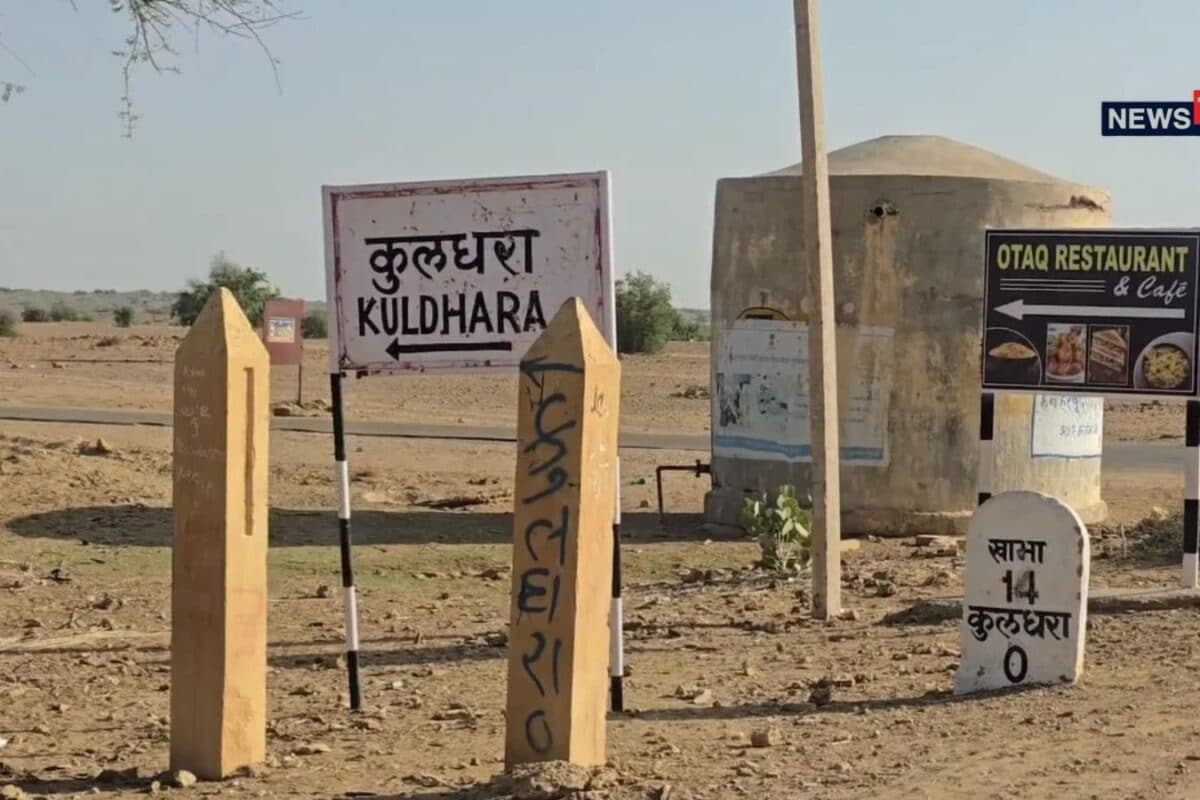
The desolate ruins of Jaisalmer continue to harbor a profound 250-year-old mystery that bears testimony to an unprecedented act of collective migration and human resolve. Known widely today as a haunting heritage site, the legendary settlement of Kuldhara stands as a silent witness to a turbulent era in regional history. The core of this enduring narrative rests upon the extraordinary self-respect, unity, and unwavering dignity of the Paliwal Brahmin community, who chose exile over subjugation.
Tracing the historical context reveals that during the erstwhile princely state era, the inhabitants faced severe oppression and administrative high-handedness. The epicenter of this systemic distress was linked to the heavy-handed policies and tyrannical actions of Salim Singh, whose administration exercised absolute and often oppressive control over the local populace. The unbearable pressure exerted upon the residents eventually crossed all thresholds of endurance, precipitating a massive crisis of conscience and security within the traditional settlement.
Faced with unrelenting persecution, the leadership and members of the broader community took a monumental and unprecedented decision regarding their collective future. In a remarkable display of solidarity, the inhabitants of 84 villages orchestrated a meticulously planned and synchronized mass departure within the span of a single night. This strategic evacuation left an entire administrative and economic zone completely deserted, altering the demographic and cultural landscape of the region permanently.
Before embarking on their mass exodus into the vast expanses of the surrounding desert, the community partook in a solemn and binding ritual that sealed their resolve. Gathering at the historic Kathodi temple, the leaders and members drank salt-infused water as part of a sacred oath to sever all ties with their ancestral homeland. This powerful symbolic gesture underscored their unwavering commitment to justice, freedom, and collective honor in the face of insurmountable adversity.
The departure of the populace left behind an extensive network of settlements that gradually transformed into wind-swept ruins and the subject of widespread folklore. While modern interpretations often sensationalize the location as a paranormal anomaly, investigative historians emphasize that the true essence of the site lies in its socio-political resistance. The physical remnants of homes, community centers, and religious structures reflect a highly prosperous and organized society that chose voluntary destitution over dishonor.
In contemporary times, regional authorities and cultural preservation bodies have increasingly focused on documenting and protecting the heritage value of these abandoned sites. Academic researchers, historians, and heritage conservationists regularly examine the archival records and architectural remains to reconstruct the socio-economic framework of the Paliwal society. These official and academic initiatives aim to educate the public on the realities of feudal exploitation and indigenous resistance.
As public interest and scholarly research continue to evolve, the legacy of Kuldhara and the 84 evacuated villages remains a central pillar of regional folklore and historical heritage. Future preservation strategies are expected to balance heritage tourism with respectful historical interpretation, ensuring that the sacrifices of the Paliwal community are remembered accurately. The enduring narrative serves as a timeless reminder of human dignity, community solidarity, and the profound costs of institutional oppression.