
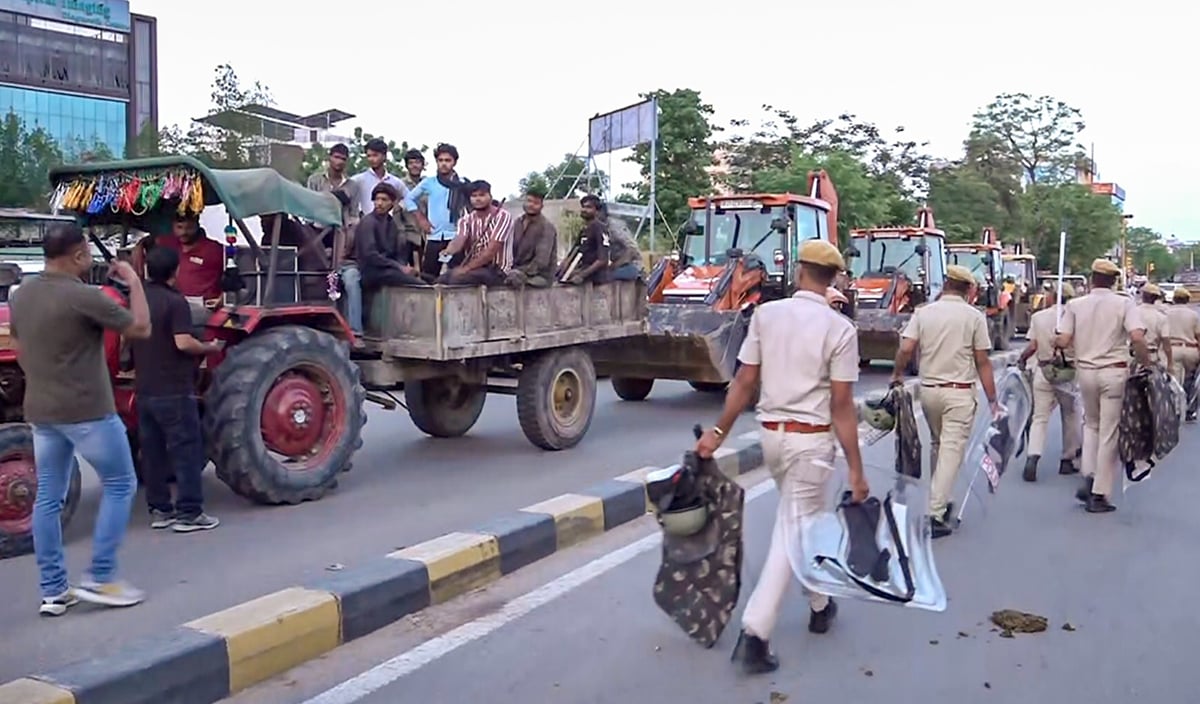
In a significant legal development originating from the state capital, the High Court has intervened in the controversial demolition of the Noorani Mosque situated in Jaipur. The judicial scrutiny began following serious petitions filed before the court regarding the manner in which the demolition drive was executed by the civic authorities. This high-profile case has drawn immense attention from legal experts, civil society, and religious organizations across the region, focusing heavily on due process and administrative accountability.
The administrative actions leading up to this legal battle trace back to municipal operations conducted within the urban jurisdiction of Jaipur. The Noorani Mosque and its adjoining madrasa have historically served as significant community landmarks for religious and educational purposes. The sudden and aggressive execution of the demolition drive by the Jaipur Development Authority sent shockwaves through the local community, raising serious questions regarding urban planning protocols, religious structures protection, and municipal transparency.
According to the preliminary submissions presented before the judiciary, the central point of contention revolves around the complete absence of prior statutory warnings. The physical scale of the demolition involved the removal of structures that had stood for considerable time, housing both a place of worship and educational facilities for children. While the authorities often cite urban expansion and encroachment removal as primary justifications for such drives, the lack of measurable documentation regarding advance notice remains a critical focal point of the judicial inquiry.
Representing the aggrieved parties, the Waqf Board strongly contested the actions of the Jaipur Development Authority during the initial hearings. The board formally alleged that the demolition was carried out in absolute disregard of established legal frameworks, completely denying the management any statutory opportunity to present their side or defend the religious property. Legal representatives argued that executing such drastic measures without serving formal notices violates fundamental principles of natural justice and constitutional safeguards governing religious institutions.
The repercussions of this contentious legal dispute extend far beyond the immediate municipal boundaries of Jaipur, deeply concerning residents and community leaders in neighboring districts including Kotputli-Behror. The broader regional population, consisting of various traders, laborers, and families, closely monitors such administrative actions as they reflect on the security of local properties and community harmony. Maintaining socio-economic stability and mutual trust remains vital for the peaceful coexistence of communities throughout the wider administrative zone.
In response to the petitions and arguments placed before the bench, the High Court has initiated formal judicial proceedings by issuing notices to the Jaipur Development Authority and all other relevant respondents. This administrative and judicial oversight ensures that state agencies are held accountable for procedural compliance when executing heavy machinery operations. The court expects a thorough administrative review and documentation of the circumstances that led to the execution of the demolition without preliminary notices.
Looking forward, the legal proceedings have entered a crucial phase with the court granting a strict deadline of eight weeks for the respondents to submit their formal replies. This upcoming period will witness intense legal arguments from both the Waqf Board and the Jaipur Development Authority as they present their respective evidences and statutory justifications. The final outcome of this case is anticipated to set a significant legal precedent regarding urban demolitions, minority institutions, and the mandatory enforcement of pre-demolition notice protocols in the state.