
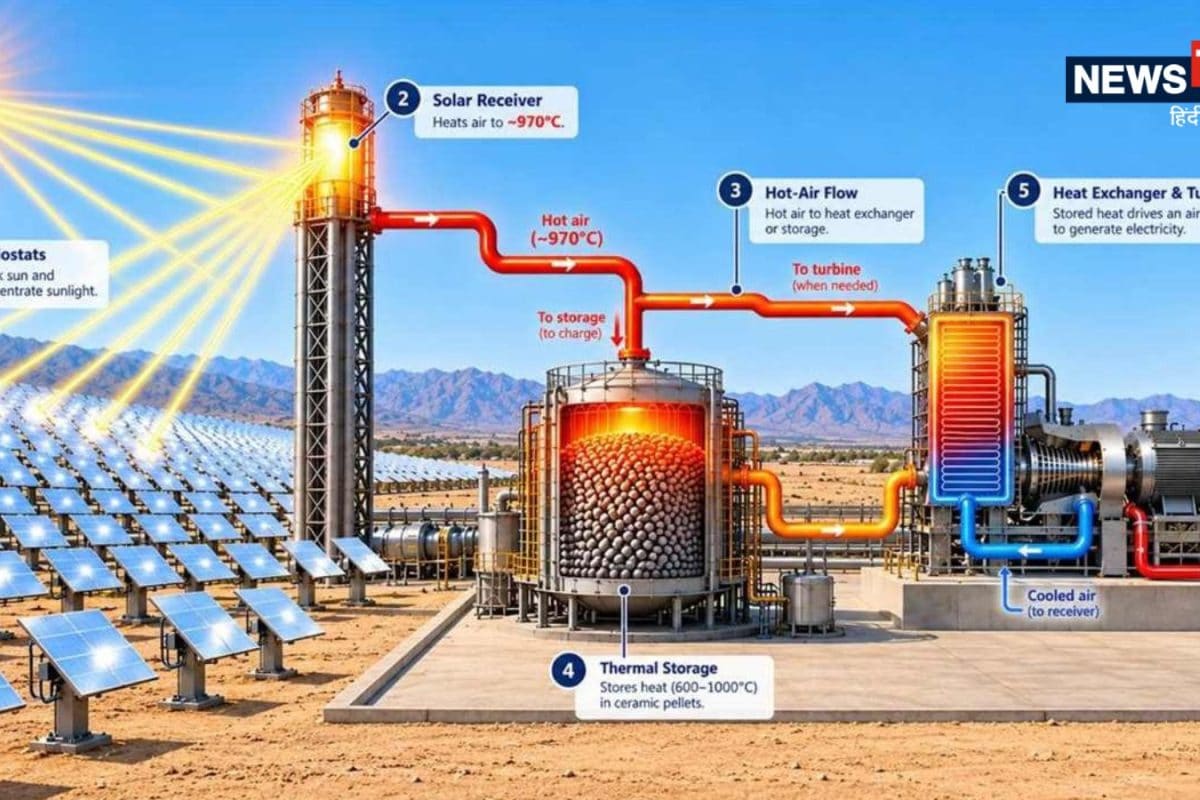
In a monumental technological leap for the renewable energy sector in India, the state of Rajasthan is preparing to witness the establishment of the nation's first ceramic storage-based concentrated solar power project. This landmark initiative is slated to be developed within the expansive terrain of the renowned Bhadla Solar Park, positioning the region at the very forefront of advanced green energy innovation. The project aims to fundamentally transform how solar energy is captured, retained, and utilized long after the sun has set.
The foundational framework of this ambitious venture rests upon a strategic collaboration between the National Thermal Power Corporation and the Rajasthan Renewable Energy Corporation Limited. Over the years, Rajasthan has emerged as a premier hub for solar power generation due to its vast arid expanses and high solar irradiance. However, the traditional limitation of solar power has always been its inability to generate electricity during nighttime hours without the deployment of massive, expensive battery storage systems, a historical hurdle this project seeks to overcome.
At the heart of this groundbreaking initiative is a meticulously designed 320 kilowatt pilot project that introduces cutting-edge thermal storage mechanisms to the Indian power grid. Instead of converting sunlight directly into electricity that must be consumed or stored immediately in chemical batteries, this concentrated solar power system harnesses solar radiation during peak daylight hours. This intense thermal energy is then systematically captured and stored within specially engineered ceramic modules, which possess exceptional heat retention capabilities.
Industry experts, energy strategists, and institutional stakeholders have expressed immense optimism regarding the deployment of this technology at the Bhadla Solar Park. Representatives from both the National Thermal Power Corporation and the Rajasthan Renewable Energy Corporation Limited have emphasized that utilizing ceramic storage represents a sustainable, durable, and environmentally friendly alternative to conventional lithium-ion or lead-acid battery banks, which carry significant ecological footprints and high procurement costs.
The broader regional implications of this technological advancement extend far beyond the immediate boundaries of the Bhadla Solar Park, offering promising economic and industrial prospects for districts across Rajasthan, including regions like Kotputli-Behror. As the state cements its status as the undisputed solar capital of India, localized infrastructural developments, green manufacturing supply chains, and technical employment opportunities are expected to flourish, positively impacting local communities and regional commerce.
Administrative oversight and regulatory coordination for the project are being handled jointly by state and central energy authorities to ensure seamless execution and adherence to stringent engineering standards. The Rajasthan Renewable Energy Corporation Limited, working in tandem with the National Thermal Power Corporation, has outlined rigorous protocols for monitoring the construction, thermal efficiency testing, and grid integration phases of the 320 kilowatt pilot installation.
Looking toward the forward outlook, the successful implementation of this ceramic storage concentrated solar power project is anticipated to pave the way for large-scale commercial replication across other sun-drenched regions of India. As timelines progress and initial operational data from the Bhadla installation are evaluated, public expectations remain high that this innovation will democratize round-the-clock renewable energy, significantly lowering grid stabilization costs and accelerating India's transition toward absolute energy independence.
