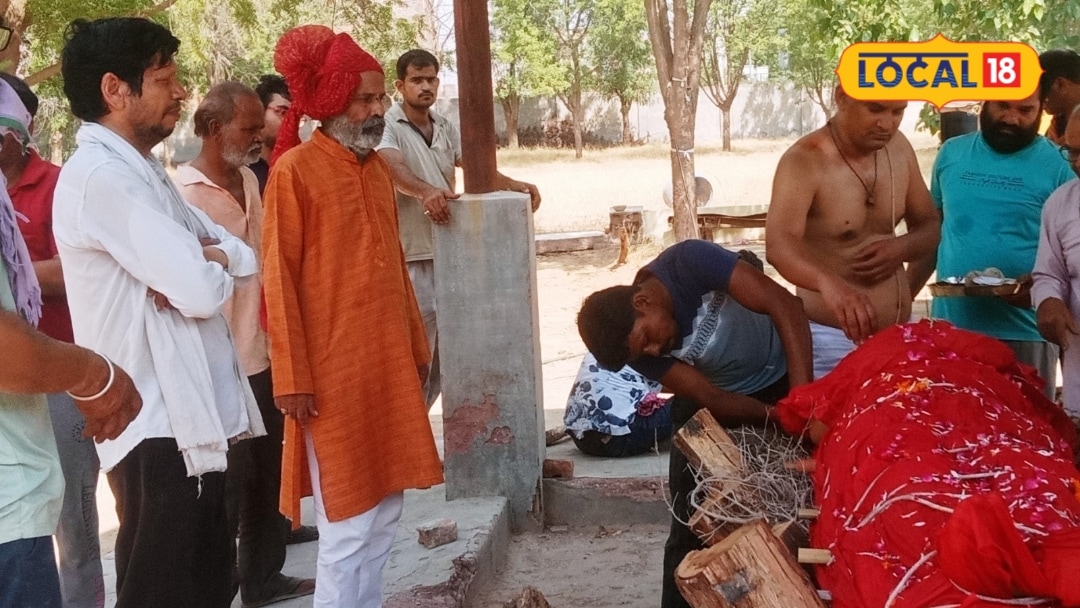
In an exceptionally poignant display of lifelong devotion and sorrow, a profound final farewell unfolded in Rajasthan, capturing the attention of communities far and wide. The Kotputli Bureau reported on September 28, 2026, regarding a deeply emotional sequence of events where a grieving husband chose to honor his departed wife of 42 years by recreating the imagery of their wedding day. This heart-wrenching spectacle transformed a traditional funeral into an extraordinary commemoration of enduring partnership and marital fidelity.
Contextually, the event traces its roots to a decades-long marital journey shared between the couple, whose lives had been deeply intertwined across changing social landscapes in Rajasthan. Long-term marriages of this magnitude represent a vanishing social fabric, where mutual resilience and shared struggles form the bedrock of domestic stability. Local stakeholders and regional observers noted that the decision to dress the deceased wife as a bride was not merely symbolic, but a deeply personal tribute reflecting forty-two years of shared memories, trials, and triumphs.
Examining the ground realities and logistical aspects reported by field correspondents, the final journey incorporated specific cultural rituals that highlighted the gravity of the occasion. Ground details reported on September 28, 2026, confirmed that the procession moved amidst traditional musical instruments, or 'gaaje-baaje', and customary farewell songs that heightened the emotional resonance. The financial and emotional stakes involved in orchestrating such a distinctive ceremony demonstrated the community's adherence to deeply entrenched local customs and familial devotion.
Local representatives and community leaders actively engaged with the unfolding situation, highlighting ongoing ground realities that define social interactions in the region. Local representatives highlighted ongoing ground realities during interviews conducted by the Kotputli News editorial team, emphasizing how acts of intense personal grief resonate deeply within the societal framework of Rajasthan. Observers pointed out that such deeply personal expressions of mourning often serve to bind communities closer together, prompting reflections on the sanctity of marriage and life commitments.
From a regional perspective, the incident left an indelible mark on the Kotputli-Behror district and surrounding localities, influencing public discourse surrounding love, loss, and tradition. The local economy and community networks experienced a temporary pause as residents gathered to witness and partake in the solemn procession. Civic leaders noted that while the region is frequently preoccupied with developmental and administrative matters, profound human events of this nature forcefully remind citizens of the emotional underpinnings that sustain community life.
Regarding administrative response and official observation, local governance bodies and statutory overseers maintained a respectful distance while ensuring that public order and traffic management were seamlessly maintained along the procession route. Although no direct administrative intervention was warranted by the private family mourning, local authorities extended necessary logistical support for the peaceful execution of the traditional rites. Such cooperation underscores the harmonious relationship between private family rituals and municipal oversight in the Kotputli region.
Looking forward, the resonance of this unique farewell is expected to linger within the cultural memory of the district for years to come, serving as a benchmark of steadfast devotion. Public expectations and upcoming community gatherings are anticipated to reference this event in discussions centered on marital commitment and cultural heritage. As the Kotputli Bureau continues to monitor regional developments, this poignant narrative remains a testament to the enduring power of human love amidst the transient nature of mortal existence.