
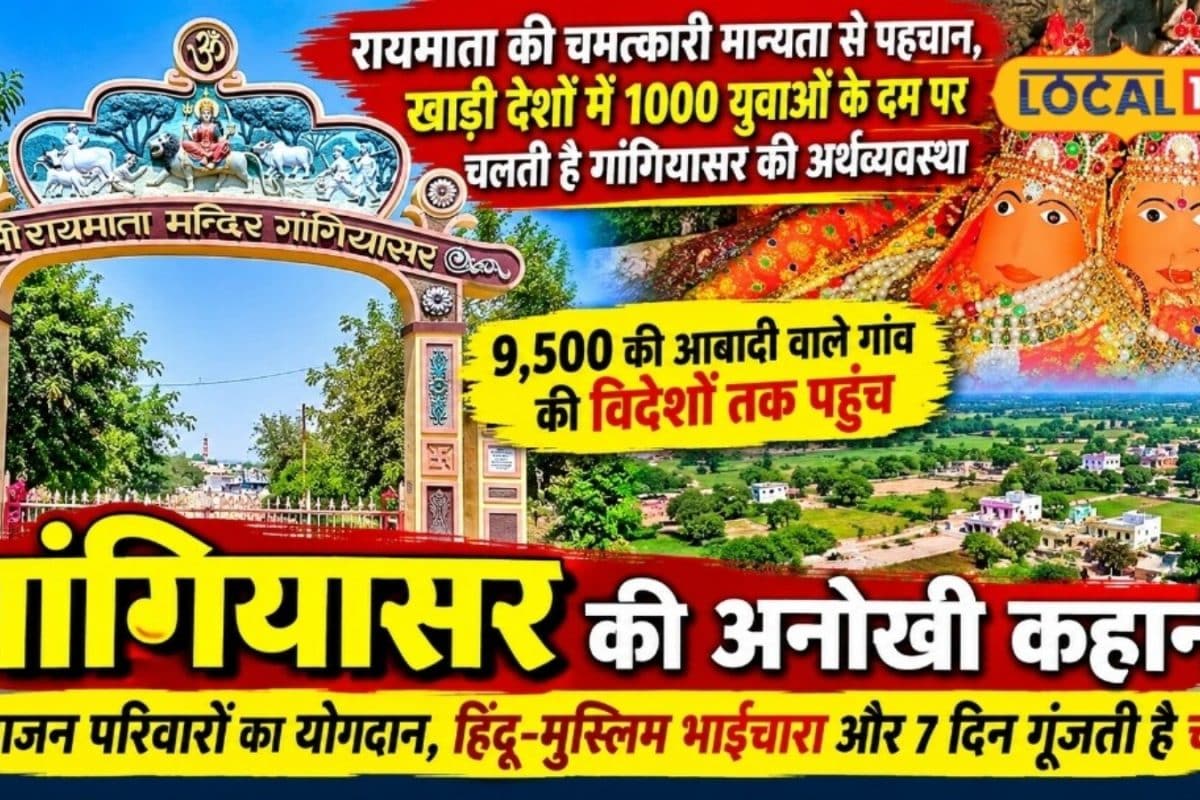
Gangiasar village, located in the Jhunjhunu district of Rajasthan, has emerged as a remarkable epicenter of traditional religious faith, deep-seated cultural heritage, and extraordinary international labor migration. While rural communities across the region often grapple with limited economic opportunities, this specific settlement has successfully forged a distinct identity that bridges ancient regional folklore with contemporary global employment markets, establishing a compelling narrative of resilience and community ambition.
At the very heart of the village's spiritual and cultural identity lies the revered tradition of Raymata, whose local folklore and sacred narratives continue to remain vibrantly alive among the residents. Generations of families have preserved these ancestral customs, passing down oral histories and ritualistic observances that bind the community together. This spiritual anchor provides the social foundation upon which the villagers build their collective identity, ensuring that modernization does not erode their historical roots.
Beyond its rich spiritual traditions, Gangiasar is defined by a striking economic statistic: approximately one thousand young individuals from this single village have ventured abroad to secure employment in various Gulf countries. This significant labor migration represents a monumental logistical and financial undertaking for families residing in rural Rajasthan. The relentless hard work and determination displayed by these young workers have directly uplifted their households, bringing financial stability and transforming the local standard of living.
Local elders, community leaders, and returning workers often reflect upon the immense challenges and eventual triumphs associated with seeking livelihoods in distant foreign lands. Families coordinate closely to support prospective travelers through documentation, skill development, and financial pooling. The shared experiences of working in the Gulf region have fostered a profound sense of mutual brotherhood and solidarity among the residents, transcending individual household struggles to create a unified village ethos.
The socioeconomic impact of this Gulf-oriented migration extends far beyond individual homes, influencing the broader regional dynamics within the surrounding districts of Rajasthan. Remittances sent back by the youth working overseas have stimulated local commerce, improved residential infrastructure, and enhanced educational prospects for younger children. This financial influx demonstrates how overseas employment can revitalize rural economies when supported by strong familial and communal networks.
Administrative observers and local governance bodies have increasingly recognized the unique developmental trajectory of Gangiasar village. While the primary impetus for international migration stems from private initiative and family networks, local authorities monitor labor welfare and documentation processes to ensure safe and legal migration channels. Ensuring proper oversight remains essential to safeguarding the rights and well-being of workers navigating complex international employment structures.
Looking toward the future, the community of Gangiasar stands at a fascinating crossroads between traditional preservation and global economic integration. As the legacy of Raymata continues to inspire cultural continuity, the younger generation maintains its commitment to overseas employment as a viable pathway for prosperity. Public expectations remain centered on improving vocational training and administrative support to facilitate even safer and more productive opportunities for the upcoming workforce.
